
what raw materials can be used for aluminum extrusion?
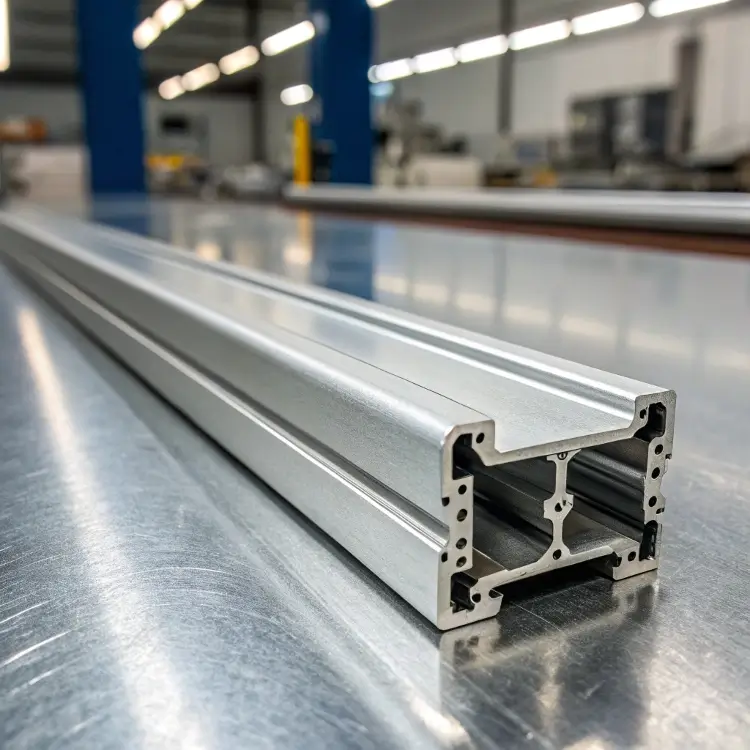
Aluminum extrusion starts long before a billet meets the press. The raw material — the aluminum alloy, its purity, and even whether it’s recycled — determines everything from how the metal flows to how strong and clean the final product is.
Aluminum extrusion uses billets made from specific aluminum alloys, often 6000-series like 6063 or 6061. The quality, composition, and condition of these raw materials directly impact extrusion speed, surface finish, mechanical strength, and long-term reliability.
If the wrong alloy is used, or if billet quality is low, the final result may be flawed, inconsistent, or even unusable. Let’s explore which materials matter most and why.
Which alloys suit extrusion best?
Aluminum comes in many grades. But only some are easy to extrude and produce high-quality results. Choosing the wrong alloy makes profiles harder to shape or weak after forming.
6000-series alloys such as 6063 and 6061 are best suited for extrusion due to their balance of flowability, surface finish, and mechanical strength.

Not all aluminum behaves the same under heat and pressure. The most common extrusion alloys are from the 6000-series, because they combine magnesium and silicon. This combination gives good strength and allows smooth flow through dies. Let’s compare two of the most popular alloys:
-
Slitina 6063
This is the workhorse of aluminum extrusion. It has moderate strength, excellent corrosion resistance, and superb surface finish. It extrudes easily, making it ideal for architectural applications where appearance matters. It responds well to anodizing and is commonly used for window frames, door rails, and decorative trims. -
Slitina 6061
This alloy has higher strength than 6063 and better mechanical properties. It’s commonly used for structural applications, truck frames, and aerospace components. However, it doesn’t flow as easily as 6063, and the surface finish may not be as smooth. It’s more prone to tearing if the die or process is not properly optimized.
Other alloys used in extrusion include:
- 6082 – Offers high strength, used in structural engineering.
- 6106 – Known for high corrosion resistance.
- 6463 – Used for bright-finish architectural profiles.
Common extrusion alloys and applications
| Slitina | Vytlačitelnost | Síla | Povrchová úprava | Typické použití |
|---|---|---|---|---|
| 6063 | Vynikající | Střední | Velmi dobré | Doors, windows, furniture |
| 6061 | Dobrý | Vysoká | Dobrý | Machinery, transport, load frames |
| 6082 | Mírná | Vysoká | Mírná | Structural beams |
| 6463 | Vynikající | Střední | Bright finish | Automotive trims, polished parts |
Choosing the correct alloy depends on the product’s end use. If the part must look perfect, 6063 is better. If strength is key, 6061 or 6082 is preferred. The choice affects everything from extrusion speed to finishing cost.
6063 alloy is ideal for applications where appearance and anodizing quality are important.Pravda
Its smooth surface, good corrosion resistance and flow make it the best for visible, decorative profiles.
All aluminum alloys behave the same during extrusion.False
Different alloy compositions change flow, strength, finish, and die wear. Alloy choice affects extrusion quality.
Why billet purity influences quality?
Even the best alloy fails if the billet has poor purity. Impurities or poor casting lead to cracking, uneven extrusion, or weak points in the final part.
Billet purity affects grain structure, surface finish, and internal strength. Cleaner billets produce better extrusions with fewer defects and more consistent properties.
A billet is the raw log of aluminum that is heated and forced through the die. To make good extrusions, the billet must have a uniform chemical composition and be free from gas pockets, dirt, or oxidation.
Purity is controlled in several ways:
- Primary billets are made from virgin aluminum ingots. These are the cleanest and most uniform. They are used for high-quality profiles, precision parts, and critical applications.
- Secondary billets are made from remelted aluminum scrap. Quality depends on how clean and well-sorted the scrap is before melting.
Inside the billet, the grain structure matters. A good billet has fine, uniform grains with no cracks or segregation. This structure ensures the aluminum flows evenly through the die, producing smooth and consistent profiles.
Poor billet purity causes:
- Flow defects – metal may resist entering narrow die sections.
- Surface flaws – dirt or inclusions create rough textures.
- Weak spots – improper bonding during extrusion may lead to failure under load.
- Die damage – hard impurities can wear or crack dies.
Billets also go through homogenization, a heat treatment that evens out the internal structure and prepares the billet for smooth extrusion. Skipping this step or using poor billets increases failure risk.
Primary vs. secondary billet quality comparison
| Funkce | Primary Billet | Secondary Billet (Recycled) |
|---|---|---|
| Purity | Velmi vysoká | Proměnná |
| Povrchová úprava | Clean, bright | May show oxidation or pits |
| Internal structure | Uniform grains | Risk of segregation or voids |
| Případy použití | High-performance parts | General industrial profiles |
Billet purity directly affects extrusion surface finish and flow consistency.Pravda
Cleaner billets flow more evenly and leave fewer surface defects or weak areas.
Impurities in the billet do not affect the final strength of the extruded part.False
Impurities interrupt metal bonding during flow, reducing structural performance.
How recycled aluminum affects properties?
Recycled aluminum offers a green solution, but only if the recycling process is controlled. Bad scrap leads to worse extrusion, while good recycled billets can match virgin ones.
Recycled aluminum, when properly sorted and melted, can match virgin aluminum for extrusion. But poor scrap management leads to impurities, poor flow, and weak parts.

Aluminum is highly recyclable. In fact, many extrusion plants use scrap material to produce billets. This reduces energy use and material costs. But using scrap means more care during billet production.
Scrap aluminum comes from two sources:
- Post-industrial scrap – leftover cuts from factories. Often clean and sorted by alloy.
- Post-consumer scrap – old windows, cans, mixed parts. Harder to sort and clean.
When recycled scrap is melted, it must be:
- Decontaminated – to remove paint, oils, and coatings.
- Sorted by alloy – to prevent unwanted element combinations.
- Refined – using fluxing agents to remove impurities.
Good foundries can turn scrap into billets with 95–98% purity and stable alloy content. These billets extrude well, especially for non-critical parts.
Problems arise when:
- Different scrap alloys are mixed
- Contaminants are not removed
- Melt is not homogenized properly
This causes porosity, variable hardness, inconsistent strength, and extrusion cracking.
Sustainable companies often aim for recycled content above 50% in general-purpose profiles. For aerospace or high-spec parts, virgin or certified billets are preferred.
High-quality recycled aluminum can produce extrusions equal in strength to those from virgin billets.Pravda
If scrap is sorted, cleaned, and melted properly, billet quality can be very high.
Using recycled aluminum always lowers the extrusion cost without trade-offs.False
Low-quality scrap may increase defect rates, slow production, or shorten die life.
Can additives modify alloy behavior?
Sometimes standard alloys aren’t enough. Additives or extra alloying elements can improve performance, but also make extrusion more complex.
Additives like copper, zinc, or chromium can enhance aluminum alloy properties such as strength, corrosion resistance, or thermal stability — but they may reduce flow and require precise control.

Aluminum alloys are made by adding other elements. In 6000-series, magnesium and silicon are essential. But other elements change how the aluminum performs:
- Měď – improves strength and hardness, used in aerospace.
- Zinek – added in 7000-series alloys for high-performance structural uses.
- Chromium / manganese – increase corrosion resistance.
- Iron / titanium – sometimes added for grain control or wear resistance.
These additives help meet demanding applications — for example, truck chassis, heat sinks, or military-grade extrusions. But there’s a trade-off:
- Harder to extrude – metal doesn’t flow as easily.
- More die wear – abrasive elements cause faster tool degradation.
- Tighter process limits – requires narrow temperature and pressure ranges.
- Lower surface quality – rougher finishes unless optimized.
Die design also matters more with modified alloys. Small changes in die angle or bearing thickness may solve or worsen flow problems. Operators must adjust speed, billet temperature, and container pressure more carefully.
Still, these alloys are valuable. They allow parts to be stronger, lighter, and more corrosion-resistant — if produced correctly.
Alloy additives can raise strength, but make extrusion more sensitive to process settings.Pravda
Extra elements change how aluminum behaves under pressure and heat, requiring better process control.
Adding more elements always improves extrusion flow and surface finish.False
Many additives reduce flowability and may cause rougher surfaces or more wear on tooling.
Závěr
Aluminum extrusion starts with the right raw material. The alloy type, billet purity, and presence of recycled content all play a role in final product quality. Alloys like 6063 and 6061 provide a good balance between workability and strength. Clean billets ensure smooth flow and reliable properties. Recycled aluminum helps cut costs and emissions, but only if refined carefully. And when advanced performance is needed, additives allow fine-tuned properties — but make the process harder. Choose wisely, and your extrusions will be strong, consistent, and ready to perform.