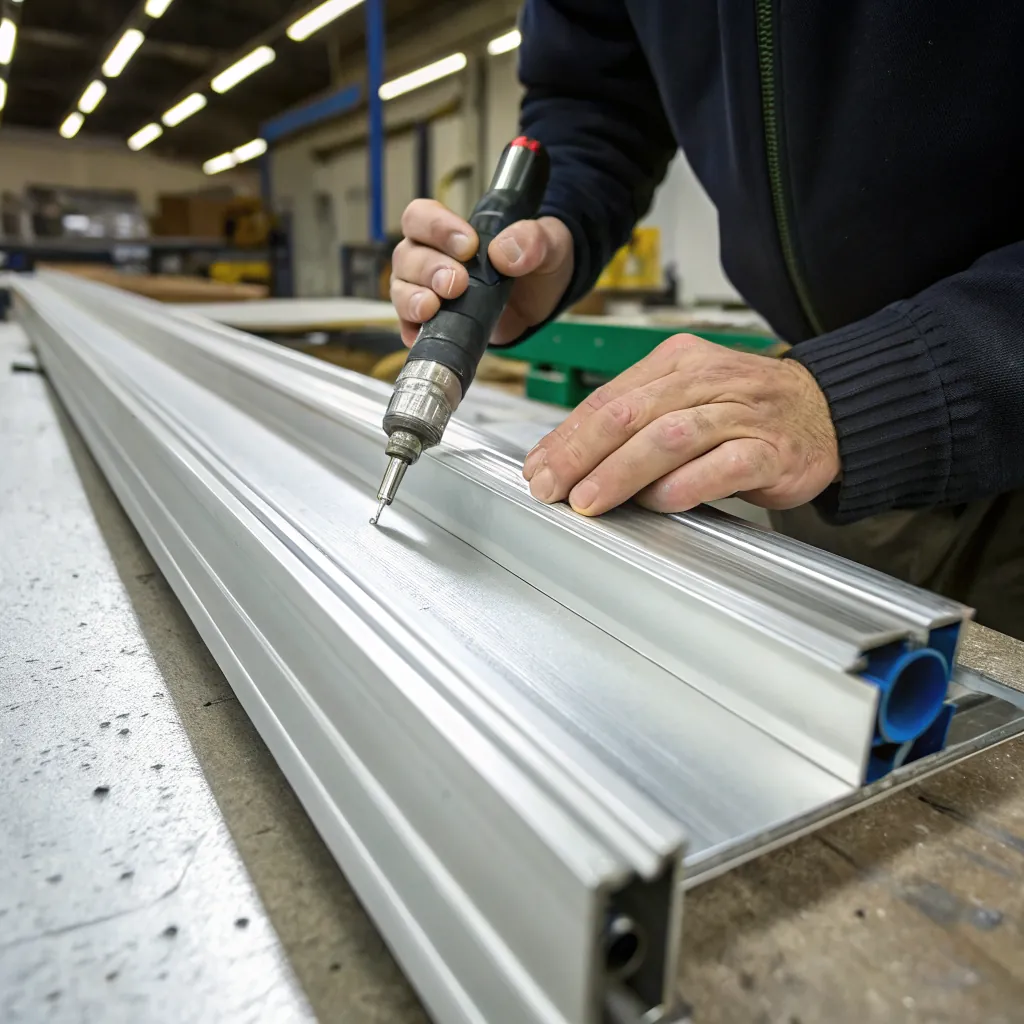
what is an aluminum extrusion press?

An aluminum extrusion press is a heavy-duty machine that uses high pressure to force a heated aluminum billet through a shaped die, producing long, continuous profiles with a specific cross-section.
The extrusion press includes a container, a hydraulic ram, and a die stack. The force and size of the press determine the size and complexity of profiles it can produce.
In this article, we’ll explore how the press works, why tonnage matters, where the billet is loaded, and how automation is transforming press control.
How does an extrusion press operate?

An extrusion press operates by applying hydraulic force to a heated aluminum billet, pushing it through a die to create a profile. This is similar to squeezing toothpaste from a tube, but on a much larger and more controlled scale.
The press heats the billet, loads it into a container, and uses a hydraulic ram to push it through a die, shaping the aluminum into a profile.
Steps of operation
- Heating the billet – The aluminum billet is heated to around 375–500°C, depending on the alloy.
- Loading – The billet is placed into the press container.
- Vytlačování – A hydraulic ram applies pressure, pushing the billet through the die.
- Chlazení – The emerging profile is cooled using air or water.
- Protahování – The profile may be stretched to correct any warping.
- Řezání – The profile is cut to desired lengths.
Types of presses
- Direct extrusion – The ram pushes the billet into a stationary die; this is the most common method.
- Indirect extrusion – The die moves toward the billet, which remains stationary. This reduces friction and works better with harder alloys.
Importance of press setup
Every part of the press, from the die to the ram and container, must work together precisely. Proper temperature, pressure control, and billet placement ensure quality, consistency, and minimal waste.
An aluminium extrusion press uses a hydraulic ram to push a heated billet through a die to form a profile.Pravda
This describes the fundamental operation of an extrusion press as per industry sources.
Indirect extrusion presses are less suited for hard aluminium alloys than direct presses.False
Indirect extrusion is often preferred for hard alloys due to lower friction in the container.
Why press tonnage matters?

Press tonnage refers to the amount of force the extrusion press can exert. This is usually measured in tons and plays a key role in determining what kind of aluminum profiles can be produced.
A press with higher tonnage can handle larger billets, harder alloys, and more complex shapes because it applies greater force during extrusion.
What affects required tonnage?
- Billet size – Larger diameter billets need more force.
- Složitost profilu – More detailed, hollow, or thin-walled shapes increase resistance.
- Typ slitiny – Harder alloys are more difficult to extrude and need more force.
- Konstrukce matrice – The thickness, shape, and resistance of the die impact the tonnage required.
- Extrusion ratio – The ratio of billet area to profile area influences the needed force.
Tonnage range
Extrusion presses typically range from 500 to over 15,000 tons. Smaller presses are used for simpler, smaller profiles. Very large presses are needed for structural components, automotive parts, or aerospace profiles.
Proč je to důležité
Choosing the right tonnage ensures the press can form the profile cleanly and consistently. If the tonnage is too low, the press might struggle or fail to produce the shape, resulting in defects or damaged tooling.
A higher tonnage extrusion press enables extrusion of larger billets and more complex profiles.Pravda
Press capacity correlates with billet size, profile complexity and alloy difficulty.
Press tonnage is irrelevant as long as the press frame is rigid.False
Even with a rigid frame, insufficient tonnage will prevent the material from flowing through the die properly.
Where billet loading occurs?

Billet loading is the process of placing a heated billet into the press container before extrusion begins. This step is critical for both efficiency and product quality.
Billet loading takes place between the billet heater and the press container, using automated or manual handling systems to position the billet correctly.
Loading process
- Vytápění – The billet is heated to the proper temperature in a furnace.
- Transfer – A conveyor or robot transfers the billet to the press area.
- Mazání – A release agent may be applied to reduce friction.
- Insertion – The billet is loaded into the container, ready for the ram to apply pressure.
Types of loading
| Loading Method | Popis | Klady | Nevýhody |
|---|---|---|---|
| Manual Loading | Operator places the billet by hand | Low initial cost | Risk of injury, slower process |
| Semi-Automated | Machine assists with positioning | Zlepšená přesnost | Still needs operator attention |
| Fully Automated | Robots handle full loading process | Fast, safe, consistent | Higher setup cost |
Key considerations
- Polohování – Incorrect placement can damage the die or result in poor-quality profiles.
- Teplota – Billets must be within the correct range to ensure smooth flow.
- Timing – Efficient loading minimizes downtime between cycles.
Automated billet loaders reduce manual handling of hot billets and increase safety and efficiency.Pravda
Modern press lines incorporate robot‑arms or manipulators for billet loading to improve safety and throughput.
Billet loading can be done manually without any impact on throughput or quality.False
Manual loading increases cycle time, introduces variability and raises safety risks.
Can automation enhance press control?
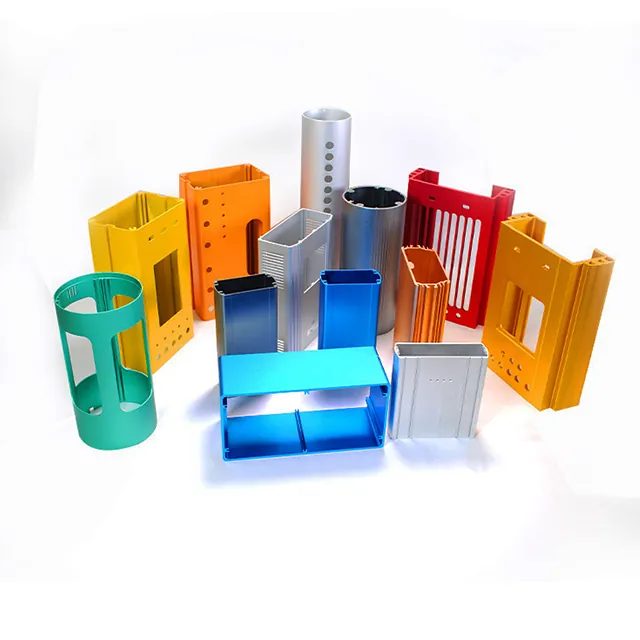
Modern extrusion presses benefit significantly from automation. Whether it’s loading billets, controlling ram speed, or adjusting die temperatures, automation helps ensure consistency, efficiency, and safety.
Automation allows precise control over temperature, pressure, speed, and position in extrusion presses, improving product quality and reducing human error.
Benefits of automation
- Faster cycle times – Automated systems reduce downtime and speed up changeovers.
- Improved consistency – Sensors and software keep variables stable.
- Enhanced safety – Reduces manual work near hot or high-pressure components.
- Data logging – Real-time tracking supports quality control and process improvement.
Automation features
| Area of Automation | Klíčové vlastnosti | Výhody |
|---|---|---|
| Billet Handling | Robotic arms, conveyors, scalping tools | Speed, safety, consistency |
| Press Control | PLCs, feedback sensors, hydraulic control | Accuracy, energy savings |
| Die Changeover | Auto die-slide systems, cooling control | Shorter downtime, fewer errors |
| Profile Monitoring | Cameras, sensors, measurement tools | Detects defects early |
Future outlook
Extrusion lines are becoming smarter. Integration with factory systems, AI for process optimization, and real-time alerts are transforming how presses operate. Automation not only boosts performance but also enables manufacturers to meet tighter tolerances and higher demand.
Automation in aluminium extrusion press systems leads to improved throughput and consistency.Pravda
Automated loaders, controls and data systems reduce cycle times and defects.
Automation adds cost but offers no measurable benefit in an extrusion press line.False
The literature shows automation reduces downtime, improves quality and increases output.
Závěr
An aluminum extrusion press is the core machine behind shaped aluminum profiles. It operates by pushing a heated billet through a die, using hydraulic force. Tonnage capacity determines what sizes and alloys it can handle. Proper billet loading is essential for safety and efficiency. And with automation, the entire process becomes faster, more accurate, and safer—ready to meet today’s industrial demands.