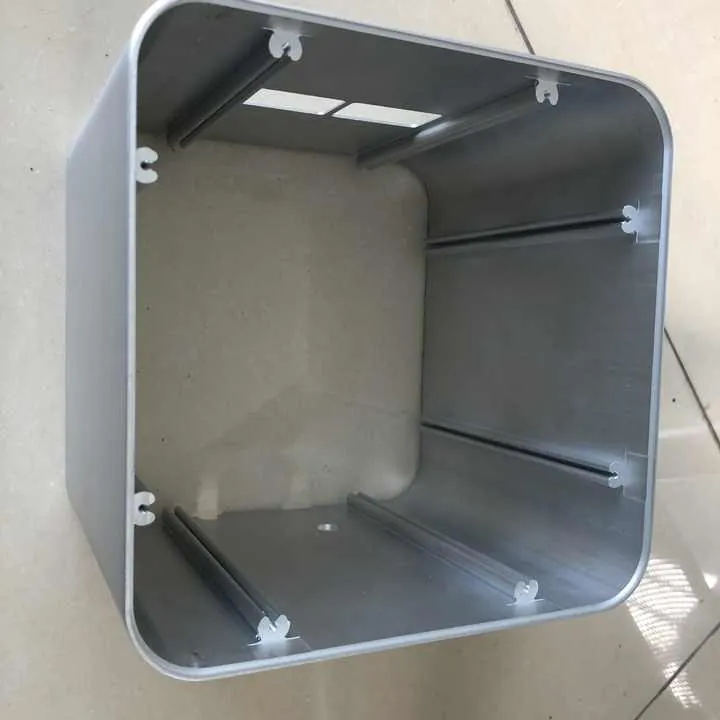
What are protrusion brackets for aluminum extrusion?

When you’re trying to lock two aluminum profiles together and worry about slippage or misalignment, you might need one simple item: a protrusion bracket.
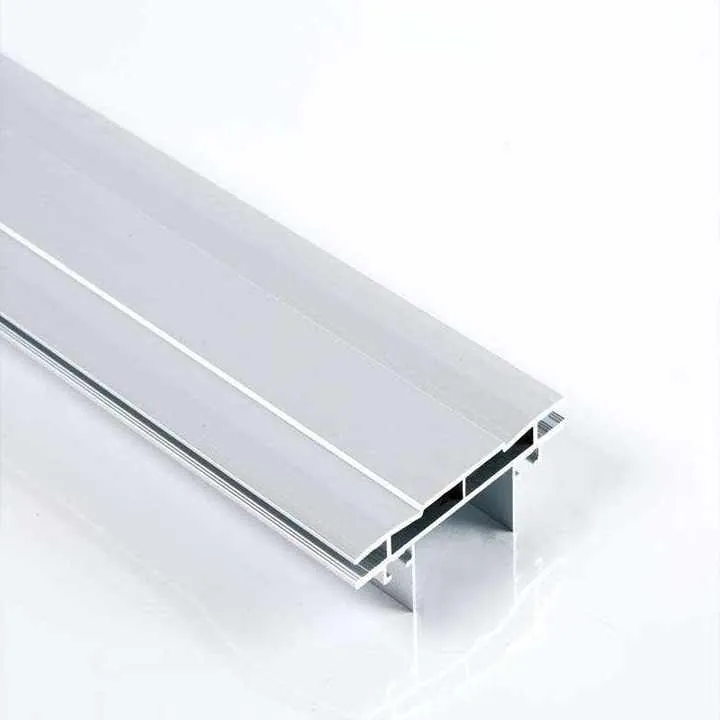
Protrusion brackets are structural add-ons designed to reinforce aluminum extrusion joints by inserting or mounting into profiles, improving joint strength, alignment, and overall rigidity.
Let’s look at how they support joints, why they enhance rigidity, where they’re installed, and whether they improve load stability.
How do brackets support extrusion joints?
Imagine needing a solid joint between two aluminum profiles — but friction or a single bolt just won’t cut it. You ask: how does a bracket really help?
Brackets reinforce extrusion joints by offering a mechanical locking surface that holds profiles together, absorbing shear, tensile, and torque forces that would otherwise loosen or misalign the connection.

Mechanical forces at the joint
Aluminum extrusion joints can be exposed to:
- Shear forces — side loads that cause slipping.
- Tension/compression — pulling or pushing loads.
- Torque — rotational force trying to twist the connection.
- Micro-motion — small shifts over time due to vibration or loading.
Without a proper locking device, connections can loosen or fail under stress.
How protrusion brackets help
- Jsou . lock into slots or mount flush with profile surfaces to create a non-slipping joint.
- Fasteners anchor the bracket to each profile, distributing forces across the bracket.
- Jsou . reduce reliance on a single bolt and improve force distribution.
- Jsou . align parts, ensuring geometry stays true across long spans or angled joints.
Proč je to důležité
Joints are typically the weakest link in a frame. Brackets elevate joint performance by:
- Adding reinforcement where bolts alone are not enough.
- Preventing rotation or shifting under load.
- Increasing life expectancy of the frame.
Bracket support alone (without bolts or screws) is sufficient to prevent sliding in a high-load aluminum extrusion jointFalse
Even with a bracket, bolts/screws or other fasteners are typically required to secure the join; bracket alone rarely suffices for high load use.
Using a protrusion bracket in an aluminum extrusion joint can reduce dependence on just slot bolts and improve alignmentPravda
A protrusion bracket that mechanically engages the extrusion profile offers improved alignment and takes some of the load off just the slot bolts.
Why protrusion brackets enhance rigidity?
When your frame needs to resist flex, shake, or vibration, the question is: how can a small bracket make it stiffer?
Protrusion brackets enhance rigidity by adding support points, reducing free span, locking out motion paths, and stiffening connections under load.
Understanding structural rigidity
Rigidity refers to how much a frame resists bending, twisting, or deflection under load. For aluminum profiles, rigidity depends on:
- Material properties
- Cross-section design
- Length of unsupported spans
- Ztuhlost kloubů
How brackets increase stiffness
- Extra support nodes: A bracket turns a free span into a supported section.
- Shorter free spans: Adding mid-span or corner brackets reduces bending distance.
- Stronger joints: Brackets reduce play or wobble at joints, adding stiffness.
- Blocked motion paths: They stop angular or translational slip at nodes.
- Distributed stress: Load spreads across the bracket face, not just through a bolt.
Tipy pro design
- Use brackets in vibration-prone or precision applications.
- Match bracket materials to profiles (avoid galvanic corrosion).
- Tighten bolts properly — pre-tension matters.
- Check for flush contact — gaps reduce effect.
- Use brackets with mechanical keys (protrusions or lugs) for best performance.
Adding a protrusion bracket at a joint does not affect the overall rigidity of an aluminum extrusion structureFalse
Adding a properly designed and installed protrusion bracket can improve rigidity by reducing movement and increasing support.
Protrusion brackets help shorten free span and improve connection stiffness, thereby increasing structural rigidityPravda
By adding a bracket that provides fixed support at a connection, the free length is reduced and connection stiffness increased, leading to higher rigidity.
Where are these brackets installed?
Maybe you think: can’t you just stick brackets anywhere? Not quite. Position matters.
Protrusion brackets are typically installed at load-bearing joints, corners, cross-nodes, column bases, or endpoints to improve load transfer, frame alignment, and resistance to motion.

Common install positions
- Corners (90° joints) — keeps square frames square.
- Beam-to-column intersections — strengthens vertical-horizontal joints.
- Base anchoring — stabilizes vertical members to the ground.
- Over long spans — supports mid-beam deflection or vibration zones.
- Profile endpoints — reinforces open ends that carry load or mount components.
Table: Install zones and purpose
| Installation Point | Primary Function |
|---|---|
| Rohové spoje | Locks frame angle and resists torsion |
| Vertical-horizontal | Absorbs shear and moment loads |
| Base anchors | Fixes vertical legs securely |
| Mid-span supports | Reduces deflection in long beams |
| End brackets | Reinforces terminals under force |
Osvědčené postupy
- Use brackets designed for your profile series (e.g., 30×30, 40×80).
- Pre-tighten bolts to spec.
- Avoid mixing dissimilar metals unless isolated.
- Ensure clean, flush mounting surfaces.
Protrusion brackets should only be installed at the corners of an aluminum extrusion frameFalse
While corners are common, brackets can and should also be installed at other critical nodes such as intersections, base fixings, or over large spans.
Installing protrusion brackets at beam‑to‑column and base anchor points of an aluminum extrusion frame improves structural stabilityPravda
At beam‑column intersections and base fixings, brackets help stabilize connections and anchor the frame, improving overall stability.
Can brackets improve load stability?
If your extrusion system shakes during use or drifts under load, the real issue may be joint instability. So, do brackets help?
Yes — properly designed and placed protrusion brackets improve structural stability under static, dynamic, and fatigue loads by strengthening joints and reducing unwanted motion.

Load types that challenge stability
- Statické zatížení — long-term weight causes sag or shift.
- Dynamic/vibration loads — motion from machines or equipment cycles joints loose.
- Shock loads — impacts or startup jolts destabilize structure.
- Fatigue loads — repeated small movements weaken joints over time.
Jak pomáhají závorky
- Stiffen the connection — higher stiffness resists load-induced displacement.
- Minimize micro-motion — prevents wear and bolt loosening from vibration.
- Improve load distribution — shares stress between bracket and bolts.
- Prevent drift or creep — keeps frame geometry from warping over time.
- Enhance fatigue resistance — stronger joints last longer under cycles.
When to use them
- High-vibration or repetitive-motion environments
- Long-span systems with center sag
- Mounted equipment or frames that shift over time
- Applications where long-term alignment matters
Protrusion brackets have no impact on dynamic load stability of an aluminum extrusion frameFalse
Properly installed protrusion brackets can improve dynamic load stability by reducing joint micro‑motion and increasing connection stiffness.
Adding protrusion brackets to an aluminum extrusion structural system can reduce long‑term deformation and improve fatigue lifePravda
By enhancing connection stiffness and reducing micro‑motion, protrusion brackets help reduce deformation accumulation and improve fatigue life of the structure.
Závěr
Protrusion brackets may seem small, but their structural effect is significant. Whether you’re solving a stability issue, reducing vibration, or boosting rigidity, these brackets give your aluminum extrusion system the backup it needs — mechanically, reliably, and simply.