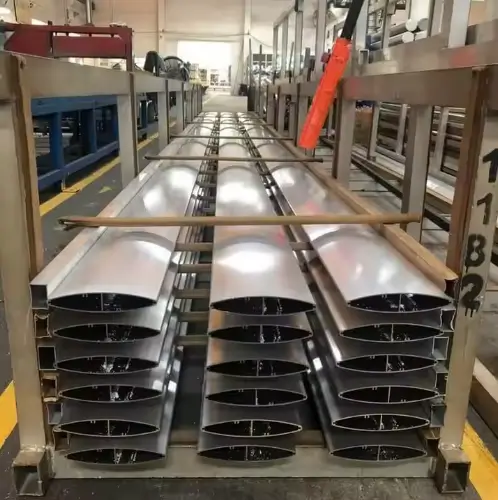
Omezení poměru extruze hliníkových profilů?

Aluminum extrusion often fails when the ratio is pushed too far. Profiles crack, tools break, and costs rise fast. Many buyers face this problem after drawings are already fixed.
The extrusion ratio of aluminum profiles is limited by metal flow stress, billet condition, die strength, alloy type, and press capability. When any one factor reaches its limit, stable extrusion is no longer possible.
Many engineers ask for higher ratios to save weight or reduce machining. That makes sense. But extrusion is not unlimited. Knowing the real limits helps avoid redesigns, delays, and quality risks.
What limits the extrusion ratio in aluminum profiles?
Aluminum extrusion ratio is the billet cross section divided by the final profile cross section. In theory, higher is better. In practice, several physical limits appear very early.

The first hard limit comes from metal flow stress. Aluminum must deform and pass through the die opening. As the ratio increases, resistance rises fast. The press must generate much higher force. Once required force exceeds press capacity, extrusion stops being possible.
The second limit is die strength. A high ratio means thin die openings and long bearing lengths. Stress inside the die increases. If stress exceeds die steel strength, cracks or breakage occur. Tool life drops sharply even before failure.
The third limit comes from temperature. Higher ratios create more friction and deformation heat. If metal temperature rises too much, surface tearing and hot shortness appear. If temperature drops too much, flow stops and pressure spikes.
Mechanical force limits
Extrusion force grows almost linearly with extrusion ratio for the same alloy and billet size. Press capacity therefore sets a hard ceiling.
| Faktor | Effect on extrusion ratio |
|---|---|
| Tonáž lisu | Direct limit |
| Průměr sochoru | Larger billets allow higher ratios |
| Container condition | Worn containers reduce max ratio |
If force is too high, press components fatigue faster. Long term damage often costs more than a redesign.
Die stress limits
Die stress does not scale gently. It rises sharply once openings become narrow.
- Thin ribs increase stress
- Long bearings increase stress
- Asymmetric profiles increase stress
Once die stress is too high, failure is sudden. There is little warning.
Metal flow stability
High ratios increase flow imbalance. Some zones accelerate while others lag. This causes:
- Kroucení
- Bowing
- Povrchové linie
- Vnitřní dutiny
Stable flow becomes harder as ratio increases.
Extrusion ratio is limited mainly by press force and die strength.Pravda
Higher extrusion ratios increase required force and internal die stress until equipment or tooling limits are reached.
Aluminum extrusion ratio has no real upper limit if speed is reduced enough.False
Even at very low speed, press capacity, die strength, and metal flow physics impose hard limits.
How does alloy choice impact achievable ratio?
All aluminum alloys do not extrude the same way. Alloy choice often matters more than press size.
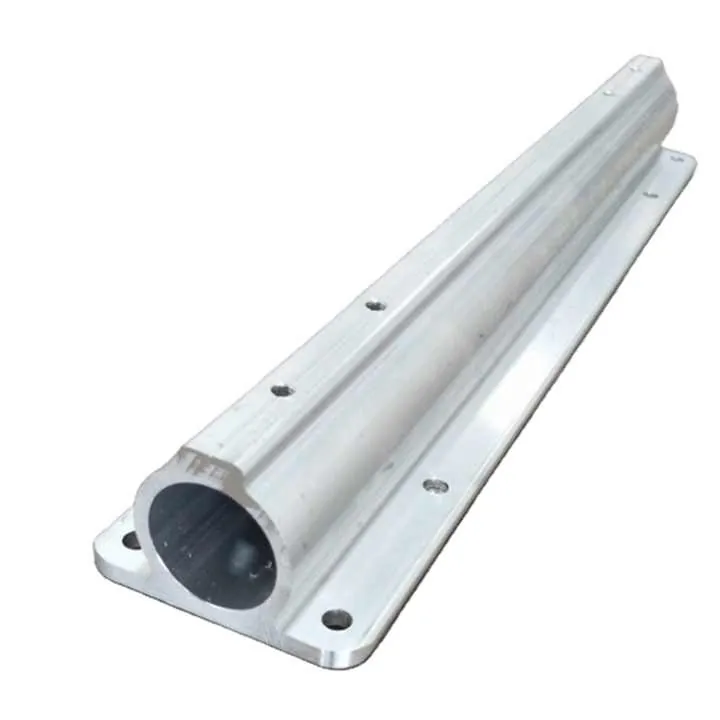
Soft alloys flow easily. Hard alloys resist deformation. This directly affects achievable extrusion ratio.
6xxx alloys are the most extrusion friendly. 6063 allows much higher ratios than 6061. 6082 allows lower ratios than both. 7xxx alloys are much more limited.
Flow stress differences by alloy
Each alloy has a different flow stress at extrusion temperature. Higher flow stress means more force and lower max ratio.
| Alloy family | Relative extrusion ratio capability |
|---|---|
| 1xxx | Velmi vysoká |
| 3xxx | Vysoká |
| 5xxx | Střední |
| 6xxx | High to medium |
| 7xxx | Nízká |
6063-T5 can often reach ratios above 80:1 under good conditions. 6061-T6 may struggle above 50:1. Some 7xxx alloys are limited to below 20:1.
Alloy chemistry effects
Small chemistry changes matter.
- Higher magnesium increases strength but lowers flow
- Silicon improves extrudability
- Copper reduces extrudability
Recycled content can also raise impurity levels, which reduces flow consistency at high ratios.
Vliv tepelného zpracování
Extrusion is done in a hot condition, but alloy response still matters.
- Homogenized billets flow better
- Poor homogenization increases pressure spikes
- Uneven billet chemistry causes flow imbalance
Choosing the wrong alloy for a thin profile often forces ratio beyond safe limits.
6063 aluminum can usually reach higher extrusion ratios than 6061.Pravda
6063 has lower flow stress and better extrudability, allowing higher ratios under similar conditions.
All 6xxx alloys have nearly identical extrusion ratio limits.False
Even within the same family, chemistry and strength differences cause large variation in achievable ratios.
Can thin-walled sections reach high extrusion ratios?
Thin walls are the most common reason extrusion ratios are pushed too high.

In many drawings, wall thickness is reduced to save weight. But thin walls increase extrusion ratio and die stress at the same time. This is a dangerous combination.
Wall thickness vs ratio
As wall thickness decreases, profile area shrinks. Ratio rises fast.
| Tloušťka stěny | Typical safe ratio range |
|---|---|
| Above 3.0 mm | 30:1 to 60:1 |
| 2.0 to 3.0 mm | 40:1 to 80:1 |
| 1.0 to 2.0 mm | 50:1 to 100:1 |
| Below 1.0 mm | Highly risky |
Thin walls below 1.2 mm often require special alloys, slow speeds, and short die life.
Flow balance challenges
Thin sections cool faster. Thick sections stay hot longer. This causes uneven flow.
- Thin walls freeze early
- Thick walls keep flowing
- Profile distorts at exit
High ratio makes this worse because flow velocity differences grow.
Structural die limits
Very thin walls require very thin die tongues. These tongues bend or break under high load.
Even if extrusion is possible, scrap rate may be high.
Thin walls can reach high ratios only when:
- Alloy is soft
- Press is large
- Speed is very slow
- Die design is optimized
This increases cost sharply.
Thin-walled aluminum profiles can reach high extrusion ratios only under controlled conditions.Pravda
Thin walls increase die stress and flow imbalance, requiring optimized alloy, speed, and tooling.
Wall thickness has little effect on extrusion ratio limits.False
Wall thickness directly affects profile area, die stress, and metal flow stability.
Which production parameters define max extrusion ratios?
Even with the right alloy and design, production parameters decide the final limit.
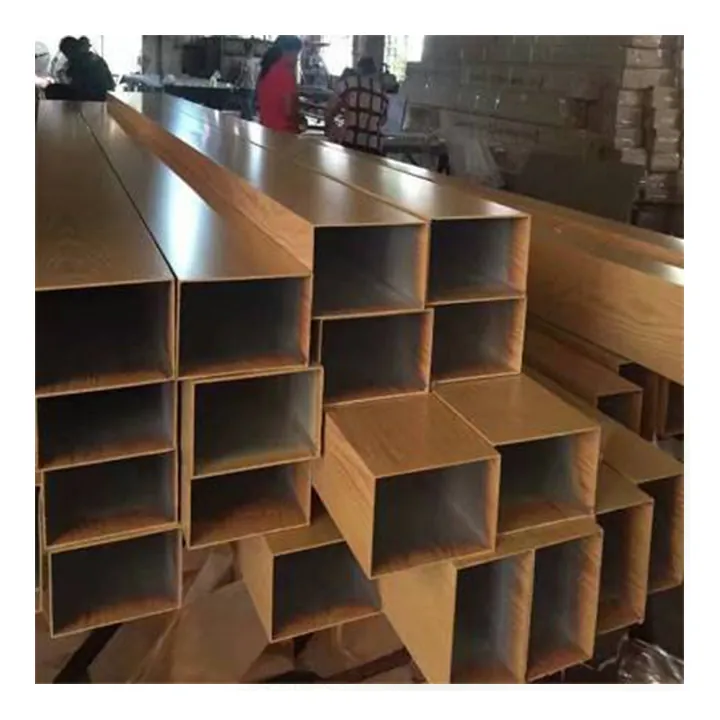
These parameters are often adjustable, but only within a narrow safe window.
Teplota polotovaru
Billet temperature controls flow stress.
- Too low: pressure spikes, die damage
- Too high: surface tearing, grain growth
Higher ratios require higher billet temperature, but only up to a point.
Extrusion speed
Slower speed reduces pressure slightly and improves flow stability.
- High ratio often needs slow speed
- Too slow reduces productivity
- Too fast causes surface defects
Speed adjustment cannot overcome press or die limits.
Lubrication and container condition
Friction adds load.
- Worn containers increase friction
- Poor lubrication raises pressure
- Dirty billet surfaces increase resistance
Good maintenance can extend ratio limits by 5 to 10 percent.
Die design parameters
Die design is the biggest lever after alloy choice.
- Bearing length controls flow
- Pocket design balances velocity
- Die steel quality affects strength
Poor die design can reduce achievable ratio by half.
| Parametr | Effect on max ratio |
|---|---|
| Billet temp | Střední |
| Rychlost | Střední |
| Konstrukce matrice | Vysoká |
| Údržba | Střední |
Press stiffness and alignment
Older presses flex more under load. This causes uneven flow and die stress concentration. Modern presses handle high ratios better even at similar tonnage.
Die design has a larger impact on max extrusion ratio than extrusion speed.Pravda
Optimized die geometry improves flow and reduces stress far more than speed changes alone.
Increasing billet temperature can always increase extrusion ratio safely.False
Too high temperature causes surface defects and material instability.
Závěr
Aluminum extrusion ratio is limited by physics, tooling, alloy, and process control. Pushing beyond these limits raises cost and risk. Understanding real boundaries early leads to better designs and stable production.