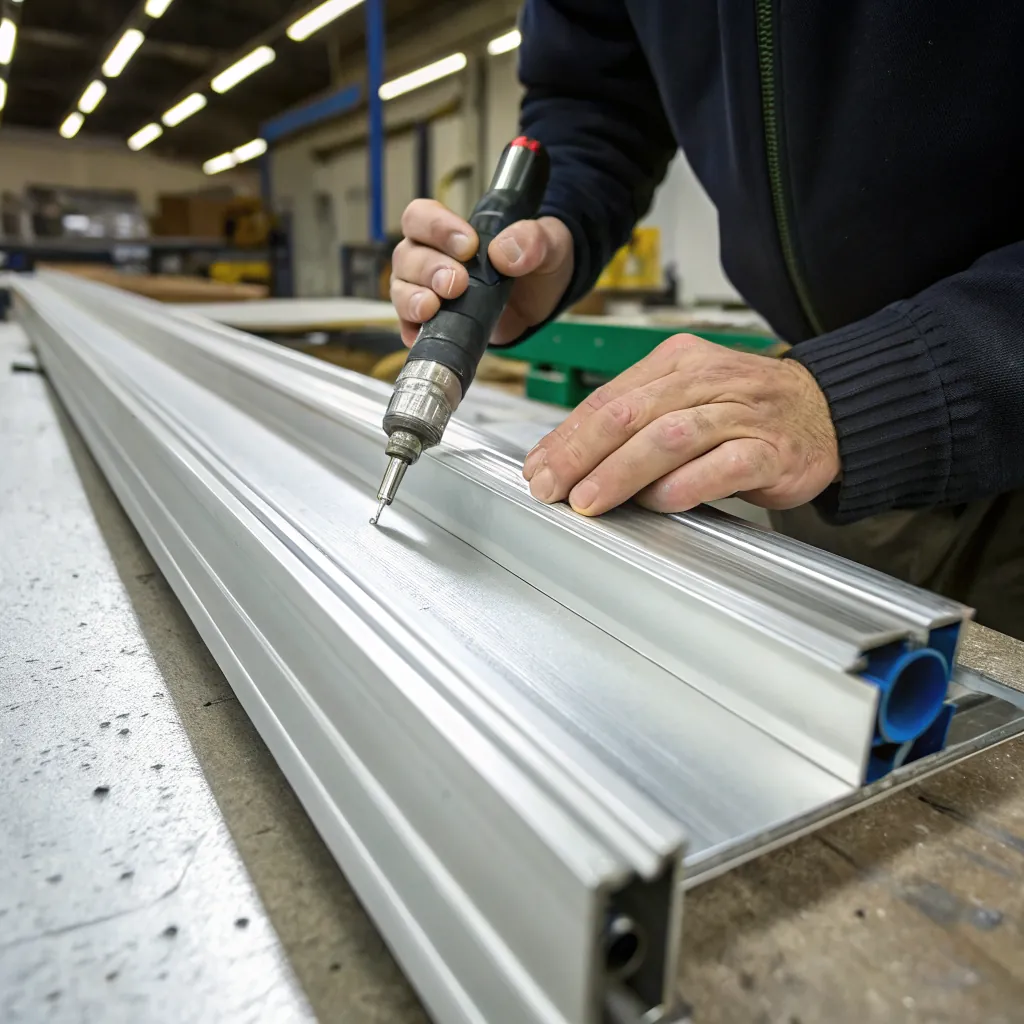
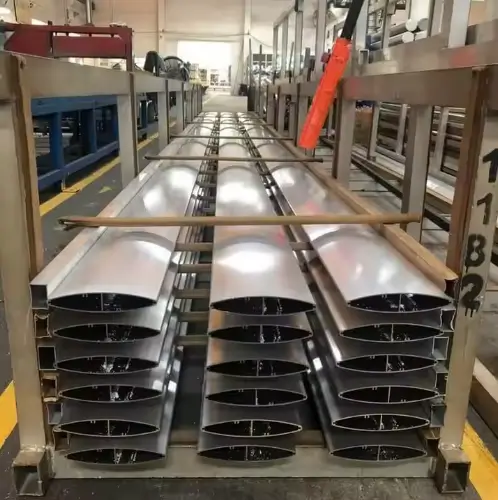
Aluminum extrusion hardness levels by alloy?

Extruded aluminum with soft, low-hardness alloy sometimes bends, wears or deforms under load. That makes parts fail or wear quickly.
Choosing the right alloy and temper gives extruded aluminum profiles the hardness needed for strength, wear resistance, and reliable machining.
Let’s explore which alloys offer the highest hardness, how to measure it, how tempering affects it, and how it influences machinability.
Which aluminum alloys have the highest hardness?
When you pick aluminum alloy for extrusions, alloy chemistry matters a lot. Some alloys naturally harden more than others — that gives higher strength, hardness, and load capacity.
Alloys in the 7000-series (like 7075) often reach the highest hardness among common aluminum alloys. In 6000-series, alloys like 6061-T6 and 6082-T6 have moderate to high hardness; softer alloys (like 6063) yield lower hardness but easier forming and finish.
Comparison of typical alloys and hardness
| Alloy (common in extrusions or wrought) | Typical Temper / Condition | Relative Hardness / Strength* | Typical Use / Comments |
|---|---|---|---|
| 7075 (7xxx-series) | T6 | Highest among common aluminum | Aerospace, high-stress parts |
| 6082-T6 (6xxx-series) | T6 | High, structural | Frames, heavy-duty profiles |
| 6061-T6 | T6 | Mírná až vysoká | General purpose, machine parts |
| 6005-T5 / T6 | T5 or T6 | Střední | Moderate strength, better extrudability |
| 6063-T5 / T6 | T5 or T6 | Dolní | Architectural, decorative uses |
* Based on Brinell or Rockwell hardness
Alloy 7075-T6 has higher hardness than 6061-T6.Pravda
7075-T6 uses more alloying elements and stronger precipitation hardening compared with 6061-T6, giving higher hardness and strength.
6063-T6 extrusions are softer and easier to form than 6061-T6.Pravda
6063 has lower hardness and yield strength, which improves formability and surface finish for extrusion and shaping.
How is hardness measured in extruded profiles?
Hardness is not guesswork: producers and inspectors measure it using standard scales and instruments.
Hardness testing ensures extruded profiles meet strength and wear requirements before delivery or machining.

Common methods
- Brinell Hardness (HB): Widely used for aluminum, uses a ball and measures indentation size.
- Rockwell B (HRB): Measures penetration depth under load, suited for softer metals like aluminum.
- Vickers (HV): Precise, for small areas or thin walls.
Typical results:
- 6061-T6: ~95 HB, ~60 HRB
- 6063-T6: ~73 HB
- 7075-T6: ~150 HB
Hardness testing is essential for confirming correct temper. If heat treatment is wrong or inconsistent, actual hardness may fall below spec, risking failure in load applications.
6061-T6 aluminum extrusions typically test around 95 HB or 60 HRB in hardness.Pravda
6061-T6 commonly reports ~95 Brinell hardness or ~60 Rockwell B in technical data sheets.
Hardness testing of extruded aluminum uses standard methods like Brinell, Rockwell B, or Vickers scales.Pravda
These are standard hardness test methods for aluminum alloys, commonly used to verify temper and strength.
Can tempering processes increase surface hardness?
Yes. For heat-treatable aluminum alloys, proper tempering (heat treatment + aging) significantly increases hardness and strength.
Tempering (or aging) enables precipitation hardening in alloys with proper chemistry. With correct extruding and heat treatment, hardness and strength rise substantially.

Tempering process:
- Tepelné zpracování roztoku: Heat alloy to dissolve elements
- Hašení: Rapid cool to lock structure
- Aging (T5, T6): Precipitates form, hardening material
Only certain alloys (like 6061, 6082, 7075) respond to tempering. Non-heat-treatable alloys (like 1100 or 3003) rely on cold working to gain hardness.
Without correct temper, even high-grade alloy stays soft. That’s why specifying temper (e.g., T5 or T6) is as important as alloy number.
Precipitation hardening through tempering significantly increases aluminum alloy hardness after extrusion.Pravda
Proper heat treatment and aging cause precipitates that strengthen the alloy and raise hardness compared to as-extruded or annealed condition.
Tempering does not change hardness of non-heat-treatable aluminum alloys.Pravda
Only heat-treatable alloy series respond to precipitation hardening; non-heat-treatable alloys rely on work hardening and do not harden via tempering.
Do harder alloys affect machinability?
A harder alloy is stronger and more wear-resistant. But that usually means it’s harder to machine.
Yes — generally harder aluminum alloys or high-strength tempers make machining more challenging compared with softer alloys. Softer alloys offer easier cutting, better surface finish, and lower tool wear.

Machining effects
- Soft alloys: Easier to cut, less tool wear, smoother finish (e.g. 6063, 3003)
- Hard alloys: Need sharper tools, slower speeds, more coolant; may wear tools faster (e.g. 7075, 6082)
In many cases, designers must balance strength with machinability. If the part needs tight tolerance or long machining cycles, going with a slightly softer but still strong alloy (like 6061) may help.
Softer aluminum alloys like 6063 are easier to machine than harder ones like 6061 or 6082.Pravda
Lower hardness reduces tool wear and allows smoother machining and finishing.
Harder aluminum alloys never affect machining difficulty compared to softer alloys.False
Higher hardness increases tool wear, needs stronger cutting tools or slower speeds, so machining becomes more difficult than with soft alloys.
Závěr
Aluminum extrusion hardness depends on alloy and temper. Alloys like 7075, 6082, 6061 give higher hardness and strength after proper tempering, while 6063 offers easier forming and machining. Measuring hardness by Brinell, Rockwell or Vickers ensures you get correct strength. Tempering (for heat-treatable alloys) effectively increases hardness. But harder alloys reduce machinability and complicate processing. Choice must balance strength needs, machining, formability, and finish.