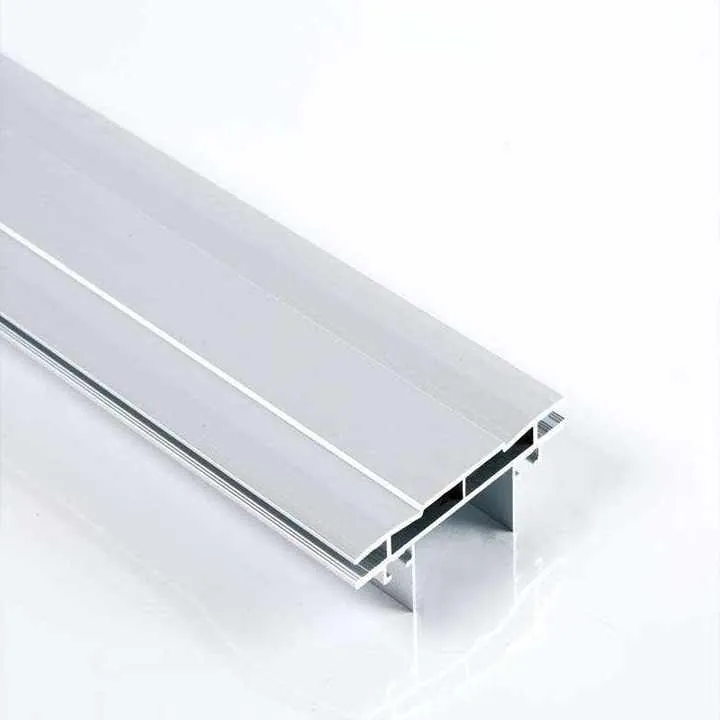
Can you weld aluminum extrusion?

Many people think aluminum extrusion can’t be welded—it’s lightweight, it warps easily, it’s tricky to clean. But welding is possible with the right prep and tools.
Yes, aluminum extrusions can be welded using TIG, MIG, or friction stir welding, though special care is required due to their shape, thickness, and alloy composition.
Welding extrusions opens up possibilities for stronger, seamless joints in frames, enclosures, and complex parts—but only if done correctly.
What welding methods suit extrusions?
Choosing the wrong welding method will cause warping, discoloration, or cracked welds. Each method has different strengths.
TIG and MIG welding are the most common for aluminum extrusions, while friction stir welding offers high strength for specific applications.

Each method has trade-offs in terms of setup, speed, and weld quality. I’ve worked with all three on different extrusion projects—here’s what I’ve learned.
1. TIG welding (GTAW)
TIG (Tungsten Inert Gas) welding is ideal for precision work. It gives the welder full control over heat and filler metal. It’s slower but creates cleaner welds with minimal spatter.
- Best for thin-wall profiles
- Cleaner welds
- Requires more skill
- Works well with 6061 and 6063 extrusions
2. MIG welding (GMAW)
MIG (Metal Inert Gas) welding is faster and easier for large parts or repetitive work. It’s more forgiving but can produce more spatter and needs better prep.
- Good for thicker sections
- Faster than TIG
- Slightly less precise
- Preferred for high-volume fabrication
3. Friction stir welding (FSW)
FSW is a solid-state process where a rotating tool generates friction to join parts. It doesn’t melt the metal and creates strong, distortion-free welds.
- No filler required
- High strength joints
- Expensive equipment
- Ideal for long straight seams
| Method | Pros | Cons | Best For |
|---|---|---|---|
| TIG Welding | Clean, precise | Slow, skill required | Thin profiles, clean finishes |
| MIG Welding | Fast, easier to learn | More spatter, less control | Larger parts, thick extrusions |
| FSW | No melting, high strength | High equipment cost | Aerospace, structural frames |
In my shop, we TIG weld small custom frames and use MIG for larger industrial parts. When working with complex 6061-T6 extrusions, TIG helps control heat input better.
TIG welding offers greater control and cleaner welds, making it suitable for thin aluminum extrusionsTrue
TIG is ideal for precise, low-distortion welds especially with thin-wall materials like aluminum extrusions.
Friction stir welding melts the aluminum to join the profilesFalse
Friction stir welding is a solid-state process that does not melt the metal, which helps avoid common issues like porosity and distortion.
Why cleaning aluminum improves welding?
Aluminum looks clean, but it often hides a barrier that stops proper welding.
Cleaning aluminum extrusion removes oxide layers and contaminants, which is essential for strong, defect-free welds.

Before welding aluminum extrusion, we always clean it thoroughly. The metal forms an oxide layer almost instantly when exposed to air. This layer melts at a much higher temperature than aluminum itself, making it a barrier during welding.
Common surface contaminants
- Oxide layer: Thin, hard layer that interferes with arc and fusion
- Oil or lubricant: From cutting, extrusion, or storage
- Moisture: Especially dangerous with MIG; causes porosity
- Dirt and dust: Reduces weld penetration and strength
Cleaning steps we follow
- Degrease: Use acetone or a solvent to wipe the surface
- Wire brushing: Stainless steel brush (used only for aluminum) to break the oxide
- Dry air blast: Remove particles and moisture
- Weld quickly: Oxide layer reforms within hours
We also preheat thicker extrusions to reduce thermal shock and help remove remaining moisture or grease.
Problems caused by poor cleaning
- Porosity: Tiny gas pockets that weaken welds
- Cracks: From contamination or poor fusion
- Inconsistent arc: Arc jumping or sputtering
- Discoloration: A sign of contaminated surface or overheating
I once skipped cleaning a batch of profiles to save time. The welds looked good at first, but they cracked after a few weeks in the field. That taught me never to ignore prep.
Aluminum oxide melts at a lower temperature than pure aluminum and helps during weldingFalse
Aluminum oxide actually melts at a much higher temperature and blocks weld fusion unless removed.
Cleaning with acetone and a stainless-steel brush improves weld quality on aluminum extrusionsTrue
This method removes oil and oxide layers, allowing proper arc and fusion.
How to avoid distortion when welding extrusions?
Thin aluminum walls and heat don’t mix well—distortion is a real threat if you’re not careful.
To avoid distortion, control heat input, use proper joint design, clamp securely, and alternate weld sequences.

Extrusions are thin-walled and often have complex shapes, like hollow channels or T-slots. They expand quickly when heated, and if the cooling isn’t even, they twist or warp.
My top distortion-control methods
- Low heat input: Use pulsed MIG or TIG with fine control
- Short welds: Stitch welding instead of full seams
- Backstep welding: Weld in the opposite direction to reduce buildup
- Symmetrical welds: Balance heat across both sides
- Use chill bars: Draw heat away from critical areas
Material and joint design tips
- Choose thicker profiles if welding is essential
- Add small tabs or extensions to absorb heat
- Avoid complex tight-tolerance joints
- Use matching filler alloy to reduce differential contraction
We had a customer request welded 2020 extrusions for a robotics frame. First run? It looked like a banana—completely warped. After switching to TIG, using chill blocks, and applying clamps every 6 inches, the second batch came out perfect.
Monitor cooling
Let the welded structure cool slowly. Avoid fans or cold air blasts. Sudden cooling introduces stress and leads to cracks or shape changes.
Clamping aluminum extrusion and using balanced weld sequences helps reduce distortionTrue
Controlling expansion and cooling on both sides ensures the profile stays straight after welding.
Using high heat and long welds is best to keep aluminum extrusions from warpingFalse
High heat and continuous welds increase the chance of distortion—short, controlled welds are better.
Can fixtures stabilize extrusions during welding?
Trying to weld freehand is a recipe for misalignment and gaps—fixtures are essential.
Fixtures and clamps stabilize aluminum extrusions during welding, prevent movement, and help control warping and misalignment.

In our welding bay, we build custom fixtures for every new extrusion design. They may take time to prepare, but they pay off in accuracy and consistency.
Benefits of using fixtures
- Hold parts in place: Prevents shifting during tack or full weld
- Ensure alignment: Critical for frames, corners, or closed profiles
- Minimize distortion: Distributes stress more evenly
- Repeatability: Easier for batch production
Types of fixtures we use
| Fixture Type | Purpose |
|---|---|
| Steel angle jigs | Hold 90° corners for frames |
| Modular clamping tables | Versatile setups for custom parts |
| Sliding clamp rails | Lock T-slot profiles in line |
| V-block supports | Stabilize round or curved profiles |
We also use ceramic backing strips for open seams and aluminum chill blocks to draw away heat. For thin-walled parts, sandwich fixtures work best—they hold the part from both sides and prevent collapse.
When to fixture
- When welding more than one joint
- When tolerance is tight
- When the part includes long extrusions
- When repeatability is key
The only time I skip fixtures is for simple single-joint repairs—but even then, I often use basic clamps. Good fixtures reduce post-weld correction, which saves time and headaches later.
Fixtures help hold extrusions in place, reduce warping, and improve weld alignmentTrue
Fixtures stabilize the parts and make it easier to weld accurately and repeatedly.
Aluminum extrusions are rigid enough that they never need fixturing during weldingFalse
Aluminum extrusions are prone to distortion and misalignment—fixtures are often necessary.
Conclusion
Welding aluminum extrusions is absolutely possible—but it requires understanding the material, choosing the right process, and managing heat carefully. From TIG precision to strong MIG welds, success depends on prep, cleaning, fixturing, and smart technique. I’ve learned through hands-on experience that when done right, welding expands what we can build with extrusion.