Can You Weld 7075 T6 Aluminum Tubes?

I once attempted to weld a 7075-T6 aluminum bike frame tube. The seams cracked immediately. That taught me the real difficulty behind welding this alloy.
Welding 7075?T6 is possible but challenging. You need special processes, strict prep, and proper post-weld treatment to restore strength.
Let’s explore the issues, methods, and steps needed to weld and treat 7075-T6 tubing.
What challenges exist when welding 7075-T6 aluminum?

7075?T6 is a high-strength aluminum alloy rich in zinc and magnesium. Its composition makes welding tough.
The main problems are hot cracking, high cracking sensitivity, loss of mechanical properties, and porosity.
Key Challenges
| Problem | Description |
|---|---|
| Hot Cracking | The weld zone forms cracks when cooling under stress. |
| Loss of Temper Strength | 7075?T6 loses most of its strength around weld area as T6 temper degrades. |
| Porosity | Trapped gas from moisture or controls can cause weak spots in welds. |
| Heat-Affected Zone (HAZ) | Surrounding metal becomes softer and prone to failure. |
| Distortion | Thin tubes warp easily under welding heat. |
Why These Happen
- Alloy content: Zn-Mg high levels make it crack-sensitive when welded.
- Rapid cooling: Causes stress from uneven contraction.
- Temper degradation: Heat above about 350°C changes its microstructure irreversibly.
- Hydrogen pickup: Even slight moisture causes gas pores.
In my first weld test, the tube cracked along the joint as it cooled. We realized we needed low-heat processes and post-weld heat treatment.
Which welding methods suit 7075-T6 tubes?

Welding 7075?T6 is not like welding 6061. It needs special methods and filler materials to reduce risks.
Friction stir welding (FSW) is the best method. Alternative methods include electron beam, laser, or MIG with special filler—but with less strength.
Common Welding Methods
| Method | Pros | Cons |
|---|---|---|
| Friction Stir Welding | Solid-state; no melting; minimal HAZ, no hot cracking | Needs special equipment, long prep time |
| Electron Beam Welding | Deep, precise weld; vacuum reduces porosity | Expensive, needs vacuum chamber, not widely portable |
| Laser Beam Welding | Fast, accurate, low heat input | Risk of porosity; needs filler; high cost equipment |
| MIG/TIG with Z703 filler | Familiar methods with custom filler | High crack risk, strength < T6; needs post-weld treatment |
Why FSW Works Best
FSW avoids melting, so no traditional weld pool. It joins metal while plastic, leading to strong sound joints with weld efficiency over 90% of base metal. Hot cracks are rare and the HAZ is small.
I once saw FSW bike tubes that handled full load tests even without post heat treatment.
How to pre-treat 7075?T6 before welding?
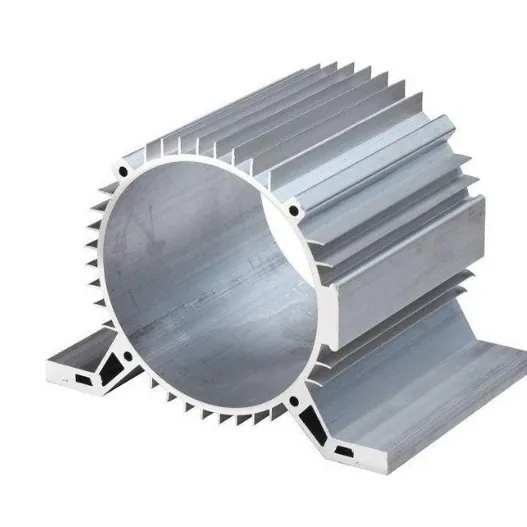
Proper pre-weld prep is vital to reduce porosity and cracking risk.
Key steps include degreasing, drying, removing oxide, machining fit, and sometimes pre-heating.
Pre?Treatment Steps
-
Clean and Degrease
Use acetone or alcohol to remove oils. Residue from adhesives or handling can cause pores. -
Dry Environment
Keep parts dry. Use warm air before welding to eliminate trapped moisture. -
Remove Oxide Layer
Light mechanical cleaning (wire brush, scotch-brite) is recommended if TIG/MIG. FSW removes it while stirring, so less prep. -
Fit Joint Precisely
Ensure tight, uniform contact. Gaps increase cracks and reduce weld strength. -
Pre?Heat (Optional)
FSW rarely needs pre-heat; TIG/MIG or laser methods benefit from ~150°C pre-heat to reduce thermal gradients. -
Clamping/Slices
Properly clamp to reduce movement during welding. For FSW, use backing plates and rigid fixtures.
I learned that welds cracked if fit was off even by 0.2?mm. Precise machining prevented failed joints.
What post-weld treatments are required for 7075-T6?

After welding, 7075?T6 won’t maintain strength unless it’s heat-treated back to T6 or T73. Mechanical polishing and corrosion protection follow.
Proper post-weld treatment is: solution heat treatment, quench, artificial aging, stress relief, then finish work.
Post?Weld Treatment Steps
-
Artificial Aging (T73)
- Heat at ~120°C–130°C for 24 hours. Offers good corrosion resistance and some strength recovery (~80–85% of T6).
-
Solution Heat Treatment (if needed)
- Heat to ~480°C then quench in water. Then age (120°C for 24h) to achieve T6 equivalent.
- Often done on assembled parts or critical joints.
-
Stress Relief
- Gentle vibration or heating reduces internal stress before aging to prevent warping.
-
Machining/Post Finishing
- Light machining can remove surface weld beads. Use fine polishing to avoid scratches.
-
Coating & Corrosion Protection
- Use primers and sealants to protect HAZ. Anodizing may require extra etch and seal processes.
-
Mechanical Inspection
- NDT checks (ultrasonic or dye-penetrant) verify weld integrity. Dimensional checks after heat reveal any distortion.
Typical Re-Treatment Results
| Condition | Tensile Strength | Typical % of Base Metal |
|---|---|---|
| As-Welded | 150–200 MPa | ~30% |
| T73 Aged | ~400 MPa | ~80% |
| Full T6 Re-aging | ~500–530 MPa | ~90–95% |
T73 is accepted for most structural components. Full re-aging is ideal for critical or highly stressed joints.
Conclusion
Welding 7075?T6 aluminum tubes is possible but comes with high challenges. Hot cracking, temper loss, and porosity require careful method selection—FSW being the top choice. Pre-weld prep is key, and post-weld heat treatment (T73 or T6) is essential to recover strength. Proper mechanical finishing, coating, and inspection ensure durable, safe welds for structural aluminum components.
True/False Questions
Friction stir welding avoids hot cracking in 7075?T6 welds because it works in solid stateTrue
FSW joins metal below melting point, avoiding weld pool and associated hot cracking.
As?welded 7075?T6 joints have nearly the same tensile strength as the original alloyFalse
Welding without post?treatment reduces strength to around 30?% of original until re?aging is applied.