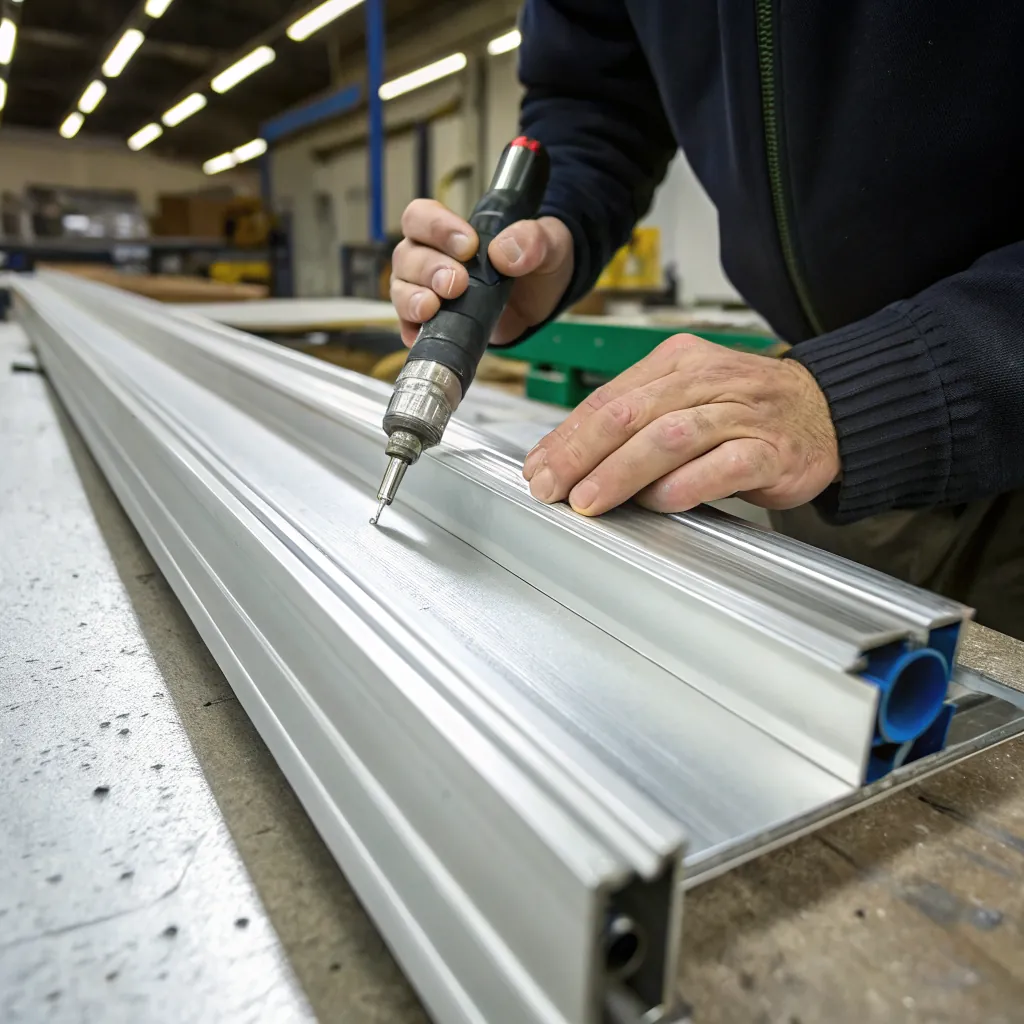
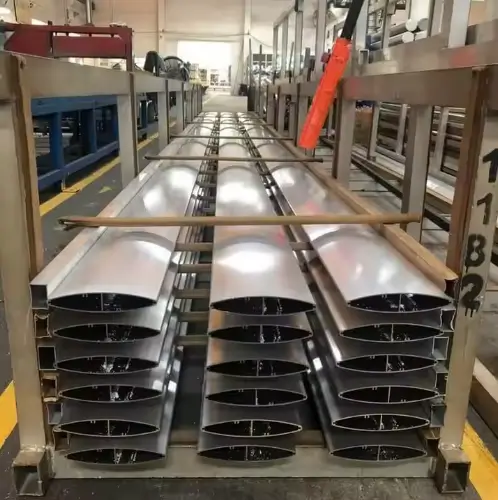
Възможност за заваряване на алуминиеви екструзии?

Sometimes aluminum extrusions need to be joined to form complex shapes or extended lengths. But is welding them really reliable, or will it compromise their strength?
Yes, aluminum extrusions can be reliably welded using the right methods, materials, and post-processing. Weld quality depends on alloy type, surface prep, and proper technique.
It’s not just about whether they can be welded — it’s about как to do it well, without risking part failure or structural weakness.
Can aluminum extrusions be reliably welded?
When welding aluminum extrusions, many engineers worry about strength loss, cracking, or uneven surfaces.
Aluminum extrusions can be reliably welded if the right alloy, surface preparation, and welding method are used. Welding success depends on controlling heat and managing oxide layers.

Aluminum is more sensitive to heat than steel. During welding, high temperatures can change the microstructure of the metal. If not done correctly, this can weaken the part.
Extrusions often come with tight tolerances and special surface finishes. Any welding process needs to respect those specs. One of the main challenges is the aluminum oxide layer. It melts at a much higher temperature than aluminum itself, which can prevent good bonding.
Another issue is porosity. If moisture or contaminants are present, gas pockets can form in the weld. These make the joint weaker and more likely to fail.
However, these issues are manageable. Using proper cleaning techniques, suitable filler materials, and experienced welders, it’s possible to achieve consistent, strong welds.
Key welding reliability tips
| Стъпка | Цел | Съвети |
|---|---|---|
| Почистване на повърхности | Remove oxide and dirt | Use stainless steel brush, degreaser |
| Предварително загряване | Avoid cracking, porosity | Heat up to 150–200°C before welding |
| Filler material | Match alloy properties | Use 4045, 4047, 5356 or 4043 |
| Control heat input | Reduce distortion | Use pulse welding or TIG for control |
Aluminum extrusions cannot be reliably welded under any conditions.Фалшив
Proper welding techniques and preparation make reliable aluminum extrusion welding possible.
Controlling heat and removing oxide layers are critical for reliable aluminum extrusion welding.Истински
Oxide layers and excessive heat can weaken welds, so they must be managed.
Which welding techniques work best for extrusions?
Not every welding method works well for extruded aluminum, especially when the shape is complex or thin.
TIG (GTAW) and MIG (GMAW) are the most reliable welding techniques for aluminum extrusions. TIG offers better precision, while MIG is faster and suited for thicker sections.

Each technique has its pros and cons. Here’s a breakdown:
Comparison of welding methods
| Метод | Предимства | Недостатъци | Най-добър за |
|---|---|---|---|
| TIG | Clean welds, precision control | Slower, skill-intensive | Thin walls, clean joints |
| MIG | Faster, more productive | More spatter, less control | High-volume, thick profiles |
| FSW | No filler, very strong joints | Expensive setup, limited shapes | Long straight extrusions |
Friction Stir Welding (FSW) is becoming more popular, especially for aerospace and rail projects. It doesn’t melt the material but stirs it at high pressure and temperature. This produces a very strong bond with minimal defects. But it works best on straight, simple parts.
TIG welding is preferred for custom or critical applications. It uses a non-consumable tungsten electrode and requires filler rod manually added. This gives the welder better control, especially on thin-walled extrusions.
MIG welding is better for production environments. It uses a continuously fed wire and is easier to automate. While it’s not as precise as TIG, it’s much faster.
TIG welding is ideal for thin aluminum extrusions requiring precision.Истински
TIG offers better heat control and cleaner welds for thin sections.
Stick welding is the best technique for aluminum extrusions.Фалшив
Stick welding is rarely used for aluminum because it offers poor control and low weld quality.
Are post-weld treatments needed for strength?
Many assume the welding job is done once the arc stops. But for aluminum, skipping the right post-treatment can lead to failures.
Yes, post-weld treatments are essential to restore strength and improve durability in aluminum extrusions. These include stress relief, aging, and surface finishing.

Welding changes the internal structure of aluminum. It creates a heat-affected zone (HAZ) around the weld. In this zone, the alloy loses its temper — the mechanical properties achieved during extrusion or aging.
To recover strength, especially in heat-treatable alloys like 6061, post-weld heat treatment (PWHT) may be needed. This can include solution treatment and aging. In some cases, artificial aging (T6) can bring the material back to nearly full strength.
Surface treatments like anodizing or powder coating are also affected by welding. Welded areas can discolor or corrode faster if left untreated.
Common post-weld treatments
| Лечение | Цел | Бележки |
|---|---|---|
| Термична обработка | Restore strength in HAZ | Especially needed for 6061-T6 |
| Mechanical straightening | Fix distortion from welding | Use jigs or fixtures |
| Обработка на повърхността | Prevent corrosion, match appearance | Re-anodizing or coating after weld |
In critical applications like aerospace or automotive, post-weld inspections like X-ray or dye-penetrant testing may also be required to ensure there are no cracks or porosity.
Post-weld heat treatment is only required for steel structures.Фалшив
Aluminum welds also lose strength and may require post-weld aging or heat treatment.
Welded aluminum extrusions may need re-anodizing for corrosion protection.Истински
Welded zones often lose protective coatings and need surface finishing again.
Does alloy choice affect weldability?
Choosing the wrong alloy can ruin a welding project. Some aluminum grades are almost impossible to weld well.
Yes, alloy selection greatly affects weldability. 5xxx and 6xxx series extrusions are easier to weld, while 2xxx and 7xxx alloys are more prone to cracking and require expert handling.

Different aluminum alloys behave differently under heat. Some alloys crack easily during welding due to their chemistry. For example, 2024 and 7075 are high-strength alloys often used in aerospace. But they are very difficult to weld and may need specialized procedures.
Weldability chart of common alloys
| Серия сплави | Заваряемост | Бележки |
|---|---|---|
| 1xxx | Отличен | Pure aluminum, soft, used for electrical |
| 3xxx | Добър | Non-heat treatable, good corrosion resistance |
| 5xxx | Много добър | Strong, corrosion-resistant, welds easily |
| 6xxx | Добър | Most common extrusion alloy, moderate strength |
| 2xxx | Беден | High cracking risk, needs special filler |
| 7xxx | Беден | High strength, not typically welded |
For extrusions, 6063 and 6061 are widely used. 6063 is easier to shape and has better surface finish, while 6061 is stronger. Both can be welded well with 4043 or 5356 filler wires.
The right filler metal also depends on the alloy. Using the wrong one can create weak joints or corrosion problems.
All aluminum alloys have equal weldability.Фалшив
Some alloys like 2024 and 7075 are very difficult to weld and prone to cracking.
6061 and 6063 alloys are among the easiest aluminum extrusion alloys to weld.Истински
They belong to the 6xxx series, known for good strength and weldability.
Заключение
Aluminum extrusions can be welded reliably, but success depends on using the right welding method, alloy, and post-weld treatment. Understanding these factors helps prevent costly failures and ensures structural integrity.