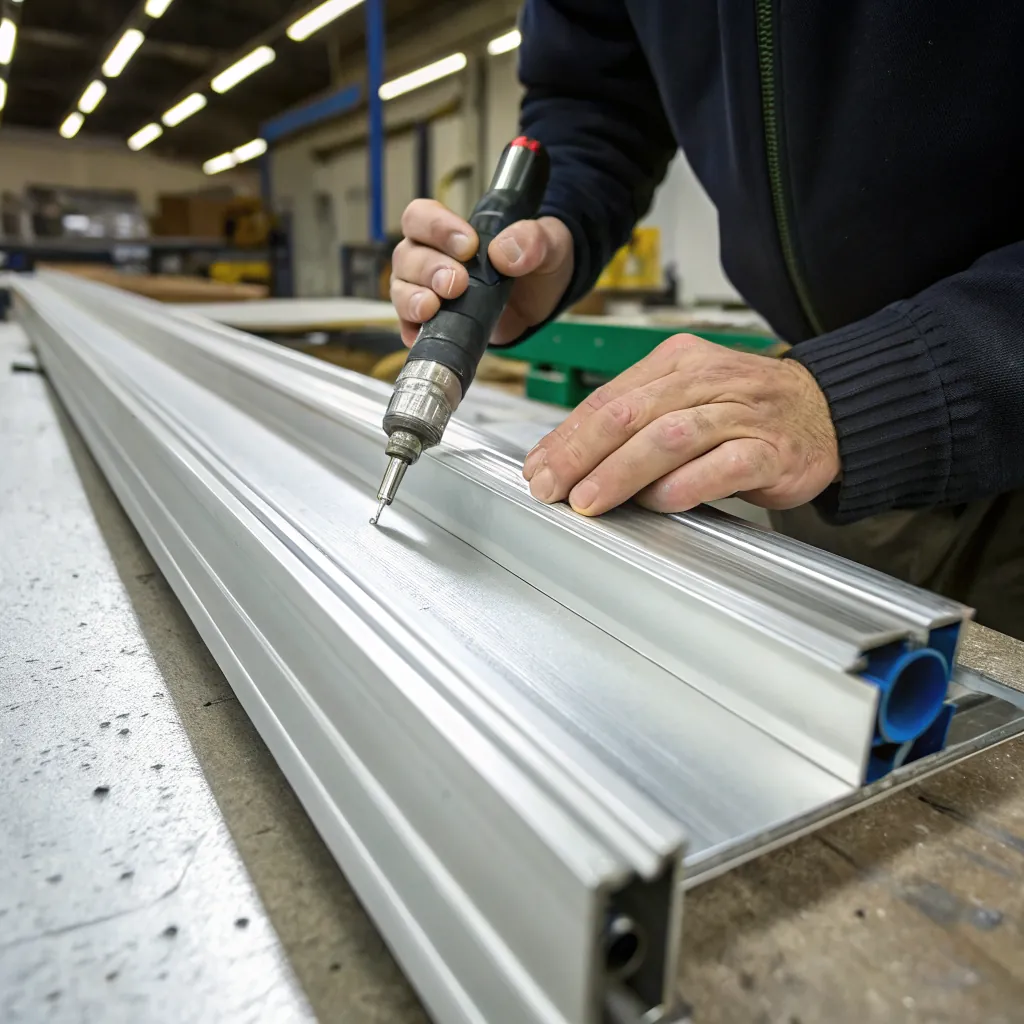
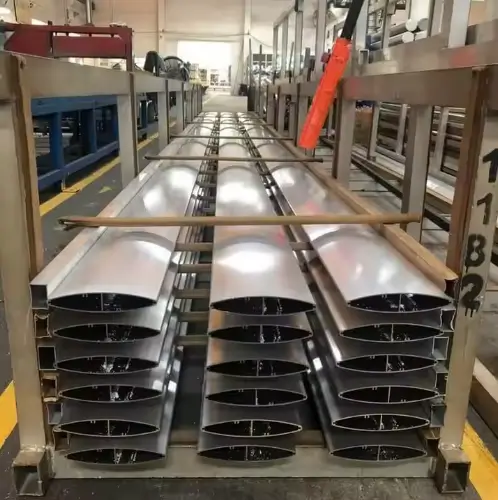
Методи за контрол на праволинейността на алуминиевите екструдирани профили?

Straightness issues appear quietly. Profiles look fine at first. After storage or assembly, bending shows up. Frames do not align. Long parts fail inspection. Most straightness problems start during extrusion and grow later.
Aluminum extrusion straightness is controlled through die design, extrusion speed, temperature balance, cooling control, and post-process straightening. Stable straightness is never accidental.
Straightness matters because extrusions are longer, thinner, and more complex than before. Understanding control methods helps reduce scrap, rework, and disputes.
How is straightness maintained during extrusion?
Straightness control begins before the press starts. Once aluminum exits the die, only limited correction is possible.
Straightness during extrusion is maintained by balanced metal flow, stable die support, controlled exit speed, and uniform pull-off tension.

Die design balance
Straight profiles start with a balanced die. If metal flows unevenly, bending begins immediately.
Good die design focuses on:
- Balanced wall thickness
- Symmetry around centerline
- Equal bearing lengths
- Proper bridge support in hollows
Even small imbalance creates bow or twist over length.
Extrusion speed control
Speed affects metal temperature and flow stability.
If speed is too high:
- Thin sections exit faster
- Temperature rises unevenly
- Profiles bend while soft
Slower speed improves straightness but reduces output.
Exit table alignment
The run-out table must be level and aligned with press center.
Problems occur when:
- Table rollers are misaligned
- Support spacing is uneven
- Profile sags under its own weight
Long profiles need frequent support points.
Puller tension consistency
The puller guides the profile after exit.
If pull force is uneven:
- One side stretches more
- Bow forms along length
- Twist increases
Pull speed must match extrusion speed exactly.
Temperature uniformity at exit
Profiles exit hot and soft. Uneven temperature creates uneven stiffness.
Causes include:
- Uneven die heating
- Drafts around exit area
- Uneven contact with table
This stage is critical for straightness.
Operator experience factor
Straightness control is partly skill-based.
Experienced operators:
- Adjust speed early
- Watch profile behavior
- Correct before defects grow
Automation helps, but human judgment still matters.
Balanced die design and controlled exit speed are key to maintaining straightness during extrusion.Истински
Uneven flow or excessive speed causes bending while the profile is still soft.
Straightness issues can be fully corrected later even if extrusion conditions are unstable.Фалшив
Poor extrusion conditions create distortion that is difficult or impossible to fully correct later.
What tools measure straightness in production?
Straightness must be measured correctly. Wrong tools lead to false rejections or missed defects.
Straightness in extrusion production is measured using straightedges, feeler gauges, laser systems, and coordinate measurement depending on length and tolerance needs.
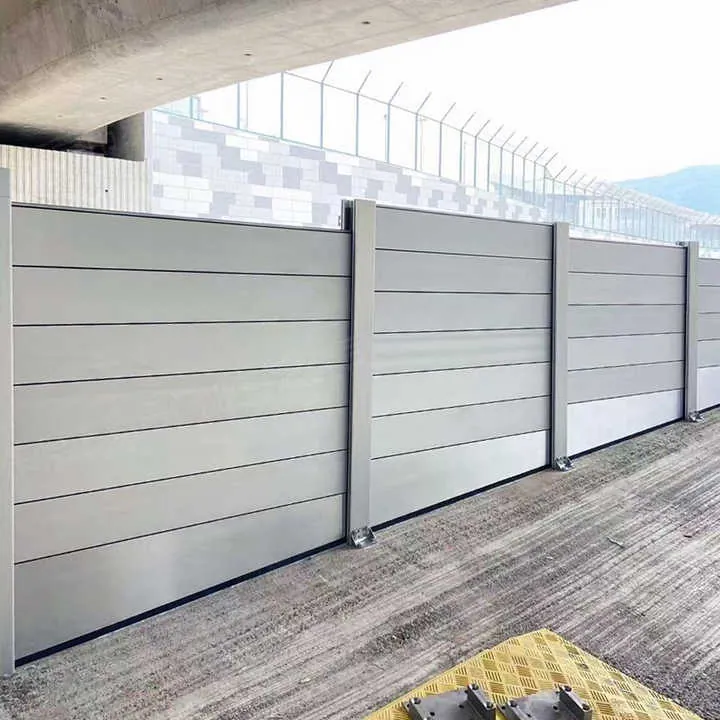
Simple straightedge method
The most common method uses a straightedge and feeler gauge.
Process includes:
- Place profile on flat surface
- Apply straightedge along length
- Measure maximum gap
This works well for routine checks.
Roller table measurement
Some plants use long roller tables with reference rails.
Ползите включват:
- Support for long profiles
- Visual bow detection
- Fast checking
Accuracy depends on table flatness.
Laser straightness systems
Laser systems provide non-contact measurement.
Предимствата включват:
- Continuous length scanning
- Digital data output
- High repeatability
These systems are common for high-volume lines.
Coordinate measurement machines
CMMs measure straightness with high accuracy.
Ограниченията включват:
- Slow measurement
- Високи разходи
- Limited length capacity
Used mainly for validation, not daily checks.
Common straightness metrics
Straightness is usually defined as deviation over length.
| Дължина на профила | Typical Straightness Limit |
|---|---|
| Below 2 m | 1/1000 length |
| 2 m to 6 m | 1.5/1000 length |
| Above 6 m | 2/1000 length |
Longer profiles always allow more deviation.
Measurement mistakes to avoid
Common errors include:
- Measuring on uneven floors
- Ignoring twist while checking bow
- Using worn straightedges
Measurement setup matters as much as tool choice.
Production reality
Most production uses simple tools combined with experience. Advanced tools support process control, not replace judgment.
Laser systems and straightedges are both used to measure extrusion straightness.Истински
Different tools are used depending on accuracy, speed, and production volume needs.
CMMs are the fastest and most common method for daily straightness checks.Фалшив
CMMs are slow and mainly used for validation, not routine production.
Can cooling rate affect profile straightness?
Cooling is often underestimated. Many straight profiles become bent during quenching.
Cooling rate strongly affects aluminum extrusion straightness because uneven cooling creates internal stress and differential shrinkage.

Why cooling causes bending
Aluminum shrinks as it cools. If one area cools faster, it shrinks first.
This causes:
- Bowing toward cooler side
- Twist in asymmetrical profiles
- Residual internal stress
These effects lock in shape.
Air cooling versus water quenching
Different cooling methods create different risks.
Air cooling:
- По-бавно
- Повече униформа
- Lower distortion risk
Water quenching:
- По-бързо
- По-висока якост
- Higher distortion risk
Choice depends on alloy and temper.
Spray pattern control
For water quenching, spray uniformity matters.
Problems occur when:
- Nozzles clog
- Spray angles differ
- Flow rate varies
Uneven spray causes uneven shrinkage.
Profile orientation during cooling
Orientation affects gravity and cooling exposure.
For long profiles:
- Horizontal cooling may sag
- Vertical cooling reduces sag
- Rotating profiles can balance effects
Setup matters.
Alloy sensitivity differences
Some alloys are more sensitive to cooling stress.
High-strength alloys:
- Require fast quench
- Have higher distortion risk
Lower strength alloys are more forgiving.
Stress accumulation over length
Small local distortions add up over meters.
A slight bend per meter becomes major bow over long profiles.
Practical control methods
Good cooling control includes:
- Regular nozzle inspection
- Balanced airflow
- Controlled quench distance
Cooling is a straightness control tool, not just a heat treatment step.
Uneven cooling is a major cause of bowing and twisting in aluminum extrusions.Истински
Different cooling rates cause uneven shrinkage and internal stress.
Cooling rate has little impact on extrusion straightness.Фалшив
Cooling rate directly affects shrinkage behavior and residual stress.
Are post-process corrections needed for long extrusions?
Even with good control, long extrusions rarely exit perfectly straight.
Post-process straightening is often required for long aluminum extrusions to meet straightness specifications.
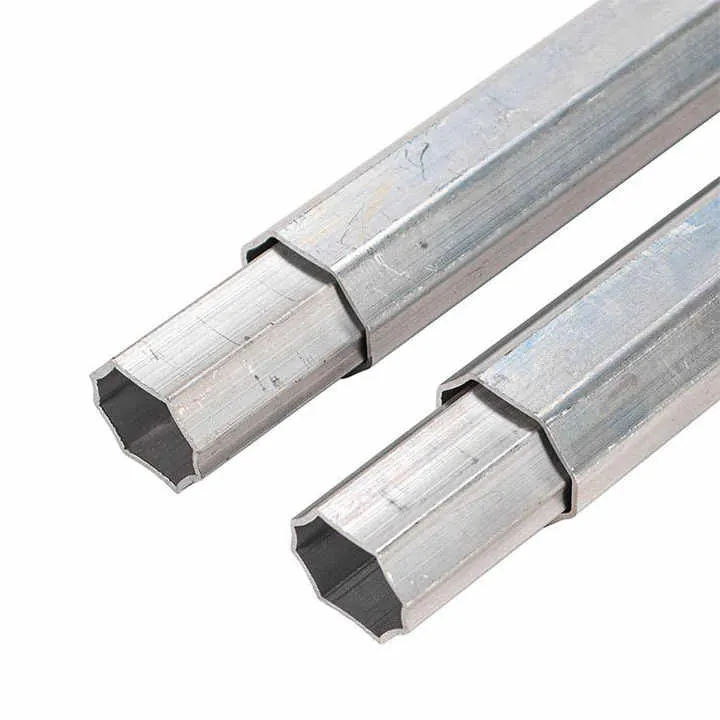
Изправяне на участъци
Stretch straightening is the most common method.
Process includes:
- Clamping both ends
- Applying controlled tension
- Removing bow and twist
This works well for most profiles.
Limitations of stretch straightening
Stretching cannot fix everything.
Limits include:
- Thin sections may crack
- Severe twist may remain
- Local dents cannot be removed
Profiles must be within correction range.
Roller straightening
Roller straighteners use controlled bending.
Ползите включват:
- Continuous processing
- Good for medium lengths
- Adjustable pressure
Used mainly for solid or thick profiles.
Manual correction
Some correction is manual.
Operators may:
- Apply localized force
- Use press blocks
- Correct minor bows
This relies heavily on skill.
Cost and yield impact
Straightening adds cost but saves scrap.
| Метод | Точност | Въздействие върху разходите |
|---|---|---|
| Изправяне на участъци | Висока | Среден |
| Roller straightening | Среден | Нисък |
| Manual correction | Променлива | Нисък |
Choosing the right method balances cost and quality.
When straightening is mandatory
Straightening is usually required when:
- Length exceeds 4 m
- Straightness tolerance is tight
- Assembly fit is critical
Skipping straightening increases rejection risk.
Design influence
Design can reduce straightening need.
Helpful design choices:
- Avoid extreme thin walls
- Limit unsupported length
- Accept realistic tolerances
Straightness starts at design.
Post-process straightening is commonly required for long aluminum extrusions.Истински
Long profiles accumulate distortion that often exceeds tolerance without correction.
Stretch straightening can correct any level of bow or twist.Фалшив
Straightening has limits and cannot fix severe distortion without damage.
Заключение
Aluminum extrusion straightness control requires attention at every stage. Die design, extrusion speed, cooling control, and straightening work together. Straight profiles are the result of process discipline, not luck.