how its made aluminum extrusions?
I faced a challenge early in my career when I ordered aluminium profiles and realised I didn’t understand how they were made — the process seemed a mystery until I learned the steps.
Aluminium extrusions are made through a sequence of steps: preparing the die, heating the billet, forcing it through the die to form the shape, then applying post‑processing to finish the profiles.
Let’s walk through each major stage, why it matters, and how you can apply the knowledge when working with custom aluminium extrusions.
What processes form aluminum extrusions?
I remember standing beside a huge hydraulic press and thinking: how does a solid piece of aluminium become a long profile? That was my “problem” moment.
The extrusion process begins with a billet of aluminium being heated and pressed through a die to form a long profile of a specific cross‑section.

When making aluminium extrusions, the process generally follows these key stages:
1. تحضير القوالب
First, a die is machined from steel with the correct opening that defines the final cross‑section of the profile. Pre‑heating the die ensures smooth metal flow and helps extend die life.
2. تسخين القضبان
A billet is a solid aluminium cylinder. It’s cut to length and preheated to make it soft enough to push through the die but not melted. This usually happens at around 400‑500°C.
3. Extrusion pressing
The heated billet is loaded into a press. A hydraulic ram then applies high pressure, forcing the aluminium through the die opening. The metal emerges in the desired shape.
4. Cooling and stretching
Once the profile exits the die, it’s cooled quickly with air or water. Then it’s pulled to straighten it and correct any slight bends or twists caused during forming.
5. Cutting and ageing
The straight profile is cut to length and sometimes heat‑treated to improve its strength, depending on the application.
Here’s a simplified overview:
| المرحلة | What happens | ما أهمية ذلك |
|---|---|---|
| تحضير القوالب | Machined and heated steel die | Controls profile shape |
| تسخين القضبان | Aluminium billet heated to 400–500°C | Makes aluminium soft enough to form |
| Extrusion pressing | Billet pushed through die by hydraulic ram | Forms the actual profile |
| Cooling and stretching | Quenched and pulled straight | Ensures profile stays straight and stable |
| Cutting and ageing | Cut to length and optionally heat‑treated | Prepares profile for final application |
Skipping any of these steps can lead to misshaped profiles or poor mechanical properties. I learned this the hard way when a batch arrived slightly twisted — it turned out the stretching step had been skipped.
Why heating prepares billets for extrusion?
Picture trying to push a cold aluminium log through a tight die opening — it would require massive force and likely break or crack.
Heating the billet softens the aluminium just enough so that it flows under pressure through the die. Without proper heating, the material won’t extrude uniformly or may cause defects.

Aluminium billets are heated for several important reasons.
First, when heated, aluminium becomes soft and more ductile. This allows it to be shaped easily without breaking or cracking. At room temperature, aluminium is still quite strong and hard to deform, so it would resist the forming pressure from the press.
Second, heating reduces the amount of force required to push the billet through the die. This saves energy, reduces stress on the press machine, and helps extend the life of the die.
Third, proper heating ensures that the aluminium flows evenly through the die. If some parts of the billet are cooler than others, the flow may be uneven. This can cause defects such as surface marks, rough edges, or variations in wall thickness.
Finally, heating the billet helps prevent issues like tearing or cracking. If the metal is too cold during forming, it may resist deformation and fracture.
In my experience, even a small drop in billet temperature during production can cause extrusion speed to slow down, or worse — create scrap material. That’s why billet temperature is always one of the first things I ask a supplier to confirm.
Pre‑heating aluminium billets is a necessary step to ensure proper flow during extrusionصحيح
Billets must be heated to soften the aluminium, allowing it to be shaped smoothly and without defects.
Extrusion billets can be processed cold without heating and still yield good quality aluminium profilesخطأ
Cold billets would resist flow and likely cause cracking or uneven profiles, making heating essential.
Where does shaping occur during extrusion?
When I first learned about extrusion, I assumed the aluminium is melted then poured into a mould, but in reality the shaping happens in a solid‑state process under high pressure.
The shaping occurs at the extrusion press when the heated billet is forced through the specially machined die; the die opening defines the final cross‑section of the profile and the material flows through it to form the shape.
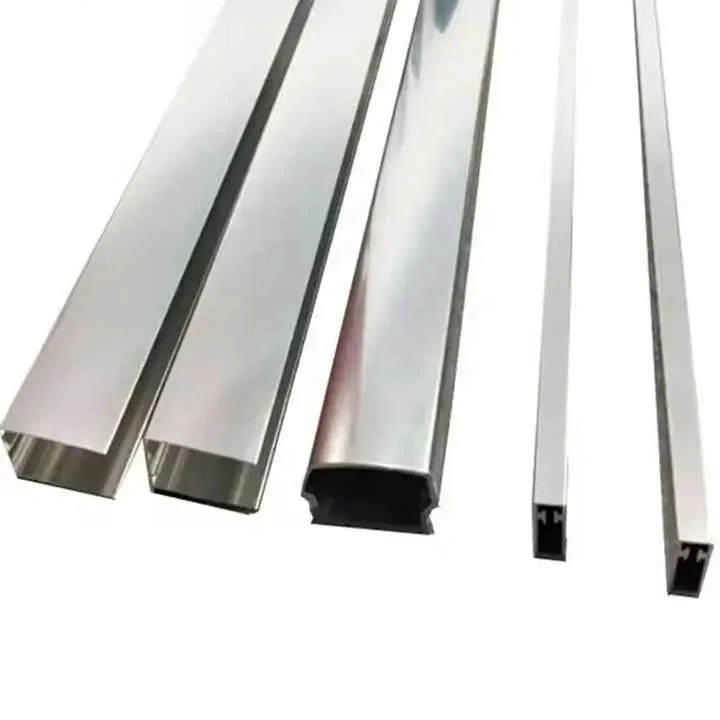
The key part of the extrusion process is the die. The die is a steel tool with a shaped opening — this shape matches the cross‑section of the final profile. When the aluminium billet is pressed through the die, it takes on the shape of the opening, much like toothpaste emerging from a tube.
This shaping process happens while the aluminium is solid but soft from heating. It’s not melted like in casting. The hydraulic ram applies enough force to push the billet through the die, where the metal flows and forms the desired shape.
There are two common types of extrusion: direct and indirect. In direct extrusion, the billet moves toward the die while the die stays in place. In indirect extrusion, the die moves toward the stationary billet. Both methods rely on the same shaping principle: metal flowing through a shaped die.
Once the profile exits the die, the shape is fully formed. But it may still be hot, and some internal stresses can remain. That’s why further steps like stretching and cooling are necessary to keep the shape stable.
In many projects, especially for complex shapes, we work closely with die designers. The accuracy and strength of the die directly affect the shape and surface finish of the profile.
The shaping of the aluminium extrusion profile occurs when the billet is forced through the die openingصحيح
The die defines the final shape, and the press forces aluminium to flow through it to form the profile.
Shaping of the profile is completed before the billet enters the die and does not depend on die designخطأ
The die is essential for shaping; the aluminium only takes shape as it flows through the die.
Can post-processing refine extruded profiles?
Even after the extrusion step, the profile is not always ready for final use in a high‑precision or high‑appearance application.
Yes — post‑processing (including stretching, heat‑treatment, surface finishing and machining) refines extruded profiles to meet final dimensional, mechanical and aesthetic requirements.
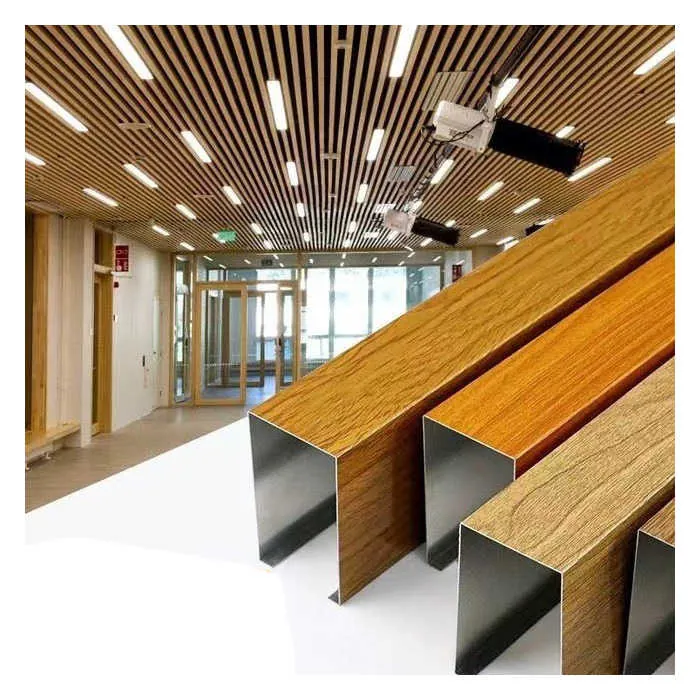
Post‑processing plays a vital role in making aluminium extrusions usable for real‑world applications.
Common post‑processing steps include:
- التمدد: Right after extrusion, profiles can be slightly bent or twisted. Stretching aligns the internal structure and straightens the profile.
- Cutting to length: Extrusions are usually cut into specific lengths to make handling and shipping easier.
- Heat‑treatment: Many aluminium alloys require heat‑treating to reach their final strength. T5 and T6 are common tempering levels that are applied after extrusion.
- تشطيب السطح: To enhance appearance or protect from corrosion, profiles can be anodised, powder‑coated, painted, or finished with wood‑grain patterns.
- التصنيع الآلي: CNC processing, drilling, tapping, or bending may be required to prepare the extrusion for assembly or installation.
Here’s a table summarising common post‑processing methods:
| العملية | الغرض | When it’s used |
|---|---|---|
| التمدد | Straighten the profile | Right after cooling |
| القطع | Resize profiles for transport or machining | After stretching |
| Heat‑treatment | Improve strength and durability | For structural and industrial applications |
| تشطيب السطح | Improve corrosion resistance and aesthetics | For architectural or exposed profiles |
| التصنيع الآلي | Add holes, slots, or special features | Before final assembly |
In my company, we often supply extrusions with special finishes or CNC features. Our clients rely on those post‑processing steps to save time in their own production lines. Skipping these would mean they have to do more work themselves — which delays everything.
Post‑processing steps like stretching, heat‑treatment and surface finishing are necessary to refine extruded aluminium profilesصحيح
These steps ensure the profile is straight, strong, and ready for final use.
Once the extruded profile emerges from the die, no further processing is requiredخطأ
Post‑processing is essential to achieve correct dimensions, strength, and surface finish.
الخاتمة
Making aluminium extrusions involves more than just pushing metal through a die. It requires precise temperature control, powerful machinery, accurate tooling, and critical post‑processing. Understanding each stage helps me ensure every profile I deliver is shaped, treated, and finished to meet customer needs.