مقارنة مقاومة التآكل في قضبان الألمنيوم المبثوقة؟
Many metal parts rust or wear when exposed to moisture or salt air. That problem can shorten life and raise maintenance cost. Choosing the right aluminum alloy, design and finish can solve corrosion risk and extend lifespan.
Aluminum alloys differ in corrosion resistance. Some resist moisture, salt and weather much better. With correct alloy, coating, and careful design, extruded parts can last many years even in harsh conditions.
Below I explore which alloys resist corrosion best, how coastal salt air affects extrusions, whether coatings can fully prevent corrosion, and what tests and standards prove real durability. Read on for details.
Which alloys offer the best corrosion resistance?
Aluminum alloys are not all equal when it comes to corrosion resistance. Some handle humidity, salt and time much better than others.

Most alloys in the 5xxx and 6xxx series show good corrosion resistance. Alloys like 5052, 6063, 6061 resist rust and oxidation under many conditions. They remain stable over time in mild humidity or wet air.
Higher‑strength alloys, like some in the 7xxx group, often trade corrosion resistance for strength. They may corrode faster if exposed to moisture or salt. That makes them less suited for outdoor or humid uses without strong protection.
Here is a comparison of common aluminum alloys and their typical corrosion resistance:
| سبيكة | السلسلة | مقاومة التآكل | التطبيقات النموذجية |
|---|---|---|---|
| 5052 | 5xxx | High — good for humid or salty air | Marine parts, outdoor fixtures |
| 6063 | 6xxx | High — good balance of strength and weather resistance | Window frames, architectural extrusions |
| 6061 | 6xxx | Medium-high — structural use with moderate exposure | Structural profiles, frames |
| 6060 | 6xxx | Medium — general purpose, light structural use | General outdoor frames |
| 6082 | 6xxx | Medium-high — industrial profiles with some exposure | Industrial frames, housings |
| 7075 | 7xxx | Low — strong but not good under corrosion stress | High-stress parts, indoor use |
Even with a good alloy, design matters. Long service life also needs shapes that avoid water traps, sharp crevices, or complex joints where water sits. Holes, recesses or cavities should allow drainage. Machining or drilling after extrusion can disturb protective oxide. That reduces corrosion resistance.
Thus for outdoor, coastal or humid use, alloys like 5052 or 6063 give the best mix of resistance and practicality. 6061 is fine when strength matters but exposure is limited. High‑strength alloys like 7075 need strong protective measures or interior use only.
Aluminum alloy 5052 offers better corrosion resistance than 7075 in humid environmentsصحيح
5052 has lower alloying elements and more stable structure, so it resists moisture and salt corrosion better than 7075.
Alloy 7075 can resist corrosion just as well as 6063 in outdoor environments without protective coatingخطأ
7075 has low corrosion resistance; without coating it corrodes faster than 6063 in humid or salty conditions.
How do coastal environments affect extruded parts?
Coastal air brings salt, humidity, wind, and even salt spray. That environment challenges metal parts. Salt speeds up corrosion more than ordinary rain or humidity. Salt crystals settle on surfaces. They hold moisture. That helps corrosion start and spread. Even resistant aluminum alloys can suffer over time if exposed constantly.

Salt water spray or sea breeze carry chloride ions. These ions break down protective oxide layers on aluminum. Once the layer breaks, metal under becomes vulnerable. Coastal parts may show pitting or surface roughness after some seasons. If design includes hollow sections or joints, salt and moisture may collect. That makes corrosion faster there. Especially inside recesses or tight joints. Problems may first appear hidden inside cavities.
Also contact with dissimilar metals (like steel screws or fasteners) makes galvanic corrosion more likely under salt water. When aluminum touches steel in salty conditions, aluminum acts as an anode. It corrodes faster while steel is protected. That means designers must isolate metals or use compatible fasteners.
Salt is persistent. Even washing with fresh water may be needed regularly to remove salt deposits. If parts are left untouched for months, corrosion may develop under coatings or in hidden corners. That reduces life, maybe structural strength. Even for marine grade alloys.
Maintenance matters a lot: regular rinsing, inspection, drainage design, using proper fasteners. Without that, corrosion risk stays high. So using corrosion‑resistant alloy alone is not enough in coastal zones. One needs alloy, good coating, smart design, and upkeep.
Salt air and humidity near coast accelerate corrosion of aluminum extruded parts even if alloy has good corrosion resistanceصحيح
Salt increases corrosion rate and damages oxide layer, making even resistant aluminum vulnerable under coastal exposure.
Aluminum extruded parts need no maintenance when used near the sea if alloy is corrosion‑resistantخطأ
Even resistant alloy can corrode under salt exposure if salt deposits or moisture remain; maintenance remains necessary.
Can surface coatings fully prevent corrosion?
Surface coatings help. They add a barrier between metal and environment. Common coatings include anodizing, powder coating, painting, or sealing. These help a lot. They reduce direct contact with salt, water, air. That extends life of extruded parts.
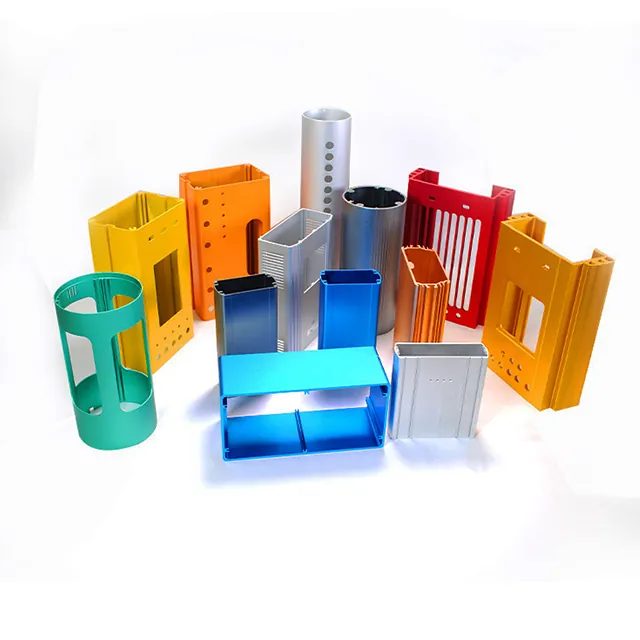
Anodizing creates a thin oxide layer that bonds with aluminum. That layer is part of the metal surface, not just a paint. It resists moisture, salt and scratches better than paint alone. Powder coating or paint adds thickness and color. They block air and moisture from reaching metal. Dark coatings may also improve heat emission, but main point is protection from corrosion.
Here is a quick look at common finishing options and their protection role:
| نوع التشطيب | Protection level | الإيجابيات | السلبيات |
|---|---|---|---|
| Anodized (natural) | عالية | Durable oxide, moisture resistance | Less color options |
| Anodized (colored) | عالية | Same durability + color | Slight cost increase |
| طلاء المسحوق | متوسط-عالي | Color, uniform coverage | Can chip or scratch |
| Paint coating | متوسط | العديد من خيارات الألوان | Less durable, vulnerable to damage |
| None (raw) | منخفضة | الأرخص | عرضة للتآكل |
Coating helps. But coatings are not magic. They can scratch, chip or wear off over time. Mechanical damage or constant salt spray may break coating barrier. Once barrier cracks, salt and moisture can reach aluminum and start corrosion. In closed or hollow sections, corrosion may go hidden under coating. That may weaken part before visible signs appear.
Also coating quality matters. Poor adhesion, thin coating, or missed spots (inside grooves, corners) reduce protection. After machining, coating edges are weak. That needs careful handling and inspection.
Coating alone cannot fully guarantee corrosion immunity. Best practice combines corrosion‑resistant alloy, good coating, smart design to avoid water traps, waterproof fasteners or isolation from other metals, and regular maintenance like rinsing salt, checking for damage, re‑coating if needed.
Anodizing aluminum extrusion provides a durable corrosion protection better than paint aloneصحيح
Anodizing forms oxide layer that bonds with aluminum and resists salt, moisture and wear better than paint which can chip or peel.
Once aluminum extrusion is anodized or coated, corrosion can be fully ignoredخطأ
Coating can degrade, scratch or wear; salt or moisture can reach metal under coating especially in hidden or damaged areas; ongoing maintenance remains necessary.
What standards assess corrosion durability?
To trust corrosion claims, industry uses standard tests. These simulate harsh conditions in lab or field. They expose samples to salt spray, humidity, cycles of moisture and dryness, acid or polluted air. Then assess rust, pitting, coating adhesion, or structural change. Results help compare alloys, coatings and finishes.

Below are common standards and tests for aluminum extrusions:
| Test / Standard | What it simulates | الغرض |
|---|---|---|
| ASTM B117 / ISO 9227 (Salt spray) | Salt fog over many hours | Simulate marine/coastal salt exposure |
| ASTM D2247 (Humidity) | High humidity cycles | Test moisture resistance in humid climates |
| ASTM D1654 / ISO 4628‑2 | Coating rust and adhesion rating | Check coated surfaces under stress |
| ASTM D3359 (Adhesion) | Score + tape adhesion test | Verify paint or powder coating adhesion |
| ISO 7599 (Anodizing quality) | Thickness and sealing of anodized layer | Ensure oxide layer proper and sealed |
Manufacturers often provide test reports showing hours of salt spray without rust or pitting, coating adhesion ratings, humidity exposure results. Good reports help choose right extrusion for environment.
Without test data, claims like "marine‑grade" or "salt proof" mean little. Real data helps assess risk and schedule maintenance. For example, salt spray test might show need to rinse parts every few months or recoat every few years.
In practice, for critical outdoor or coastal installations, require test report. Check alloy, finish, coating process, and test results. That gives confidence in long-term durability.
ASTM B117 salt spray test is a standard method to evaluate aluminum extrusion corrosion resistance for coastal useصحيح
ASTM B117 exposes samples to salt fog under controlled conditions and reveals how well alloy and coating resist salt‑induced corrosion.
Passing a humidity test alone ensures aluminum extrusion will last many years in salty coastal environmentخطأ
Humidity test does not involve salt chloride exposure; coastal salt spray adds chloride ions that accelerate corrosion, so humidity test alone is insufficient.
الخاتمة
Aluminum extrusion resists corrosion best when using alloys like 5052 or 6063, combined with coatings, proper design to avoid water traps, and regular maintenance. For coastal or humid zones, rely on tested alloys, quality coatings, good design, and inspection routines to ensure long life.