
متطلبات الامتثال لشهادة CE الخاصة بسبائك الألومنيوم؟

Opening paragraph that uses a simple PAS style. Many buyers worry about CE rules because they fear delays. Some struggle with unclear steps. Some feel stressed when they review directive lists. This article breaks the process into clear parts.
CE compliance for aluminum extrusions depends on the product’s final use. CE rules apply only when the profile is part of a product that falls under specific EU directives. Aluminum extrusions alone do not need CE marking unless they form a component within a regulated product category.
A short transition to keep readers engaged. Many engineers ask the same questions because the rules shift with each application. So I will walk through each part and show how these rules work in real projects.
What CE directives apply to aluminum extrusions?
A short PAS-style opening. Many companies feel lost because aluminum extrusions look simple. But the rules change fast once the profiles become building parts or machine parts.
The CE directives that apply depend on the final application. Aluminum extrusions used in construction may follow CPR. Parts used in machinery may fall under the Machinery Regulation or other related directives.
Understanding how directives connect to extrusions
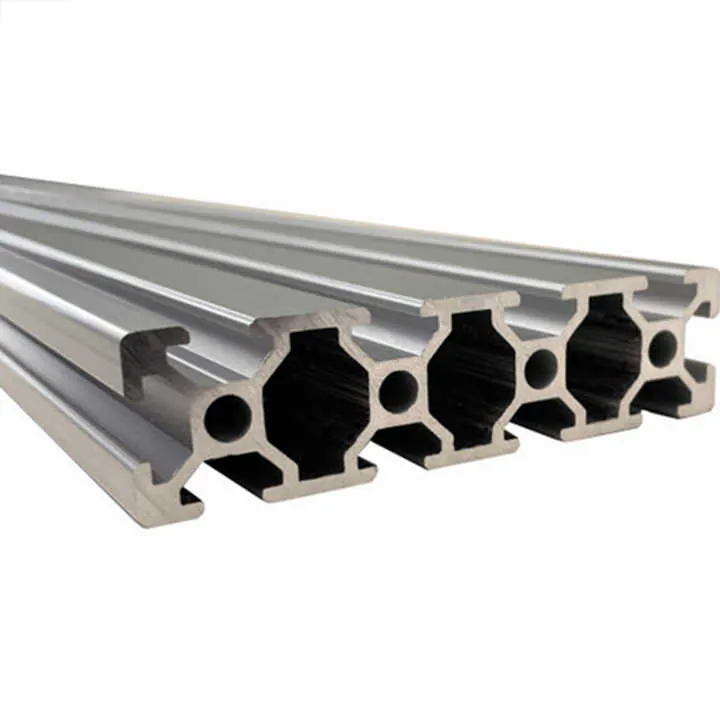
When I study the way customers use aluminum extrusions, I see that no single EU directive controls all extruded products. The EU regulates finished products, not raw profiles. But extrusions often become important components, so they enter larger legal categories. This simple fact causes confusion and also leads to mistakes during early design.
I first check the end use. If a customer uses extrusions in doors, windows, curtain walls, or structural parts, these products fall under the Construction Products Regulation (CPR). CPR requires technical documentation like performance declarations. It also needs testing for mechanical performance, fire reaction, and durability when required by harmonized standards. Some buyers think CPR always applies to aluminum extrusions, but that is not true. It applies only when the extrusion becomes part of a construction product that falls under a harmonized EN standard.
Common directives related to aluminum extrusions
I list the most common directives below. Buyers use this list to judge early requirements:
| Directive / Regulation | When it applies |
|---|---|
| CPR (Construction Products Regulation) | Extrusions used in doors, windows, curtain walls, building components |
| Machinery Regulation | Extrusions used as parts of machines, guarding, frames |
| Low Voltage Directive | Extrusions used inside electrical devices |
| EMC Directive | Parts within electronic assemblies |
| RoHS | Extrusions used in electronics |
| PED (Pressure Equipment Directive) | Extrusions used in high-pressure equipment |
Why application defines compliance
Some engineers think materials automatically require CE marking. But CE applies to المنتجات, not materials. So a raw aluminum bar, tube, or profile does not carry CE unless it forms part of a regulated finished product. This creates a simple rule that helps every project: CE follows application, not material.
Deep Dive Summary
When customers understand these connections, they make better design choices. They can prepare documents earlier and avoid late certification problems. The best path is to map each extrusion to its final directive before cutting the first die.
CE applies only when the final product category is regulated by an EU directive or regulation.صحيح
CE is triggered by the product’s final function, not by the base material.
All aluminum extrusions automatically require CE marking because they are metal products.خطأ
Extrusions are not automatically covered unless they belong to a regulated product category.
How is CE compliance tested and documented?
A simple PAS-style start. Many buyers worry about testing costs. Some teams fear piles of paperwork. Some even delay orders because they do not know where to begin.
CE compliance is tested by following the harmonized EN standards for the product category. Documentation includes technical files, performance declarations, test reports, risk assessments, traceability data, and a final CE Declaration of Conformity.
The three-step structure of CE testing
I explain CE testing in a simple three-step format, which works for both construction and machinery categories. These steps help teams stay organized during projects.
Step 1: Identify the correct harmonized standard
If the profile becomes part of a window system, the harmonized standard might be EN 14351. Curtain wall systems follow EN 13830. Machine frame extrusions follow standards from the Machinery Regulation. This step sets the scope of testing. Some customers skip this step, which leads to confusion and retesting.
Step 2: Perform required laboratory tests
Testing depends on the product category. For engineering structures, tests may involve bending, compression, fire behavior, or surface durability. For machine guarding, tests may include impact strength and stability checks. The goal is to show that the extrusion can perform safely in its final function. The sample preparation must follow EN rules because labs cannot accept random shapes.
Step 3: Build the technical file
This file contains drawings, alloy grades, mechanical data, test results, and risk assessments. Many companies do not keep files updated, which creates problems during audits. I always tell customers to store drawings, die numbers, production dates, and raw material batches in clear folders. It keeps everything traceable.
A sample CE documentation structure
Below is a simple documentation structure that many customers follow:
| نوع المستند | الغرض |
|---|---|
| Technical drawings & bills of materials | Identify exact profile and alloy |
| Test reports (EN standards) | Show compliance with required performance |
| شهادات المواد | Provide alloy and temper verification |
| تقييم المخاطر | Required for machinery products |
| Declaration of Conformity | Final CE statement |
Deep technical view
When teams handle CE documentation early, the process becomes smooth. When they wait too long, the documentation grows larger and more confusing. I saw one project where a customer tried to collect all test data only days before shipment. They missed half the documents and had to delay launch for six weeks. Early preparation prevents problems that cost more than any test fee.
CE documentation must include a technical file, test reports, and a Declaration of Conformity.صحيح
These documents form the basic CE compliance package.
CE testing is optional as long as the supplier provides alloy certificates.خطأ
CE requires testing based on harmonized standards, not just material certificates.
Are mechanical properties part of CE evaluation?
Quick PAS opening. Many buyers fear mechanical tests because they think they always need them. Some still feel unsure, especially when they use heavy or structural profiles.
Mechanical properties matter when the applied EN standard requires them. Construction and machinery applications usually need mechanical performance tests, while decorative applications may not.

When mechanical tests are required
In construction systems such as windows or curtain walls, mechanical tests help prove safety. The tests often include bending, tensile properties, and load resistance. For machine frames, the requirements may involve static load checks, stability, or impact resistance. Mechanical tests confirm that the extrusion can support the loads defined in design.
Typical mechanical tests for extrusions
Customers often use the tests below when preparing CE files:
| نوع الاختبار | What it Measures |
|---|---|
| Tensile test | Yield strength, tensile strength, elongation |
| Hardness test | Surface hardness and consistency |
| Bend test | Flexibility and crack resistance |
| Load test | Structural stability under force |
| Impact test | Resistance to sudden shock |
Why mechanical properties matter in real applications
I have worked with customers who design solar frames, machine chassis, and structural components. They often use alloys like 6063-T5 و 6061-T6. Each alloy has different strengths. CE testing confirms whether the selected alloy supports design stress values. When customers skip mechanics, they risk design failure.
Deeper understanding of mechanical evaluation
In my experience, mechanical tests help both suppliers and buyers improve product quality. They reveal weak die designs, uneven extrusion flow, and heat-treatment errors. One customer found that a thin wall collapsed under small loads. The test exposed inconsistent cooling in their old supplier’s plant. They changed supplier, redesigned the die, and passed CE evaluation easily.
Extended insights
The role of mechanical properties grows when profiles must survive harsh conditions like wind loads, machine vibration, or outdoor temperature cycles. These conditions push the profile to its limits. CE rules do not only check safety. They support long-term performance. This principle keeps EU buyers confident in stable and safe products.
Mechanical properties are evaluated when required by the harmonized standard for the product category.صحيح
Mechanical data supports safety and performance claims.
Mechanical testing is never needed because CE focuses only on documents.خطأ
Mechanical performance is mandatory in many CE categories.
Can CE marking be self-declared for profiles?
PAS-style opening. Many buyers want to move fast. Some hope for a shortcut. Some think CE marking works like a simple stamp. But the truth is different.
CE can be self-declared only when the directive allows self-declaration. Many construction and machinery applications require notified body involvement or third-party testing. Raw extrusions alone cannot carry CE unless they form part of a regulated product.
When self-declaration is allowed
Some directives allow self-declaration. For example, simple electronic housings with no electrical function may fall under low-risk categories. But construction products often need third-party evaluation. Machinery parts may need risk assessments and sometimes notified body reviews. So self-declaration depends on the directive, not on the material.
Why aluminum extrusions alone cannot be self-declared
Extrusions are only components. They become CE-relevant only when integrated in a final product. A supplier cannot simply print CE on a raw profile because the component does not represent a complete regulated product. Customers must complete CE marking on the finished system.
Deep understanding of CE self-declaration
Some suppliers misuse CE marking for marketing. They place CE logos on catalogs even when no directive applies. This creates legal risk. EU law sees CE misuse as a serious violation. In one case I saw, a distributor had to remove thousands of labels because they marked raw extrusions as CE. They lost months of work. This story shows why correct CE classification is important.
Practical guidance for buyers
Buyers should check three points:
- Does the directive apply to the product?
- Does the directive allow self-declaration?
- Does the product need a notified body?
If any step requires outside testing, the buyer must follow that route. Self-declaration is not a shortcut. It is only a method when risk level is low.
Self-declaration is possible only when the governing directive allows it.صحيح
Only low-risk categories permit self-declaration.
All aluminum extrusions can be CE-marked by the supplier without testing.خطأ
Raw extrusions cannot be CE-marked unless they form part of a regulated product.
الخاتمة
CE compliance for aluminum extrusions depends fully on the final application. The rules follow the product category, the applied directive, and the required harmonized standards. When buyers understand these steps early, they avoid delays and achieve smooth CE approval.