Aluminum extrusion seamless tube vs welded options?
Aluminum tubes sometimes crack, leak, or corrode — problems buyers hate. Choosing the wrong tube type increases that risk.
Seamless and welded aluminum extruded tubes differ in strength, uniformity, cost, and suitability. The right choice depends on use case, not just price.
Let’s explore how they differ in production, strength, corrosion resistance, and performance in fluid systems.
What are the differences between seamless and welded tubes?
Many think all aluminum tubes are similar. But seamless and welded ones differ in structure, performance, and reliability.
Seamless tubes are formed from a solid aluminum billet with no seam; welded tubes are made by rolling and welding aluminum strip.

| Feature | Seamless Tube | Welded Tube |
|---|---|---|
| Structure | Solid billet, no weld, homogeneous | Welded seam, potential weak point |
| Inner/outer surface | Smooth, uniform | Seam line may be visible or irregular |
| Strength | Even wall stress, better under pressure | Slightly lower strength at weld zone |
| Cost & Availability | Higher cost, longer lead time | Lower cost, widely available |
| Application Fit | High-pressure, high-integrity applications | Decorative, structural, non-critical use |
Seamless tubes are ideal where performance matters — like pressure systems or critical mechanical loads. Welded tubes work fine for general framing, furniture, or non-pressurized systems.
Seamless aluminum tubes have no welded seam and offer uniform wall strength and pressure resistance.True
Because seamless tubes are formed from a single billet without welds, they avoid seam-associated weak points and have homogeneous material distribution.
Welded aluminum tubes always offer the same pressure resistance as seamless tubes.False
Welded tubes have a seam which can create a structural or leakage weak point; their pressure or stress tolerance is generally lower than seamless tubes of same material and size.
How do production methods affect tube strength?
Production defines internal structure, stress uniformity, and long-term strength.
Seamless tubes are stronger and more uniform, especially under pressure or cyclic loading. Welded tubes may have weld seam weaknesses even after post-processing.

Key differences in forming
- Seamless: Extruded or pierced from solid billet, then cold drawn to refine dimension and improve strength. Material is continuous.
- Welded: Rolled from strip, then welded and optionally drawn or annealed. Weld area may differ in grain and structure.
Welded tubes can perform well if processed correctly, but under pressure or bending, the seam area remains the weakest link. Seamless tubes avoid this and offer better fatigue resistance and consistent strength.
Cold-drawn seamless aluminum tubes often have better dimensional precision and uniform wall thickness than welded tubes.True
The drawing process refines wall thickness and internal surface, resulting in better uniformity and mechanical performance.
Welded aluminum tubes have the same uniform material distribution as seamless tubes after rod-drawing and annealing.False
Even after drawing and annealing, welded tubes retain a seam-influenced structure which may not match the homogeneity of seamless tubes.
Are seamless tubes better for fluid applications?
In fluid systems, leaks and failure are unacceptable. Tube quality becomes critical.
Yes — seamless tubes perform better for fluid transport due to superior pressure resistance, smooth bore, and lack of welds that could leak.
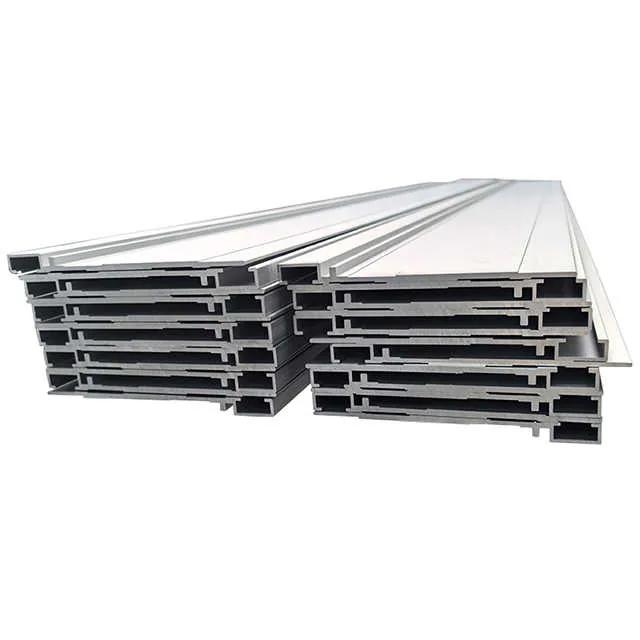
Seamless for critical flow
- No welds = fewer weak points
- Uniform bore = smoother fluid flow
- Better pressure rating
- Less risk of corrosion from weld defects
Fluid systems such as hydraulics, pneumatics, refrigerant lines, and gas cylinders demand these qualities. Seamless tubing is the default for engineers designing systems where failure isn’t an option.
Seamless aluminum tubes are generally preferred over welded tubes for high-pressure fluid or gas transfer applications.True
Seamless tubes lack weld seams, so they avoid seam-related weaknesses and leak risks, giving better pressure rating and reliability for fluid transfer.
Welded aluminum tubes are as leak-proof and pressure-resistant as seamless tubes for critical fluid applications.False
Welded tubes have weld seams which can be weak points under pressure or stress, so they are less reliable than seamless tubes for critical fluid service.
Which type offers better corrosion resistance?
Corrosion resistance is about more than just alloy — consistency and surface integrity matter too.
Seamless tubes resist corrosion better due to homogeneous structure and lack of weld-related stress or defects. Welded seams can become corrosion initiation points.

Why seamless performs better
- No heat-affected zones
- No residual weld stress
- More uniform anodizing or coating
- Smoother surface = fewer corrosion traps
In harsh environments — marine, chemical, or humid conditions — seamless tubes typically last longer and resist pitting or stress corrosion cracking more effectively.
Because seamless aluminum tubes have no seams or weld joints, they typically show better corrosion resistance than welded tubes.True
Seamless tubes avoid welding-related microstructural defects and stress concentrations that can initiate corrosion or fatigue corrosion.
Welded aluminum tubes resist corrosion equally as seamless tubes do in all environments.False
Weld seams and heat-affected zones in welded tubes can act as corrosion initiation sites, making their corrosion resistance generally lower in harsh environments.
Conclusion
Choosing between seamless and welded aluminum extrusions depends on application. For fluid transfer, high pressure, critical structural use, or corrosive environments — seamless tubing generally gives better strength, sealing, uniformity, and durability. If cost, flexibility, size, or lead time matter more than maximum performance, welded tubing remains a viable, economical choice.