Aluminum extrusion quality inspection standards?

Extruded aluminum may look fine at first glance. Yet hidden defects or small errors can cause big problems for clients. Good inspection standards can spot issues before they become costly failures.
Key quality inspection standards help ensure aluminum extrusions meet specifications for dimensions, surface finish, and performance — giving buyers confidence and avoiding costly rework.
If you rely on aluminum extrusion suppliers, it is worth knowing what standards and practices to expect. That helps you pick a supplier that will deliver reliably.
What are key checkpoints in extrusion quality control?
Extrusion seems simple: metal in, profile out. But errors can hide in shape, size, surface, hardness, and even in packaging. Without good checks, parts may warp, scratch, or not fit. That risks delays and unhappy clients.
Key checkpoints include alloy verification, dimension and tolerance checking, surface finish inspection, mechanical properties, and packaging integrity.
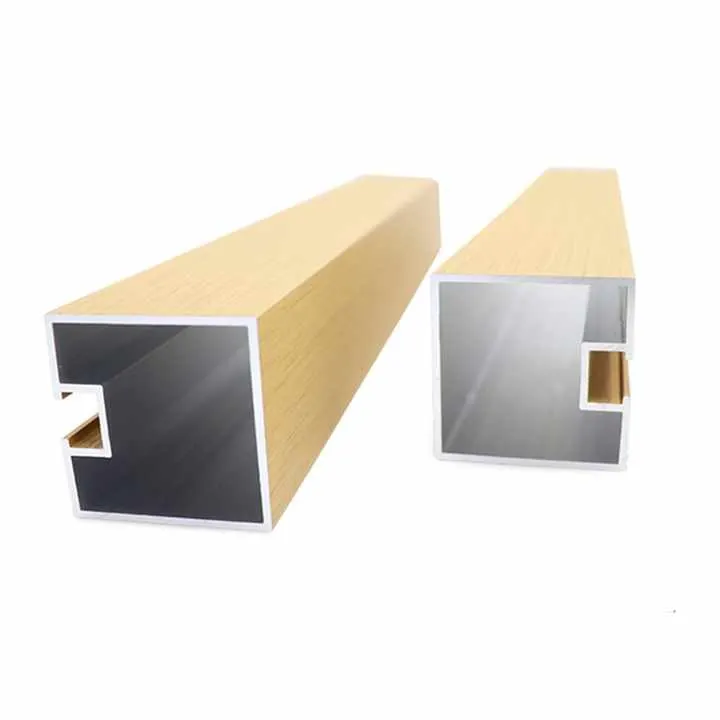
When inspecting extruded aluminum profiles, several aspects need verification before accepting a batch:
- Material traceability and correct aluminum alloy (6063-T5, 6061-T6 etc.)
- Profile dimensions: width, height, wall thickness, corner radii, straightness
- Surface condition: scratches, dents, oxidation, burrs, anodizing or paint defects
- Mechanical properties: hardness, yield strength, any distortions
- Consistency of surface treatment (anodizing, coating): thickness, color, adhesion
- Packaging and protection: plastic film, corner protectors, bundling, labels
Here is a common checklist used by inspectors:
| Inspection Item | Purpose | Acceptable Criteria |
|---|---|---|
| Alloy verification | Confirm correct metal grade | Alloy certificate or spectrometer result |
| Dimensional check | Ensure parts match design | Dimensional tolerance as per drawing |
| Surface finish check | Avoid damage or coating issues | No visible scratches, dents, or stains |
| Straightness / warpage | Ensure parts fit downstream | Max bow < specified mm per meter |
| Hardness / mechanical test | Confirm strength | Hardness within alloy spec, no cracks |
| Coating thickness and adhesion | Ensure corrosion protection or appearance | Coating thickness and adhesion meet standard |
Inspectors often use calipers, micrometers, straight edges, surface gauges, visual check under light, hardness testers, and coating thickness meters. They follow a clear set of steps and record all results. If any item fails, the batch may be rejected or reworked.
This detailed inspection helps catch defects early. That protects both buyer and supplier. It reduces waste, avoids returns, and builds trust in long-term cooperation.
Extrusion quality control must verify dimensions, surface finish, alloy, and packagingTrue
These checkpoints ensure the product meets design and functional requirements.
Only visual check of surface finish is enough to ensure qualityFalse
Dimensional accuracy, alloy grade, mechanical properties and packaging also matter for reliable extrusion quality.
Which standards define visual and dimensional quality?
Many buyers expect a standard document or norm to define what counts as acceptable quality. For aluminum extrusions, industry often refers to general engineering standards or client drawings rather than a universal “extrusion standard.” Yet several standards or norm types serve as reference points for visual and dimensional quality.
Standards or documented specifications — such as drawing tolerances, surface finish definitions, and coating requirements — set the baseline for quality acceptance; though not all are formal ISO norms.

There is no single global standard that covers all details of aluminum extrusion quality. Instead, quality is defined by a mix of:
- The purchase order or client drawing (with tolerances, finish, mechanical and other specs)
- Internal quality standards of the supplier or industry reference documents
- General metalwork or fabrication standards for dimensions, surface, and coating
Here is a sample table of standards and what they cover:
| Reference Type | What it defines | Typical Use in Extrusion |
|---|---|---|
| Client Drawing and Spec | Dimensions, tolerances, surface finish, coating, treatment | Primary acceptance criteria for each order |
| Supplier Internal QC Standard | Inspection steps, acceptable defect criteria, packaging rules | Consistent quality within supplier across orders |
| Metalwork General Norms | Basic tolerances on straightness, flatness, surface defects | Supplemental criteria if client spec lacks detail |
| Coating / Anodizing Specs | Coating thickness, adhesion, color consistency | Used when surface treatment applies |
Since aluminum extrusion profiles come in many shapes and sizes, using drawing-based specifications gives flexibility. Suppliers often combine drawing specs with internal QC rule sets. As long as those specs clearly state tolerances and finish requirements, inspection is straightforward.
In absence of formal norms, many buyers still require surface roughness values, maximum straightness error per meter, acceptable burr thresholds, and coating defects — all defined in their specifications. This system works if both buyer and supplier agree on the spec in advance.
Using clear specifications also means less dispute on arrival inspection. Both sides know what counts as pass or fail. Good suppliers document all inspection results and keep records linked to batch numbers. That helps if rework or audit is needed later.
Client drawing and specifications are the primary definitions for quality acceptance in extrusionTrue
They specify dimensions, tolerance, surface finish, and treatments for that particular order.
There is a single universal standard that covers all aluminum extrusion quality controlFalse
Extrusion quality depends on client drawing, supplier standards, and metalwork norms, not one universal standard.
Are third-party inspections common in this industry?
Sometimes buyers trust supplier QC. Other times they need independent proof. That raises the question: do buyers often ask for third-party inspections? The answer: yes — especially in large orders or when clients cannot visit the factory themselves.
Third-party inspections before shipment are common for overseas buyers, especially for large volume or critical application — they provide unbiased quality assurance and reduce risk of defects or disputes.

Third-party inspection companies often perform pre-shipment checks (PSI). These checks cover the same items as internal QC but add independent validation. A typical third-party inspection includes:
- Verification of alloy certificates and chemical analysis
- Random sampling of extrusions for dimension, straightness, surface defects
- Coating thickness and adhesion tests if surface treatment applied
- Packing and labeling inspection
- Final packaging integrity and shipment preparation review
Buyers often require inspection for first orders, large shipments or for high value contracts. They may also demand 100% check of critical dimensions or 10-20% sampling for surface and finishing checks. Third-party inspectors record photos, measurements, and sometimes deliver a full inspection report.
Third-party inspection adds cost but helps buyers:
- Ensure compliance to specification before shipment
- Avoid receiving non-conforming parts that may cause rework or rejection
- Have documented proof for audits or quality management
From supplier side, good factories welcome third-party inspections. It shows confidence in their process. Many factories already run internal QC so third-party check adds little extra time — only documentation and allowance for inspector access.
Third‑party inspection also encourages factories to keep high standards. Knowing an independent inspector may come, they maintain organized QC records, clean packaging, and stable process. This habit leads to better overall quality control, even when buyers skip inspection.
Third-party inspection before shipment is rare in aluminum extrusion industryFalse
For overseas or high value orders, many buyers require independent inspections to reduce risk.
Third-party inspections help ensure quality compliance and reduce disputes on arrivalTrue
Independent checks and documented reports provide objective assurance for buyers.
How is consistency maintained across large batches?
When a buyer orders hundreds or thousands of aluminum profiles over many lots, consistency matters most. If batch A differs from batch B, parts may not match downstream equipment. That causes big issues. Therefore manufacturers need methods to keep quality stable.
Consistency across large batches is maintained through strict process control, record keeping, sampling inspection, and continuous feedback loops to correct deviations early.
To keep output consistent, extrusion manufacturers implement multiple controls:
Standard Operating Procedures (SOP)
Every step — alloy handling, extrusion temperature and speed, cooling, stretching, cutting, surface treatment, packing — has a well-defined procedure. Workers must follow the same steps every time. That reduces variation caused by human error or random choices.
Batch Records and Traceability
Each production batch gets a unique ID. The record notes material lot number, extrusion parameters, surface treatment recipe, inspection results, packaging details. With these records, if a problem appears later, supplier can trace back to raw material, machine, or operator. That helps solve root cause and avoid recurrence.
Statistical Sampling and Control Charts
For large batches, not every piece is checked. Instead, manufacturers use sampling plans: inspect a subset for dimensions, surface, coating quality. They record results and track trends. If variation grows beyond acceptable limits, they stop production and investigate.
Ongoing Training and Calibration
Machines, measuring tools, coating baths need regular calibration. Operators need periodic training to keep skill and consistency. For example, extrusion die wear may change profile shape over time — regular checks and die maintenance avoid drift.
Final Inspection Before Packing
Before shipping, final check ensures all accepted pieces meet all specs. Rejects are removed, packing is standardized, and shipment ready for inspection. This final gate ensures only compliant parts leave factory.
Below is a simple view of process and control measures:
| Control Measure | Purpose | Outcome |
|---|---|---|
| SOPs for all steps | Reduce variation due to human action | Consistent process execution |
| Batch tracking | Enable traceability | Fast problem identification |
| Sampling inspection | Monitor batch quality | Detect drift or defects early |
| Equipment calibration | Maintain measurement accuracy | Reliable inspection results |
| Final packing inspection | Prevent damage or missing parts | Delivered parts meet spec reliably |
Consistency control demands discipline and system. Good manufacturers often keep a dedicated QC team. They enforce SOPs strictly. They also respond to customer feedback with corrective action and update SOPs if needed. That way quality improves over time.
For buyers ordering repeat batches, this method gives confidence. They know each shipment should match earlier ones. That reduces surprise, rework, or extra sorting at destination. Suppliers with good consistency practices often earn long-term trust and repeat orders.
Consistent production quality requires defined SOPs, batch records, and sampling inspectionTrue
These controls help maintain uniform quality across lots and over time.
Without formal process control and inspection, quality between batch A and batch B will always be identicalFalse
Human and material variation cause differences unless controlled by proper systems.
Conclusion
Strong quality inspection standards — from material checks and dimensional control to final packing review — ensure aluminum extrusion parts match expectations. Clear specifications, internal QC, and optional third‑party inspection make quality reliable. With consistent methods and traceability, extruded profiles stay uniform batch after batch.