


Aluminum extrusion precision cutting requirements?
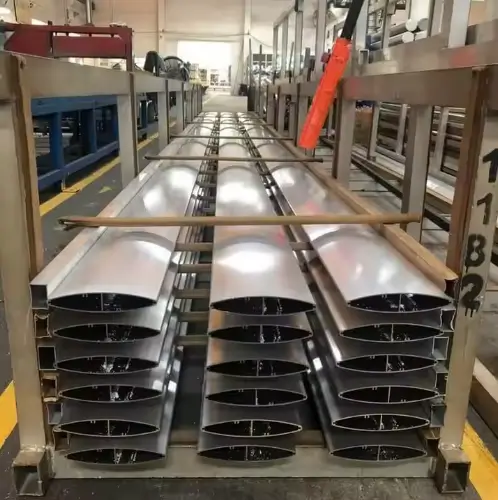
Aluminum extrusions often fail at the final step. Poor cutting ruins tight tolerances, delays assembly, and creates hidden costs. Many buyers only notice problems after parts reach the production line.
Precision cutting requirements define how accurate, clean, and repeatable aluminum extrusion cuts must be so parts fit, function, and assemble without rework or waste.
This topic matters because cutting is the last irreversible step. Once material is cut wrong, no surface treatment or machining can fully fix it. Understanding the rules behind precision cutting helps buyers avoid quality risks before orders begin.
What are precision standards for cutting extrusions?

Aluminum extrusions look simple, but cutting them precisely is not. Small errors grow fast when parts move into assembly. Many projects fail because buyers and suppliers never align on real cutting standards.
Precision standards define allowable tolerances for length, angle, squareness, and surface condition so extrusions meet design and assembly needs.
Precision cutting standards usually come from three sources. The first is the drawing. The second is industry norms. The third is the actual use case. All three must match, or problems will follow.
Length tolerance control
Length tolerance is the most basic requirement. Yet it is often misunderstood. Many buyers assume tighter is always better. That is not true. Overly tight tolerances raise cost and slow production without adding value.
Typical length tolerances depend on profile size and cut method.
| Cut Length Range | Standard Tolerance | High Precision Tolerance |
|---|---|---|
| Below 500 mm | +/- 0.5 mm | +/- 0.1 mm |
| 500–2000 mm | +/- 1.0 mm | +/- 0.2 mm |
| Above 2000 mm | +/- 1.5 mm | +/- 0.3 mm |
Short parts are easier to control. Long extrusions flex during cutting. This makes tight tolerance harder and slower.
Squareness and angle tolerance
Squareness matters when parts butt together or slide into frames. A cut that looks straight can still be out of square. Even a small angle error creates gaps or stress during assembly.
Most industrial applications accept squareness within 0.3 mm per 100 mm. For precision frames, this may drop to 0.1 mm per 100 mm. Achieving this needs stable fixtures and sharp blades.
Cut surface quality
Precision standards also include surface condition. A clean cut face improves fit and safety. Rough surfaces increase burr risk and weaken joints.
Surface quality depends on blade type, speed, and extrusion alloy. Softer alloys smear more. Harder alloys chip more. Standards usually define limits on visible saw marks and deformation.
Matching standards to real use
Not every extrusion needs the same precision. Solar frames differ from machine bases. Lighting housings differ from structural beams. Precision standards must match the function, not just the drawing.
Over-specifying precision increases cost. Under-specifying creates risk. Clear standards protect both sides.
Precision cutting standards must align with real assembly needs, not just generic tight tolerances.True
Different applications require different levels of accuracy, and unnecessary tight tolerances increase cost without improving function.
All aluminum extrusions should always be cut with the tightest possible tolerance to ensure quality.False
Excessively tight tolerances raise cost and slow production without adding value for many applications.
Which tools ensure consistent cut accuracy?

Even the best standards fail without the right tools. Cutting accuracy is controlled by machines, fixtures, and blades working together. Weak links show up as variation, not always as obvious defects.
Consistent cut accuracy comes from rigid machines, stable fixturing, sharp blades, and controlled feed systems working as a single process.
Precision cutting is not about one tool. It is about system stability.
Saw types and their roles
Different saws serve different precision levels.
| Tool Type | Accuracy Level | Typical Use Case |
|---|---|---|
| Manual saw | Low | Short runs, loose tolerance |
| Semi-automatic saw | Medium | Standard industrial cutting |
| CNC automatic saw | High | High volume, tight tolerance |
Manual saws rely on operator skill. Variation is unavoidable. Semi-automatic saws reduce error but still depend on setup quality. CNC saws control feed length digitally, which improves repeatability.
Blade selection and condition
Blade choice matters as much as the machine. Tooth count, tooth shape, and blade material all affect accuracy.
Fine tooth blades give smoother cuts but cut slower. Coarse blades cut fast but leave rough edges. Using the wrong blade increases burrs and length variation.
Blade wear is another hidden risk. A dull blade pushes material instead of cutting it. This causes deformation and angle error. Many quality issues trace back to poor blade maintenance.
Fixturing and clamping
Extrusions are hollow and light. They move easily during cutting. Good fixturing prevents vibration and rotation.
Soft jaws protect surface finish. Multi-point clamping spreads force evenly. Poor clamping creates angled cuts even on good machines.
Measurement and feedback
Accuracy improves when cutting is measured often. Inline length checks catch drift early. Feedback loops allow adjustments before scrap builds up.
Cutting tools alone do not guarantee precision. Measurement completes the system.
Stable fixturing and sharp blades are as important as the cutting machine itself for accuracy.True
Even advanced machines produce inconsistent results if material is not held securely or blades are worn.
CNC saws eliminate the need for blade maintenance and fixturing control.False
CNC control improves repeatability, but blade condition and clamping still directly affect cut quality.
Can high-speed cutting impact edge quality?

High-speed cutting looks efficient. Parts move fast, output rises, and cycle time drops. But speed always has a trade-off. Edge quality often pays the price.
High-speed cutting can reduce edge quality if speed exceeds the alloy, blade, and fixture limits of the extrusion.
Speed must match material behavior.
Heat generation and material response
Aluminum conducts heat well, but thin walls heat fast. High blade speed increases friction. This softens the cut edge and causes smearing instead of clean separation.
Smearing creates rough edges and built-up material. This raises burr risk and worsens surface finish.
Vibration and chatter
At high speed, even small imbalance causes vibration. Hollow profiles amplify this effect. Vibration leaves wave marks on cut faces and reduces squareness.
Rigid machines handle speed better. Light-duty saws do not.
Alloy differences
Not all aluminum alloys cut the same. Softer alloys deform more at high speed. Harder alloys chip instead.
Matching speed to alloy avoids both problems.
Finding the balance
The goal is stable cutting, not maximum speed. Many shops use test cuts to find the safe window where speed, finish, and accuracy align.
High speed works best with sharp blades, rigid frames, and consistent profiles. Without these, slowing down improves quality more than it hurts output.
Excessive cutting speed can increase burr formation and reduce edge quality.True
High speed raises heat and vibration, which negatively affects cut surface condition.
Higher cutting speed always improves aluminum extrusion cut quality.False
Beyond a certain point, increased speed causes heat, vibration, and edge damage.
How is burr minimization handled during cutting?

Burrs seem small, but they cause big problems. They cut hands, block assembly, and increase rework. Burr control starts at cutting, not after.
Burr minimization is achieved through proper blade selection, optimized cutting parameters, stable clamping, and secondary deburring when needed.
Ignoring burrs early raises cost later.
Root causes of burrs
Burrs form when material bends instead of shears. This happens due to dull blades, wrong tooth geometry, or unstable cutting.
Thin walls are most sensitive. Hollow profiles trap burrs inside, making them harder to remove.
Blade and parameter control
Sharp blades with correct tooth angles shear cleanly. Slower feed with stable speed reduces tearing. Too fast feed increases burr size.
Matching parameters to profile geometry matters more than generic settings.
Process-based prevention
Good clamping reduces vibration. Support blocks reduce exit tear-out. Cutting from the strongest side of the profile improves results.
Preventing burrs costs less than removing them.
Secondary deburring methods
Some applications still need deburring. Methods include brushing, tumbling, and manual scraping. Each adds cost and time.
Deburring should be specified clearly. Unclear requirements lead to disputes and delays.
Buyer responsibility in burr control
Buyers must define acceptable burr limits. Visual standards help. A simple sample avoids confusion better than words.
Clear burr criteria protect both quality and schedule.
Most burr problems should be prevented during cutting rather than fixed later.True
Upstream control reduces cost, handling, and rework compared to secondary deburring.
Burrs are unavoidable and should always be removed only after cutting.False
Proper blade, speed, and clamping choices can greatly reduce burr formation at the cutting stage.
Conclusion
Precision cutting defines whether aluminum extrusions succeed or fail in real use. Clear standards, proper tools, controlled speed, and burr prevention work together. When cutting is treated as a system, quality becomes predictable instead of reactive.


