Aluminum extrusion options for structural framing?

Many projects fail before they even start. The wrong frame choice leads to bending, vibration, or early failure. Many buyers assume all aluminum extrusions work the same. That assumption creates risk.
Aluminum extrusions offer flexible, strong, and scalable options for structural framing when the correct profile, alloy, and design method are used.
Structural framing is not only about strength. It is about load paths, connection design, and long-term stability. This article explains how to choose aluminum extrusion options for real structural use.
Which extrusion types are ideal for structural use?

Structural frames fail when profiles are chosen by appearance instead of function. Thin walls, open sections, and weak joints cause hidden problems.
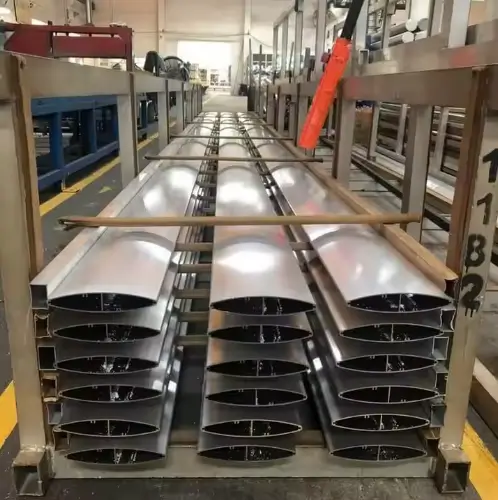
Closed and semi-closed aluminum extrusion profiles with thicker walls are ideal for structural framing due to better load distribution and torsional resistance.
Choosing the right extrusion type is the first step toward a safe frame.
Common structural aluminum extrusion types
Not every extrusion works for structure. Some are decorative. Some are load-bearing.
The most common structural types include:
- Square and rectangular hollow profiles
- T-slot industrial profiles
- I-beam and T-beam sections
- Box sections with internal ribs
Each type handles loads differently.
Why hollow sections perform better
Closed hollow profiles resist bending and twisting better than open shapes. The load spreads across the full perimeter.
This makes them stable under both vertical and horizontal forces.
Comparison of common extrusion types
| Profile type | Bending resistance | Torsion resistance | Typical use |
|---|---|---|---|
| Open U-shape | Low | Very low | Light frames |
| T-slot profile | Medium | Medium | Modular systems |
| Square hollow | High | High | Structural frames |
| Box with ribs | Very high | Very high | Heavy load frames |
This table shows why hollow sections dominate structural designs.
Wall thickness matters more than size
Many buyers focus only on outer dimensions. This causes under-design.
A large profile with thin walls can fail earlier than a smaller profile with thick walls.
Wall thickness directly affects:
- Buckling resistance
- Fatigue life
- Joint strength
Real production experience
In one project, a customer selected a wide T-slot profile to support moving equipment. The frame vibrated during operation.
After switching to a box section with internal ribs, vibration dropped sharply without increasing size.
Closed aluminum extrusion profiles provide better structural performance than open sections.True
Closed profiles distribute stress evenly and resist bending and twisting.
Any aluminum extrusion can be used safely for structural framing if the size is large enough.False
Profile shape and wall thickness are critical, not just size.
How are frame profiles selected based on load?

Load miscalculation is a silent failure cause. Many frames look strong but fail under dynamic or uneven loads.
Frame profile selection must be based on load type, direction, magnitude, and safety factor, not only static weight.
Understanding load behavior changes how profiles are selected.
Types of loads in structural framing
Structural frames rarely carry only one load type.
Common loads include:
- Static loads from equipment weight
- Dynamic loads from motion
- Impact loads from sudden force
- Distributed loads along beams
Each load affects the frame differently.
Load direction and stress paths
Vertical loads cause bending. Horizontal loads cause shear. Torsion comes from offset forces.
Profiles must align with load paths to avoid stress concentration.
Basic load selection logic
The process usually follows these steps:
- Identify maximum load
- Identify load direction
- Determine span length
- Select safety factor
- Check deflection limits
Skipping any step leads to risk.
Typical safety factors used
| Application type | Safety factor |
|---|---|
| Static equipment | 1.5 to 2.0 |
| Moving machinery | 2.0 to 3.0 |
| Human access | 3.0 or higher |
Higher safety factors reduce deflection and fatigue risk.
Deflection matters more than failure
Many aluminum frames do not break. They bend too much.
Excessive deflection causes:
- Misalignment
- Noise
- Fastener loosening
- Fatigue cracks
Design limits often use deflection ratios like L/200 or L/300.
Practical design example
A conveyor frame carried only moderate weight. The profile strength was enough, but deflection caused belt tracking issues.
After switching to a taller profile with the same weight, deflection dropped without changing material cost.
Profile selection must consider load direction and deflection limits, not only strength.True
Frames often fail due to excessive bending rather than fracture.
If an aluminum frame does not break, it is structurally acceptable.False
Excessive deflection can still cause functional and fatigue problems.
Can extrusions replace steel in structural framing?

Steel is often seen as the default structural material. Aluminum is sometimes dismissed too early.
Aluminum extrusions can replace steel in many structural framing applications when weight reduction, corrosion resistance, and modularity are priorities.
The decision depends on application goals, not tradition.
Strength-to-weight advantage
Aluminum has lower absolute strength than steel. But it is much lighter.
This gives aluminum a strong strength-to-weight ratio.
For many frames, weight matters more than ultimate strength.
Corrosion and environment
Steel needs coating or painting. Aluminum forms its own oxide layer.
In humid or outdoor environments, aluminum often lasts longer with less maintenance.
Fabrication and assembly benefits
Aluminum extrusions allow:
- Bolt-together assembly
- Modular expansion
- Reduced welding
- Faster installation
These benefits reduce labor cost.
Comparison between aluminum and steel frames
| Property | Aluminum extrusion | Steel structure |
|---|---|---|
| Weight | Low | High |
| Corrosion resistance | High | Medium |
| Fabrication speed | Fast | Slower |
| Modularity | Excellent | Limited |
| Initial material cost | Higher | Lower |
This table shows trade-offs, not a winner.
Where aluminum should NOT replace steel
Aluminum is not ideal for:
- Very high temperature zones
- Extreme impact loads
- Ultra-heavy static loads
In these cases, steel still dominates.
Real project insight
In a factory platform project, switching from steel to aluminum reduced total weight by over 40 percent.
This allowed smaller foundations and faster installation.
Aluminum extrusions can replace steel in many structural framing applications.True
Aluminum offers weight, corrosion, and modular advantages.
Aluminum extrusions are always weaker and unsafe compared to steel structures.False
Properly designed aluminum frames can meet many structural requirements safely.
What designs improve stability in structural systems?

Many structural failures come from poor design, not weak material. Profiles alone do not guarantee stability.
Structural stability improves through proper geometry, bracing, joint design, and load distribution.
Design choices often matter more than material grade.
Importance of triangulation
Triangular shapes resist deformation. Rectangles do not.
Adding diagonal bracing increases stiffness without much extra weight.
Joint design and connection strength
Weak joints ruin strong frames.
Bolted connections must:
- Spread load evenly
- Prevent rotation
- Maintain preload
Loose joints create vibration and fatigue.
Frame geometry principles
Stable frames follow simple rules:
- Shorter spans reduce bending
- Taller sections increase stiffness
- Symmetry balances load
Ignoring geometry causes uneven stress.
Common stability improvements
| Design method | Stability benefit |
|---|---|
| Diagonal bracing | Reduces sway |
| Gusset plates | Strengthen joints |
| Ribbed profiles | Increase stiffness |
| Load sharing beams | Reduce peak stress |
These methods work together, not alone.
Vibration control in aluminum frames
Aluminum is lighter, so vibration needs attention.
Solutions include:
- Increasing section height
- Adding damping elements
- Improving joint tightness
Ignoring vibration leads to noise and fatigue.
Design lesson from experience
In one automated system, the frame met strength limits but vibrated during operation.
After adding diagonal braces, vibration dropped without changing profiles.
Structural stability depends heavily on frame geometry and joint design.True
Good design distributes load and limits deformation.
Using thicker aluminum profiles alone guarantees structural stability.False
Poor geometry and weak joints can still cause instability.
Conclusion
Aluminum extrusion structural framing succeeds when profile type, load analysis, material choice, and design geometry work together. Smart selection and proper design allow aluminum frames to be strong, stable, and reliable across many structural applications.