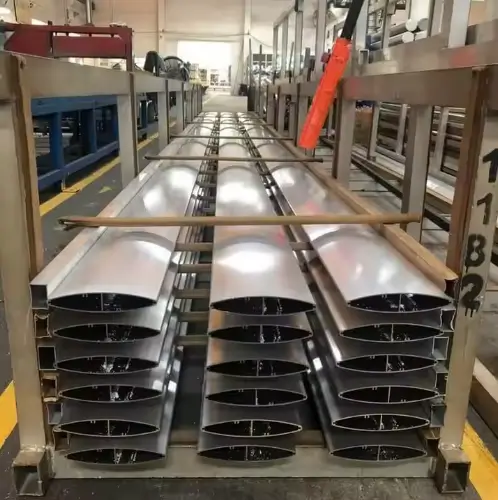
Aluminum extrusion for transportation equipment?
Transportation equipment faces constant pressure. Vehicles must be lighter, safer, and cheaper to run. Many buyers still rely on steel and face high fuel cost and design limits. This gap creates stress for manufacturers and operators.
Aluminum extrusion is widely used in transportation equipment because it offers a strong balance of weight, strength, and design freedom while supporting long service life and lower operating cost.
As someone working closely with industrial buyers, this topic comes up often. Many teams know aluminum matters, but they want clear reasons and real use cases. That is why it is worth breaking this topic down step by step.
Why is aluminum extrusion used in transport vehicles?

Transport vehicles operate under tough conditions. Designers must control weight, ensure safety, and meet tight budgets. Traditional materials often create tradeoffs. Aluminum extrusion reduces many of these limits at once.
Aluminum extrusion is used in transport vehicles because it allows complex shapes, reduces weight, resists corrosion, and supports efficient mass production.
Aluminum extrusion starts with a simple idea. Heated aluminum is pushed through a die to form a fixed cross section. This process gives engineers strong control over shape and structure.
Design freedom supports system integration
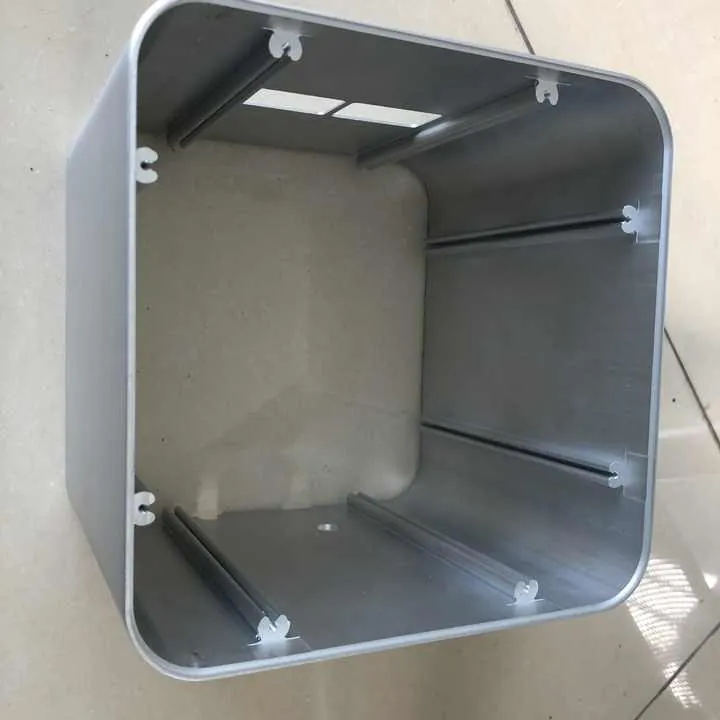
Extrusion allows hollow sections, internal ribs, and multi-function profiles. One profile can replace several welded steel parts. This lowers part count and simplifies assembly.
Design teams can integrate:
- Cable channels
- Mounting grooves
- Drain paths
- Reinforcement ribs
All inside one profile. This is hard to achieve with rolling or casting.
Weight reduction without strength loss
Aluminum has about one third the density of steel. Yet with proper profile design, it can meet strength needs. Engineers place material only where load exists. This improves strength to weight ratio.
In transport vehicles, lower weight means:
- Lower energy use
- Higher payload
- Less wear on brakes and tires
Corrosion resistance matters in daily use
Vehicles face rain, snow, salt, and heat. Aluminum naturally forms an oxide layer. This protects it from rust. With anodizing or coating, life span improves further.
This reduces:
- Maintenance cost
- Downtime
- Surface damage risk
Scalable production fits transport volumes
Extrusion supports both medium and large volumes. Once a die is ready, output stays stable. Profiles remain consistent over long runs. This is key for buses, rail cars, and trailers.
Below is a simple comparison of material behavior.
| Property | Aluminum Extrusion | Carbon Steel |
|---|---|---|
| Density | Low | High |
| Corrosion resistance | High | Low |
| Design flexibility | High | Medium |
| Assembly complexity | Low | High |
Aluminum extrusion allows designers to combine multiple functions into a single profile.True
Extrusion enables complex internal and external shapes that replace several welded or bolted parts.
Aluminum extrusion is mainly used because it is cheaper than steel in raw material price.False
Aluminum often costs more per kg, but total system cost is lower due to weight and processing savings.
What benefits do extrusions offer in buses or trains?

Public transport vehicles operate for decades. They need durability, safety, and easy repair. Aluminum extrusion fits these needs well.
In buses and trains, aluminum extrusions provide long service life, modular design, improved safety, and lower life cycle cost.
This benefit becomes clear when looking at real vehicle structures.
Structural efficiency in large bodies
Buses and rail cars use long profiles for:
- Side walls
- Roof beams
- Floor frames
Extrusion allows long straight sections with constant quality. This supports large vehicle bodies without heavy reinforcement.
Modular construction improves repair
Extruded profiles support modular assembly. Panels and frames bolt or rivet together. If damage occurs, sections can be replaced without cutting the whole body.
This matters for fleet operators who value uptime.
Fire and safety performance
Transport standards often require fire resistance. Aluminum does not burn. It also does not release toxic smoke like some plastics.
Designers can add fire barriers and insulation within extruded cavities. This improves safety without extra space.
Noise and vibration control
Extrusions support precise tolerances. This helps reduce vibration and rattling. Rubber inserts and insulation fit easily into profile channels.
Noise control improves passenger comfort in trains and buses.
Surface finish and branding
Extruded aluminum accepts many finishes:
- Anodizing
- Powder coating
- Painting
This helps with branding and appearance. It also protects surfaces in heavy use.
Below is a table showing common extrusion uses.
| Vehicle Area | Extruded Profile Role | Key Benefit |
|---|---|---|
| Side wall | Frame and stiffener | Weight reduction |
| Roof | Beam support | High stiffness |
| Floor | Load distribution | Durability |
| Door system | Track and guide | Precision |
Aluminum extrusions help extend the service life of buses and trains.True
Corrosion resistance and modular repair improve long term durability.
Extrusions are mainly used in buses for decorative parts only.False
They are widely used in structural and safety critical components.
Can extrusions reduce total vehicle weight?
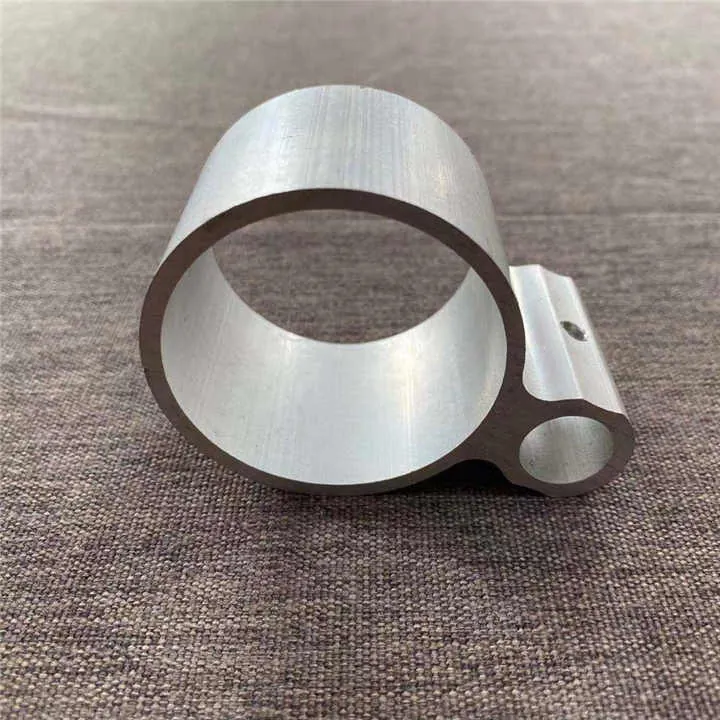
Weight reduction is one of the strongest drivers in transport design. Lower weight improves efficiency and lowers emissions. Aluminum extrusion plays a direct role here.
Yes, aluminum extrusions can significantly reduce total vehicle weight while maintaining required strength and stiffness.
This impact is measurable across many vehicle types.
Density advantage creates a baseline saving
Aluminum density is about 2.7 g per cubic cm. Steel is about 7.8. Even before design optimization, this offers a major weight drop.
Shape optimization multiplies the effect
Extrusion allows engineers to tune wall thickness and internal ribs. Material is added only where stress exists.
This avoids overdesign. Steel parts often need extra thickness for forming or welding.
System level weight reduction
Weight saving does not stop at one part. Lighter frames allow:
- Smaller suspension systems
- Reduced axle load
- Lower brake size
This creates a chain effect. Total vehicle mass drops further.
Energy and emission impact
For electric buses and trains, lower weight means:
- Longer range
- Smaller battery packs
- Lower charging cost
For diesel vehicles, fuel use drops over time.
Realistic expectations
Weight reduction varies by design. In many cases:
- Steel to aluminum frame: 30 to 50 percent lighter
- Body panels: 20 to 40 percent lighter
Below is a simple example.
| Component | Steel Weight | Aluminum Extrusion Weight |
|---|---|---|
| Side frame | 100 kg | 55 kg |
| Roof beam | 80 kg | 45 kg |
| Floor support | 120 kg | 70 kg |
Reducing vehicle weight with extrusions can also reduce energy consumption.True
Lower mass directly reduces energy needed for movement.
Aluminum extrusions reduce weight but always reduce strength.False
Properly designed extrusions meet or exceed required strength levels.
Are there certifications for transport-grade profiles?

Transport buyers often ask about standards. Certifications help reduce risk and ensure safety. Aluminum extrusion profiles follow clear rules in this sector.
Yes, transport-grade aluminum extrusions are produced under specific material, process, and quality certifications.
These certifications vary by region and application.
Material standards
Transport profiles often use specific alloys and tempers. Common grades include:
- 6063 for surface quality
- 6061 for higher strength
Material standards define chemical composition and mechanical properties.
Process and quality control
Factories follow quality systems that control:
- Billet sourcing
- Extrusion temperature
- Die maintenance
- Dimensional checks
This ensures consistent output.
Transport specific approvals
Rail and public transport often require extra testing. This may include:
- Fatigue testing
- Fire performance
- Weld quality checks
Third party inspection is common.
Documentation and traceability
Certified suppliers provide:
- Mill test certificates
- Inspection reports
- Batch traceability
This supports audits and long term supply contracts.
Below is a general overview.
| Certification Type | Purpose |
|---|---|
| Quality system | Process control |
| Material standard | Alloy and temper |
| Fire safety | Passenger protection |
| Inspection report | Proof of compliance |
Transport-grade aluminum profiles usually require documented quality control.True
Certifications rely on traceability and controlled production.
There are no special standards for aluminum used in trains or buses.False
Public transport applications often require additional testing and approval.
Conclusion
Aluminum extrusion plays a key role in modern transportation equipment. It supports lighter vehicles, flexible design, long service life, and controlled quality. These advantages explain why it continues to replace traditional materials in buses, trains, and other transport systems.