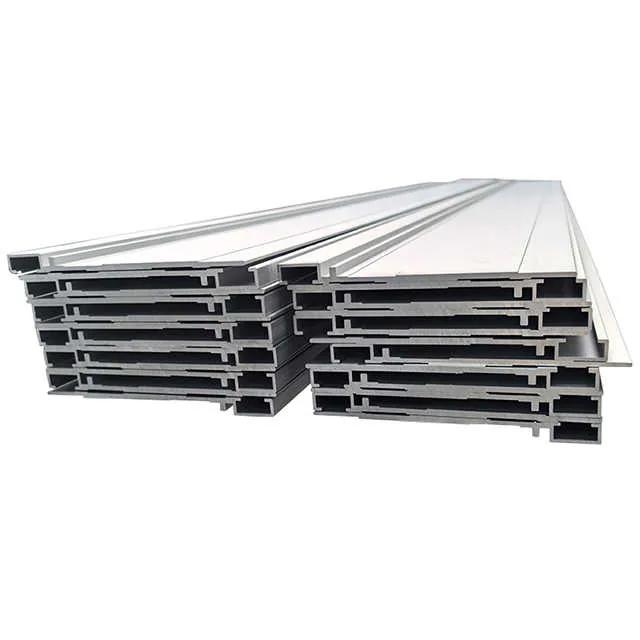
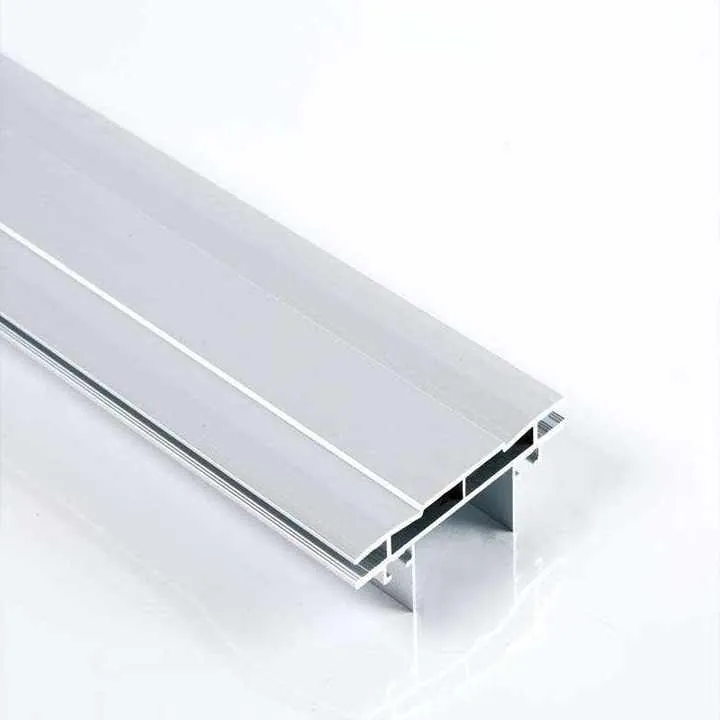
Aluminum extrusion for battery cooling systems?

In EV battery systems, overheating is a silent enemy. Without proper cooling, packs degrade fast and risk safety. Aluminum extrusion offers a low‑cost, high‑efficiency way to keep cells cool and stable.
Aluminum extrusion delivers excellent thermal conductivity, structural strength, and design flexibility. These traits make it ideal for EV battery cooling plates and enclosures needing efficient heat dissipation.
That advantage matters for electric vehicles. A good cooling design keeps temperature even. That improves safety, performance, and battery life. In the rest of this article, I explore why extrusion is used, which designs help heat control, how performance is tested, and whether extruded parts merge with battery enclosures.
Why is aluminum extrusion used in EV battery cooling?
Aluminum extrusion helps solve two big problems in EV battery packs: heat buildup and need for rigid structure. Many battery cells produce heat when charging or discharging. Without cooling, heat can concentrate. Aluminum conducts heat quickly away from hot cells. It also adds strength and shapes that match battery layout.
Aluminum extrusion is used because it offers high thermal conductivity, supports complex channel shapes for coolant flow, and provides strength for structural support in battery modules.
Battery packs need cooling plates that guide coolant fluid evenly near many cells. Aluminum extrusions allow co‑designed channels that follow cell layouts. They also help form rigid modules that resist vibration and crash loads. Using extrusion, manufacturers keep cooling efficient and structure strong.
Dive deeper
Aluminum has key physical traits that work well for battery cooling. For example, the alloy (often 6000‑series) has thermal conductivity around 150–180 W/mK. That is much higher than steel or many plastics. This helps pull heat away fast. Also, extrusion lets makers shape internal fluid channels, outer fins, or ribs to match the pack layout. This flexibility matters because battery packs come in many shapes and sizes depending on vehicle model.
Here is a table that shows common materials and why aluminum works well compared to others:
| Material | Thermal Conductivity (approx) | Structural Strength | Manufacturability for Cooling Plates |
|---|---|---|---|
| Aluminum 6063 | ~170 W/mK | Moderate | Easy extrusion; complex shapes |
| Aluminum 6061 | ~160 W/mK | Higher than 6063 | Good extrusion; strong after temper |
| Steel (mild) | ~50 W/mK | High | Harder to machine; heavy |
| Plastic (PA, PP) | ~0.2 W/mK | Low | Easy to mold; poor heat transfer |
Because of that conductivity and machinability, aluminum is often the go-to. Extrusion is cheaper than machining a big block. It lets makers embed cooling channels inside plates. Those channels guide coolant close to battery cells. This gives better heat removal than bonding or gluing separate plates and tubes.

Also, extruded plates add structural frame support for battery modules or enclosures. In many EVs, the battery pack doubles as chassis stiffener. In that role, aluminum extrusion supports loads and maintains alignment. That saves space and weight compared to a separate frame plus cooling tubes.
Aluminum extrusion is often chosen for battery cooling because it combines high thermal conductivity and ability to embed coolant channels.True
Extrusion allows internal channels and uses aluminum conductivity, ideal for cooling plates.
Steel is better than aluminum for battery cooling plates because of its structural strength.False
Steel has lower thermal conductivity, making it poor for heat transfer compared to aluminum.
Which designs improve thermal regulation efficiency?
Good cooling performance depends on design geometry. Simple flat plates help some. Better designs use internal coolant channels, fins, ribs, and multiple flow paths. These features increase surface contact with coolant, spread heat evenly, and avoid hotspots.
Designs with well‑placed internal channels, high surface area fins, and uniform coolant flow improve thermal regulation efficiency in battery cooling applications.
Layouts vary by pack geometry, cell arrangement, and cooling strategy. Designers often use serpentine channels or parallel flow paths. They also integrate fins or webs inside extrusion to spread heat across broad area. Complexity rises when dealing with many cells in arrays.
Dive deeper
Good cooling design begins with channel layout. For a battery pack with many cells in rows, channels must pass close to each cell group. If channels are too far, coolant will not absorb heat effectively. Engineers often map cell positions and design extrusion cross‑section accordingly. That planning ensures near‑cell cooling.
Fins or webs inside the extrusion increase how much aluminum touches coolant. That means more heat moves from cell to fluid per time. More surface area = better heat exchange.
Here are common design elements and their impact:
| Design Feature | Impact on Thermal Efficiency |
|---|---|
| Multiple narrow channels | Better heat removal, higher surface contact |
| Serpentine flow | Slower flow, more time for heat transfer |
| Parallel flow paths | Even temperature distribution |
| Fins inside channels | Increases turbulence and surface contact |
| Thin walls between channels | Faster heat transfer from cells |
Flow path topology matters too. If coolant enters at one end and exits at another, cells near entrance might get more cooling. To avoid that, many designs use parallel paths or branching manifolds. That keeps temperature uniform.
Adding fins and multiple coolant channels in an aluminum extrusion improves heat transfer efficiency.True
More surface area and coolant contact paths allow better heat exchange and more uniform cooling.
Using a single wide channel always provides better cooling than multiple narrow channels.False
Single wide channel may reduce surface contact and cause poor coolant distribution compared to multiple narrow paths.
How is thermal performance validated in testing?
Design looks good on paper. But actual thermal performance needs testing. Manufacturers test cooling plates with dummy or real battery modules. They monitor temperature distribution, coolant flow, pressure drop, and long‑term thermal cycling.
Thermal testing usually involves coolant flow tests, thermal cycling, and measurement of temperature uniformity under load. This ensures the extrusion design cools effectively and reliably across full battery pack use.
OEMs or suppliers simulate charging, fast charging, discharging, and ambient heat. They record data to confirm no hotspots or leaks, and to ensure the plate survives real‑world conditions.

Dive deeper
Testing often begins with flow and pressure tests. Engineers connect the extrusion cooling plate into a test rig. They flow coolant at a set rate and measure pressure drop across the plate. High drop signals poor design.
Next, they apply thermal load. Dummy heaters mimic real battery cells. Sensors and thermal cameras monitor temperature. Goal: uniform heat distribution, no hotspots.
Common test types include:
| Test Type | Typical Conditions | Pass Criteria |
|---|---|---|
| Flow & pressure | 2–5 L/min; room temp coolant | Pressure drop < 1.0 bar |
| Heat soak test | 3–5 kW thermal load | Max surface delta T < 10 °C |
| Thermal cycling | -20°C to +60°C, 1000+ cycles | No cracks, leaks, or warping |
| Vibration & impact | Combined with coolant flow | Structure and seal integrity intact |
Mechanical testing may follow. Engineers simulate road shock and crash. They ensure extrusion holds coolant and structural form under vibration and impact.
I’ve seen even small warps in wall thickness cause failures in tests. That’s why aluminum extrusion quality and machining precision are key to real-world reliability.
Thermal cycling tests are important to ensure aluminum extruded cooling plates do not deform over repeated temperature changes.True
Repeated heating and cooling can stress aluminum; testing ensures durability and no warping or leaks.
Passing a single coolant flow test is enough to guarantee long‑term reliability.False
Long‑term reliability requires repeated thermal cycling and structural tests, not just a single flow run.
Are extrusions integrated with battery enclosures?
Many EV makers merge cooling plates with the battery enclosure or module housing. That means the extrusion serves dual roles: thermal regulator and structural support. This saves parts, weight, and cost.
Yes. Aluminum extrusions are often combined with battery enclosures or module frames. That design reduces part count, increases structural integrity, and supports efficient manufacturing.
Extrusions with coolant channels, sealing features, and mounting surfaces support both cooling and structural roles in one compact part.
Dive deeper
Design teams often begin integration with a 3D model of the pack. They map out cell layout, mounting holes, coolant inlets, and sealing zones. The goal: one part that cools, protects, and supports.
This integration simplifies:
- Assembly: fewer parts, fewer fasteners
- Logistics: fewer SKUs and suppliers
- Cost: less machining, welding, and testing
- Space: lower pack height and fewer overlaps
But challenges include:
- Complex cross‑sections for extrusion dies
- Need for sealing around internal coolant paths
- Risk of leak in structural part (repair cost high)
- Difficulty of replacing parts (maintenance planning needed)
Still, benefits often outweigh costs. In fact, many battery packs use full‑length extrusions with both coolant paths and load-bearing frames.
Some designs even integrate extrusions on side walls or lids. The result: modular, compact, and thermally efficient battery packs.
Combining cooling channels and structural support in one extrusion reduces overall part count and saves weight.True
Integrated design merges cooling plate and structural frame, reducing redundant parts and material.
Integrated extrusion design always makes maintenance easy.False
If cooling and structure are combined, a leak or damage may require replacing whole unit, complicating maintenance.
Conclusion
Aluminum extrusion shines in EV battery cooling thanks to its thermal, structural, and design strengths. Smart designs with internal channels and fins boost cooling. Rigorous testing ensures performance and durability. Many packs combine extrusion with enclosure to save weight, cost, and assembly time. Overall, extrusion plays key role in safe, efficient, compact battery systems.