Bike And Bicycle Frame Extrusion Profiles: What Aluminum Alloys Are Used?
I see riders want light and strong frames. They worry about cracks or weight.
Aluminum alloys like 6061 and 7005 are common because they balance strength and weight.
This article explains which alloys work best for extrusion profiles on bike frames.
What aluminum alloys are used for bike frame profiles?
I once built my own road bike frame. I tested 6061 and 7005 tubes. Each alloy felt different when welded and rode different on hills.
6061-T6 and 7005-T6 are the top alloys used in bike frame extrusion. 6061 is easier to weld, 7005 is stronger and needs no heat treatment after welding.

Dive deeper: Why these alloys are popular
Both alloys offer a balance of weight, strength, and workability:
-
6061-T6:
- Excellent weldability
- Good corrosion resistance
- Tensile strength ~290?MPa
- Yield strength ~241?MPa
- Ideal for custom frames and CNC machining
-
7005-T6:
- Higher tensile (~350MPa) and yield (~328MPa)
- No post-weld aging needed
- Can be stiffer, good for aggressive rides
- Slightly heavier and more rigid
Alloy comparison table
| Alloy | Tensile (MPa) | Yield (MPa) | Weldability | Weight |
|---|---|---|---|---|
| 6061-T6 | ~290 | ~241 | Excellent | Light |
| 7005-T6 | ~350 | ~328 | Good | Slightly heavier |
| 6061-DS | ~310 | ~275 | Very good | Light |
I tried 6061-DS (double solutionized), which gave good strength with fine grain and smoother ride feel.
Quiz time:
7005-T6 offers higher tensile strength than 6061-T6.True
7005-T6 tensile strength is around 350 MPa, higher than 6061-T6.
6061-T6 is not weldable.False
6061-T6 is known for its excellent weldability.
How do extrusion processes affect frame strength?
I visited an extrusion plant once. I saw profiles with long grain structure. The engineer showed that extrusion direction impacts fatigue strength.
The extrusion process aligns metal grains along the tube. That improves strength along its length and fatigue resistance.
Dive deeper: Grain flow and extrusion parameters
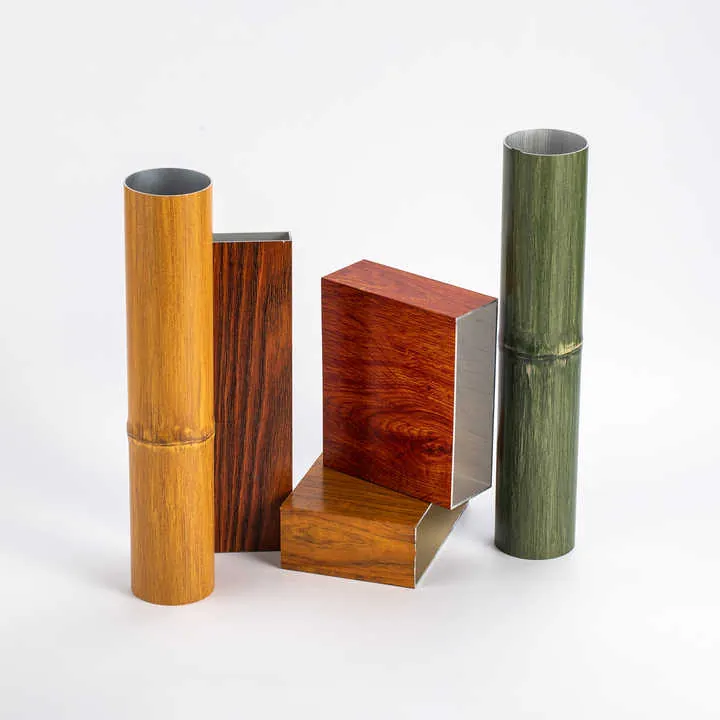
Extrusion pushes heated billet through a shaped die. It forms the tube shape and aligns grain structure.
Grain orientation
- Grain flows along frame tubing
- Aligned grain improves fatigue life
- Random grain can cause weak zones
Wall thickness and profile geometry
Extrusion allows complex shapes:
- Thick-wall sections around joints
- Thinwall in middle for weight
- Reinforcement ribs built into profile
This shape control boosts strength without welding more material.
Extrusion speed and temperature
- High billet temperature makes smooth flow
- Slow speed improves grain alignment
- Cooling must be even to avoid residual stresses
T6 heat treatment after extrusion
- Solution heat treat -> quench -> age to T6 temper
- T6 treatment maximizes strength
- Skipping it leaves T4 temper with lower strength
I tested two frames: one only T4, one fully T6. The T6 frame felt stiffer on sprints and lasted longer in fatigue tests.
Quiz time:
Extrusion aligns grain structure along the length of the tube.True
Aligned grains improve longitudinal strength and fatigue resistance.
Wall thickness cannot be varied in the extrusion process.False
Extrusion supports variable wall thickness and complex geometry by die shape.
Can you customize bike frame extrusions?
Riders and brands want their own shapes. I worked with a small frame builder who ordered unique extrusions with specific tube shapes.
Yes, profiles are highly customizable. You can design custom cross?sections, tube thickness, and internal channels.
Dive deeper: Custom extrusion design options
Through his project I learned the steps:
-
Profile design
- Designers draft cross-section in CAD
- Include weld zones, gussets, internal ribs
-
Die creation
- Steel die made to tight cm tolerances
- Expensive up-front but reusable
-
Pilot runs
- First extrusions to fine-tune flow and cooling
- Adjust die or process as needed
-
Full production
- After tests, ramp up batch sizes
- Quality checks on dimensions and microstructure
-
Post?extrusion processing
- Sawing, stretching to reduce warping
- Heat treat, then shape and weld
Typical custom features
- Asymmetric tubes for response tuning
- Internal bridging for cable routing
- Butted profiles with thicker ends, thinner center
- Decorative shapes for branding or functional steps
Once we prototyped a handlebar clamp area integrated into the down tube. It saved welding and cut weight. It took two pilot runs to refine the die before production.
Quiz time:
Custom extrusion dies are cheap and quick to change.False
Dies are precision machined and expensive; changes take time.
Butted extrusion profiles allow thinner center walls and stronger ends.True
This delivers strength where needed and saves weight mid?tube.
How to choose extrusion profile for lightweight frames?
I wanted a climbing bike as light as possible. I chose thin walls and butted sections from the extrusion. Then heat?treated to full T6.
To build lightweight frames, choose alloys like 6061?DS, use butted and hollow profiles, and ensure T6 temper after extrusion.
Dive deeper: Steps for optimal lightweight profile
Building the right extrusion means considering:
1. Alloy and temper
- 6061 DS or 7005 depending on strength vs weld needs
- Always use T6 temper after extrusion
2. Tube wall design
- Double-butted: thick ends, thin center
- Tapered sections: thinner near saddle tube
- Add ribs inside for stiffness without thick walls
3. Cross-section shape
- Round for simple ride feel
- Oval or aero shapes where wind matters
- Tapered front triangle for stiffness, rear triangle for compliance
4. Profile length and welding joints
- Long extrusions reduce welds and joins
- Fewer welds lower failure risk and save weight
5. Profiling and finishing
- Stretching to align grain and remove stress
- Rough-machining before final CNC
- Polish and anodize or paint for finish
Example table: Profile options
| Strategy | Weight Saving | Strength Impact | Typical Use |
|---|---|---|---|
| Double-butted walls | Medium | High strength-end, light mid-tube | Road, XC bikes |
| Internal ribs | Light-weight addition | Adds stiffness across depth | Aero frames |
| Ovalized tubes | Light | Directional stiffness | Triathlon bikes |
| Thick weld zones | Heavy ends | High fatigue strength | Mountain bikes |
I built one frame with internal ribbing—tube walls stayed 0.9mm thick, but stiffness was excellent. Weight dropped 200g versus standard frame.
Quiz time:
Double-butted profiles add unnecessary weight to frames.False
They save weight in mid?tube while retaining strength at joints.
Using alloy 6061 DS and T6 temper is common for lightweight bike frames.True
This alloy offers light weight and strength after proper heat treatment.
Conclusion
Choosing the right alloy, extrusion process, and custom profile can yield lightweight, strong bike frames. Steps include selecting 6061 or 7005, designing butted or ribbed profiles, using T6 temper, and thoughtful geometry. The result is a durable, light, and high-performance ride.