How to Design Aluminum Extrusions for Bending?
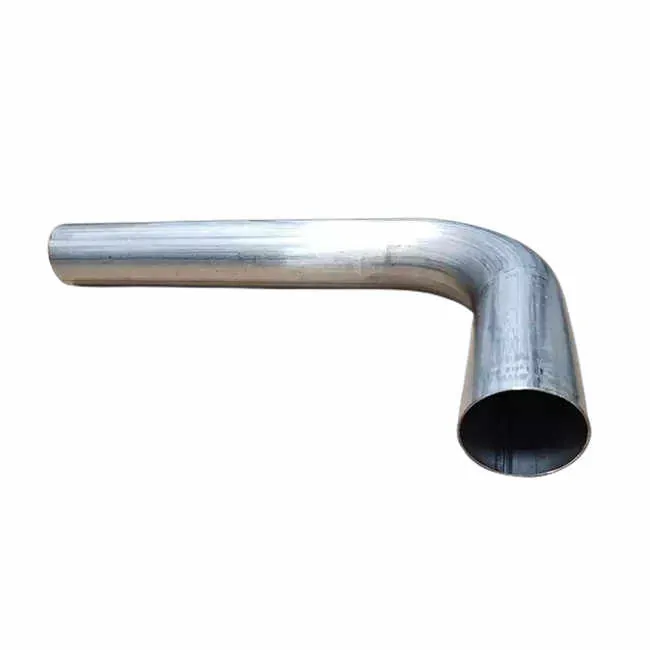
I once needed to bend a long aluminum handrail extrusion, but it squashed at corners. That taught me how cross-section, wall thickness, and tooling matter in bending success.
Designing extrusion profiles for bending lets you shape metal smoothly without wrinkles, cracks, or flattening.
Let’s explore section selection, radius calculation, wall thickness design, and techniques to control deformation.
What cross-section shapes bend most easily?

Some shapes flex better than others. Round or simple open shapes bend naturally, while complex closed profiles resist and wrinkle.
Round tubes, simple C/U profiles, and thick-walled hollow sections bend best. Complex shapes need careful support and tooling.
Profile Shape and Bendability
| Shape Type | Bendability | Behavior in Bending | Use Cases |
|---|---|---|---|
| Round Tube | Excellent | Uniform and smooth curvature | Railings, bike frames |
| Thin-walled C/U | Very Good | Bends without wrinkles if minimally loaded | Trim, rails, frames |
| Thick Hollow Box | Good | Smooth if round press-brakes or mandrels used | Shelving, enclosures |
| L-shape Angle | Moderate | May open legs if inner radius is small | Brackets, flanges |
| Complex Multi-cavity | Difficult | Risk of buckling or local deformation | Special shapes, needs mandrel |
Rounded sections allow equal outer and inner compression and stretching. Open shapes don’t lock hydrostatic pressure, so they follow the bend more easily. Complex profiles need internal support or segmented bending methods.
How to calculate bend radius for extrusion profiles?
Choosing the right bend radius ensures the section bends without failure. The thicker the wall, the larger the radius needed.
Minimum bend radius depends on wall thickness, profile width, material, and shape. The general rule: R ≥ K × wall thickness, where K depends on section type.
Radius Guidelines
| Section Type | Minimum Radius (R/wT) | Recommended R (×10mm wall) |
|---|---|---|
| Round Tube | ≥ 1.5× wT | Example: wT 3?mm → R ≥ 4.5?mm |
| C/U Channel | ≥ 2–3× wT | wT 2?mm → R ≥ 4–6?mm |
| Hollow Box | ≥ 3–4× shell thickness | 2?mm shell → R ≥ 6–8?mm |
| L-Angle | ≥ 4–5× wT | wT 3?mm → R ≥ 12–15?mm |
Steps to calculate:
- Identify wall thickness at the bend.
- Choose K value based on section complexity.
- Multiply to get minimum R.
- Add extra for tool clearances and springback.
For CNC bending or press brakes, standard mandrels, or roll benders, this rule guides tooling and protects the shape.
What wall thickness is optimal for bending?

Wall thickness is a double-edge sword: thick gives strength but resists bending; thin bends easily but wrinkles or flattens.
Optimal wall is where it supports the bend radius needed. For lightweight bends, 1.5–3?mm works well. Thicker walls need larger radii or internal support.
Thickness vs Bendability
| Wall Thickness | Bend Ease | Minimum Radius (for light shape) |
|---|---|---|
| 1.0 – 1.5?mm | Very Easy | 2–6?mm |
| 1.5 – 2.5?mm | Easy | 4–8?mm |
| 2.5 – 4.0?mm | Moderate | 8–15?mm (tooling may be needed) |
| >4.0?mm | Hard | >20–25?mm; use mandrel or segmentation |
Thicker walls resist wrinkling and maintain profile shape, but they become stiffer to bend. Wall thickness design must consider required bend radius and intended profile rigidity.
How to avoid wrinkling or flattening during bends?
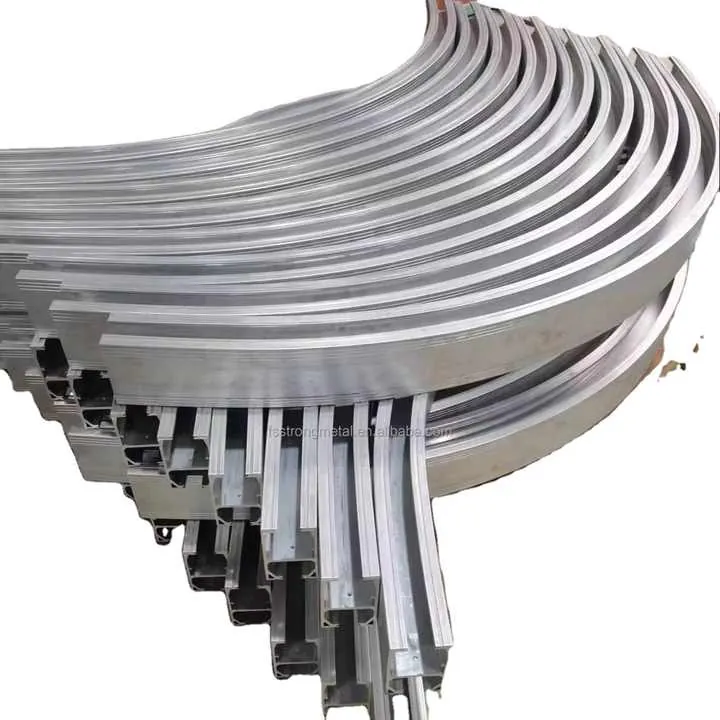
When bending extrusion, wrinkles on inner radius or flattening on outer can spoil the shape. Using inside supports and controlled bending methods helps.
To avoid defects, use mandrels, internal leaves, roller benders, or segmented bending methods depending on profile complexity.
Support Techniques
-
Mandrel bending
A plug inside prevents collapse and supports the load. Common in thin tubes. -
Internal Leaves
Soft inserts inside C/U sections to prevent walls buckling inward. -
Roll Benders
Three-roll machines bend round and square sections gradually and smoothly. -
Press Brake Forming
Use appropriate radius dies, step bending gradually, and back gauging for accuracy. -
Segmental Bending
Hand bend each side cleanly and weld or rivet together—used for ornamental shapes.
Additional Tips
- Lubrication: Use silicone or light oil at bend sites to reduce friction.
- Heat treatment: Warm the metal (100–150°C) to improve formability.
- Bend orientation: Plan bend axis to minimize profile distortion.
- Support soft spots: Edge areas prone to collapse should have added internal strength.
In one project with bent railing, inner wrinkles disappeared after fitting a plug and sending through a three-roll bender—making a smooth sweep.
Conclusion
Designing extrusion profiles for bending means picking simple shapes, matching wall thickness with bend radius, and using internal support or mandrels. Round tubes and C/U open sections bend more easily. Calculate minimum radius using R ≥ K × wT. Support tools like mandrels, leaves, and bending machines avoid wrinkles and flattening.
With smart design and tooling, you can bend aluminum extrusions cleanly and accurately for railings, frames, and decorative parts.
True/False Questions
Round tubes are among the easiest extrusion shapes to bend without distortionTrue
They provide even stress distribution and resist flattening compared to asymmetric profiles.