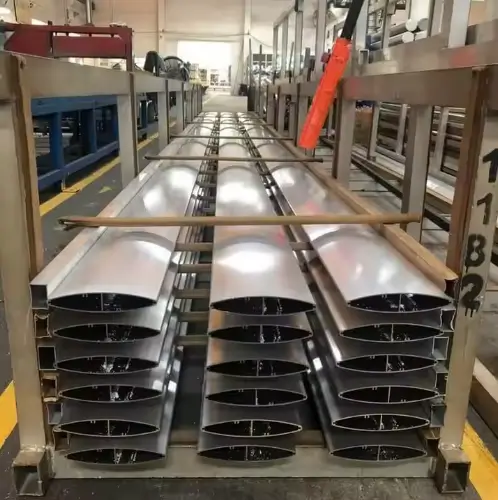
Aluminum extrusion tensile strength by alloy?

Many buyers compare aluminum profiles only by price or shape. Later, they face bending, cracking, or early failure. In most cases, the real issue is not design, but misunderstanding tensile strength by alloy.
Aluminum extrusion tensile strength depends mainly on alloy system and temper. High tensile numbers come from the right alloy–temper combination, not from extrusion alone.
Tensile strength is one of the first values engineers look at, but it is also one of the most misused. The sections below explain which alloys are strongest, how tempering changes tensile values, whether surface treatment matters, and how tensile strength is confirmed in real profiles.
Which alloys offer the highest tensile strength?
Not all aluminum alloys are designed for the same job. Some focus on formability. Others focus on corrosion resistance. A smaller group focuses on strength. Knowing where each alloy sits helps avoid overdesign or underperformance.
Among common extrusion alloys, 7xxx series alloys offer the highest tensile strength, followed by selected 6xxx alloys like 6061 and 6082. However, higher tensile strength often comes with lower ductility and higher cost.
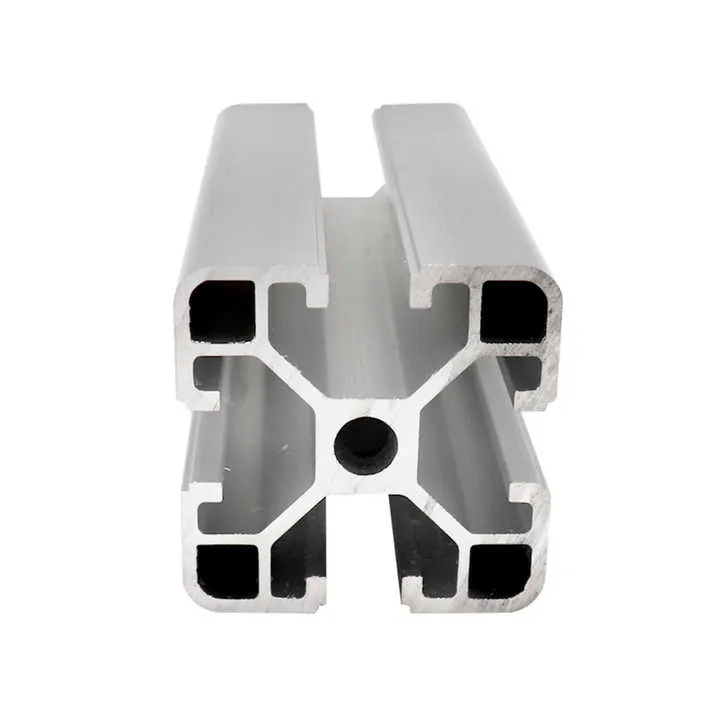
Understanding alloy series in simple terms
Aluminum alloys are grouped by main alloying elements:
- 6xxx series: Magnesium and silicon. Good balance of strength, corrosion resistance, and extrudability.
- 7xxx series: Zinc-based. Very high strength, harder to extrude, lower corrosion resistance.
- 5xxx series: Magnesium-based. Good corrosion resistance, medium strength, limited heat treatment response.
Most structural extrusions in industry use 6xxx alloys because they balance strength and production efficiency.
Tensile strength comparison by common extrusion alloys
The table below shows typical ultimate tensile strength ranges for popular alloys in common tempers. Values are approximate and depend on profile shape and process control.
| Alloy | Common temper | Typical tensile strength (MPa) | Relative strength level |
|---|---|---|---|
| 6063 | T5 / T6 | 190–240 | Medium |
| 6061 | T6 | 260–310 | High |
| 6005A | T6 | 260–300 | High |
| 6082 | T6 | 290–340 | Very high |
| 7003 | T5 / T6 | 350–420 | Extremely high |
| 7075 | T6 | 500+ | Ultra high (limited extrusion use) |
Why the strongest alloy is not always the best
Very high tensile strength sounds attractive, but it introduces trade-offs:
- Lower elongation means less warning before fracture.
- Toughness often drops as tensile strength rises.
- Tooling wear and scrap rate increase with harder alloys.
- Availability and lead time may be longer.
For many frames, rails, and supports, 6061-T6 or 6082-T6 provides more than enough tensile strength without the risks of ultra-high-strength alloys.
Application-driven alloy selection
In practice, alloy choice follows application needs:
- General industrial frames: 6063-T5 or T6
- Load-bearing structures: 6061-T6 or 6005A-T6
- Heavy-duty mechanical parts: 6082-T6
- Special high-strength needs: 7xxx series with careful design
7xxx series aluminum alloys generally provide higher tensile strength than 6xxx series alloys.True
Zinc-based 7xxx alloys are designed for very high strength and typically exceed the tensile values of 6xxx alloys.
6063 aluminum always has higher tensile strength than 6061.False
6061-T6 has significantly higher tensile strength than 6063 in most tempers.
How does tempering affect tensile values?
Alloy alone does not define tensile strength. Temper condition often makes an equal or larger difference. Two profiles of the same alloy can show very different tensile results because of tempering.
Tempering affects tensile strength by controlling precipitation hardening and internal stress state. Heat-treated tempers like T6 maximize tensile strength, while softer tempers trade strength for ductility and formability.

What temper really means
Temper describes the thermal and mechanical history of the aluminum after extrusion.
Common extrusion tempers include:
- T5: Cooled from extrusion temperature and artificially aged.
- T6: Solution heat treated, quenched, and artificially aged.
- T4: Solution heat treated and naturally aged.
Each step changes the size and distribution of strengthening precipitates inside the metal.
Tensile strength differences by temper
For most 6xxx alloys:
- T6 gives the highest tensile strength.
- T5 offers slightly lower strength but better dimensional stability.
- T4 provides lower strength but higher elongation.
The table below shows a simplified comparison using 6061 as an example.
| Alloy | Temper | Typical tensile strength (MPa) | Ductility trend |
|---|---|---|---|
| 6061 | T4 | 180–210 | High |
| 6061 | T5 | 240–280 | Medium |
| 6061 | T6 | 260–310 | Lower |
Why T6 is not always chosen
Although T6 maximizes tensile strength, it is not always ideal:
- Thin or complex profiles may distort during solution treatment.
- Residual stresses may increase risk of warping during machining.
- Some applications need flexibility rather than maximum strength.
In these cases, T5 or even T4 can deliver better real-world performance.
Consistency and process control
Tempering quality depends on:
- Accurate furnace temperature control
- Proper quenching speed
- Uniform aging time
Poor temper control can lead to tensile values below specification, even if the alloy is correct.
Design tip for buyers
When specifying tensile strength:
- Always specify alloy + temper, not just alloy.
- Confirm whether values are minimum guaranteed or typical averages.
- Ask how tensile properties are verified for complex profiles.
T6 temper usually provides higher tensile strength than T5 for the same 6xxx alloy.True
T6 includes full solution heat treatment and aging, which maximizes precipitation hardening.
Temper has little effect on tensile strength compared to alloy choice.False
Temper can change tensile strength by tens of percent within the same alloy.
Can surface treatment alter tensile performance?
Surface treatment is often discussed for corrosion or appearance. Many buyers ask whether anodizing or coating changes tensile strength. The short answer is subtle but important.
Surface treatments do not significantly change the bulk tensile strength of aluminum extrusions, but aggressive processes or high temperatures can slightly reduce effective strength or introduce surface-related failure risks.
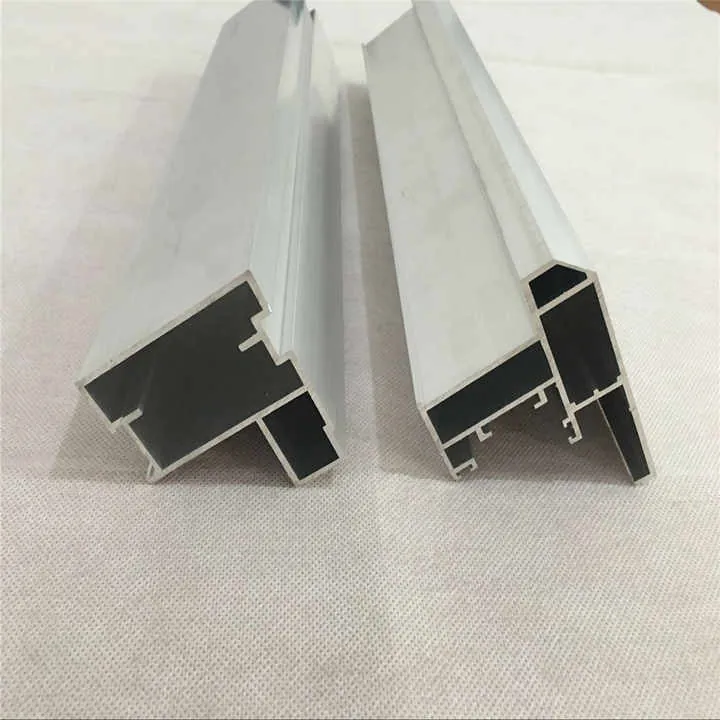
Bulk strength versus surface condition
Tensile tests measure bulk material behavior. Most surface treatments affect only a thin outer layer.
Common treatments include:
- Anodizing
- Powder coating
- Electrophoretic coating
- Mechanical polishing
These processes do not change the alloy’s internal microstructure.
When surface treatment can matter
Although bulk tensile strength stays similar, surface treatment can influence performance indirectly.
Thick anodizing layers
Hard anodizing creates a brittle oxide layer. Under tensile loading:
- The oxide can crack.
- Cracks may act as initiation sites in fatigue or impact, not in static tensile tests.
High-temperature exposure
Some coatings require elevated cure temperatures. Excessive heat can:
- Over-age the alloy.
- Slightly reduce tensile strength, especially in T6 tempers.
Surface damage before coating
Improper pretreatment can introduce:
- Scratches
- Pits
- Chemical attack
These defects reduce effective cross-section and may lower measured tensile results in extreme cases.
What surface treatment does not do
Surface treatment does not:
- Increase tensile strength beyond alloy limits.
- Turn a low-strength alloy into a high-strength one.
- Replace proper alloy and temper selection.
Practical guidance
For tensile-critical parts:
- Confirm that coating temperatures stay within alloy limits.
- Avoid unnecessary thick or brittle surface layers.
- Focus tensile requirements on base material, not coating.
Most surface treatments do not significantly change the bulk tensile strength of aluminum extrusions.True
Surface treatments affect only a thin outer layer and do not alter the internal alloy structure.
Anodizing always increases tensile strength because it adds a hard surface layer.False
Anodizing does not increase bulk tensile strength and can introduce brittle surface behavior.
What tests confirm tensile strength in profiles?
Datasheet values are only meaningful if they are verified. Tensile strength must be measured using standardized tests that reflect real material behavior.
Tensile strength in aluminum extrusion profiles is confirmed through standardized tensile testing on samples taken from the profile, following defined procedures that control sample orientation, speed, and measurement accuracy.
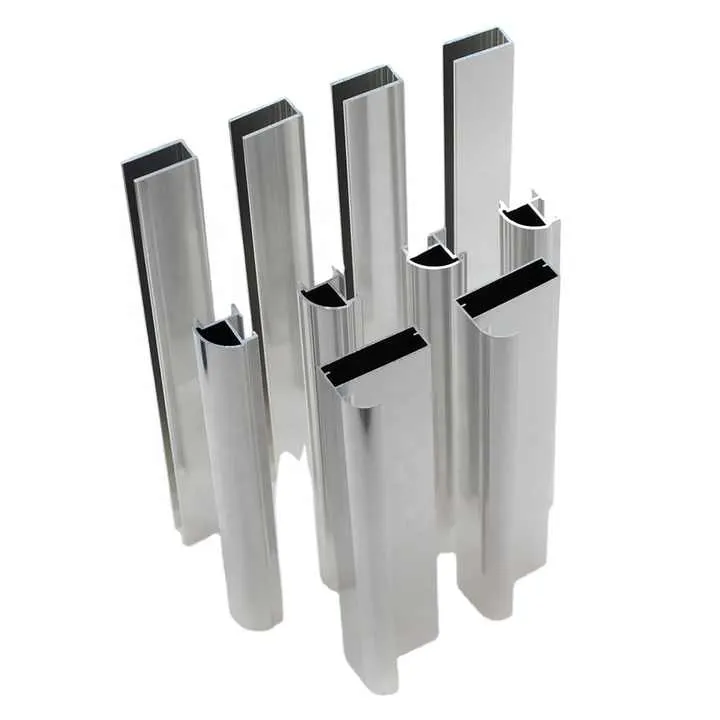
Standard tensile testing basics
Tensile testing involves:
- Pulling a prepared specimen at a controlled rate.
- Measuring force and elongation.
- Calculating tensile strength, yield strength, and elongation.
The result represents the material behavior under uniaxial tension.
Sample location and orientation matter
For extrusions:
- Samples are usually taken along the extrusion direction.
- Properties across the section are generally uniform, but thin walls may vary slightly.
For hollow profiles, samples may come from:
- Outer walls
- Webs or ribs
- Flat sections with enough width
Typical test outputs
A standard tensile test provides:
- Ultimate tensile strength
- Yield strength
- Elongation at break
These values together describe strength and ductility.
Batch testing versus per-profile testing
In production:
- Tensile tests are often done per alloy batch or heat.
- Not every profile is tested, but process consistency is monitored.
For critical applications, buyers may request:
- Additional tests on finished profiles
- Third-party verification
- Test reports linked to production lots
Limits of tensile testing
Tensile tests do not show:
- Impact resistance
- Fatigue life
- Buckling behavior
They are one part of a complete mechanical evaluation.
Using test data correctly
When reviewing tensile reports:
- Check minimum guaranteed values, not just averages.
- Confirm test standard and sample location.
- Match reported temper to the delivered product.
Standard tensile testing directly measures ultimate tensile strength and yield strength of aluminum extrusions.True
Tensile tests apply controlled tension to measure strength and elongation values.
Tensile tests alone are enough to predict all mechanical performance of an extrusion.False
Tensile tests do not capture impact, fatigue, or stability behavior.
Conclusion
Aluminum extrusion tensile strength is driven by alloy choice, temper control, and verified testing. High numbers matter, but correct matching to application matters more. When tensile strength is understood in context, extrusions deliver reliable and predictable performance.