Aluminum extrusion suitable for automotive structures?
I once rode in a car that felt light but solid, and I wondered how makers built a strong frame yet kept the weight down.
Aluminum extrusion becomes a top choice for car frames because it cuts weight, keeps strength, and gives design freedom all at once.
The rest of this article explores why extrusions suit vehicles, what benefits they bring, how they behave under fatigue, and how they fare in crash tests.
Why is aluminum extrusion used in vehicle frames?
Cars face a big challenge: they must stay strong and protect passengers, yet stay light enough for fuel efficiency and handling.
Aluminum extrusions help meet that challenge by providing lighter, customizable, and durable structural parts that reduce overall vehicle weight.

Vehicle makers use aluminum extrusion for frames for several reasons. First, weight savings matter. Steel frames are heavy. Heavy weight reduces fuel efficiency or electric range. Aluminum has a lower density than steel. So replacing steel parts with aluminum extruded parts cuts mass significantly. Less weight means better mileage or longer battery life.
Second, extrusion gives design freedom. Extrusion lets factories shape aluminum into complex cross‑sections. They can build hollow beams, reinforced ribs, varied wall thickness. These shapes help meet strength and stiffness needs while minimizing metal used. That saves weight and cost. It also helps package space—extruded parts can follow vehicle contours, give crash‑energy paths, and integrate mounting points.
Third, corrosion resistance and recyclability add value. Aluminum resists rust compared to untreated steel. In climates with moisture or road salt, aluminum frames last longer. Also aluminum recycles well. Many automakers reuse scrap aluminum, which helps sustainability.
Fourth, extrusions let makers integrate multiple functions. A single extruded beam can serve as side rail, door sill, mounting plate for seats, or crash‑energy absorber. That reduces the number of parts. Fewer parts mean less assembly time and lower labor and welding costs.
Because of these benefits, many modern cars, especially electric or high‑end ones, use aluminum extrusions in frames, roof rails, side members, and cross beams. The shift happens where weight, strength, corrosion, and manufacturability all matter together.
Aluminum’s low density helps reduce vehicle weight compared to steel.True
Aluminum has lower density than steel, so equivalent volume of aluminum weighs less, yielding lighter vehicles.
Extrusion limits design variety for vehicle frames because it can only produce simple shapes.False
Extrusion supports complex hollow sections, variable wall thickness, and multifunctional cross‑sections, offering high design flexibility.
What mechanical benefits do extrusions offer in cars?
Car frames need stiffness, strength, energy absorption, and durability. Aluminum extrusions deliver these while keeping weight low.
Extruded aluminum gives good strength‑to‑weight ratio, allows stiffness tuning by shape, and supports integrated parts to improve structural performance.
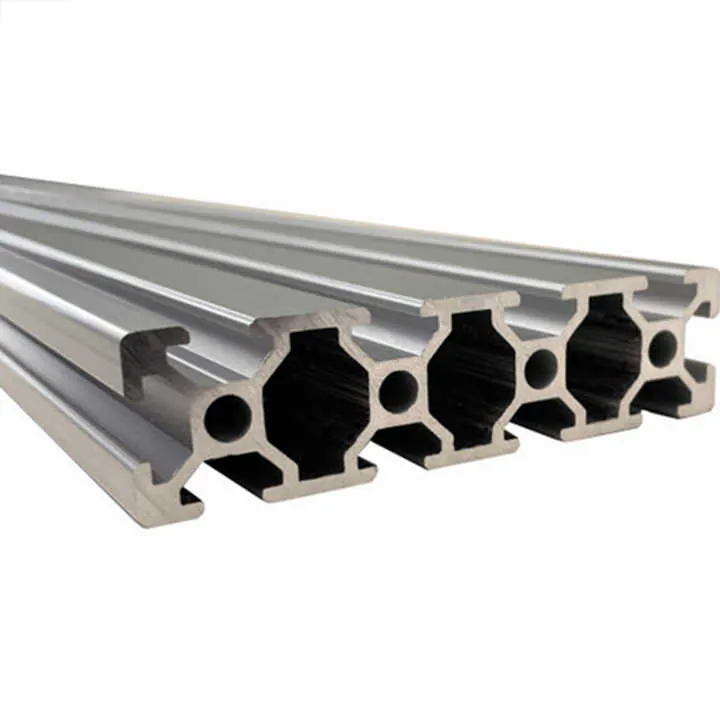
Extrusions give several mechanical advantages. The biggest is high strength‑to‑weight ratio. For example, a well‑designed aluminum beam can match stiffness of steel but weigh less than half. This improves acceleration, braking, and handling. It also helps battery‑powered cars go farther.
Also, shape matters. Extruded sections can feature hollow spaces, internal webs, ribs, and flanges. These features let engineers tune the bending stiffness, torsional rigidity, and load paths for each part. They can reinforce areas under high load (like suspension mounts) and keep low weight elsewhere. This selective reinforcement avoids overbuilding parts, saving material and weight.
Moreover, extrusions provide predictable mechanical behavior. Because the metal flows uniformly during extrusion, grain structure is more consistent than some welded assemblies or castings. That leads to better fatigue behavior, less risk of weak zones, and consistent performance across many parts.
Extrusions also help assembly and integration. Many components like seat rails, door frames, or cross‑members can come out of one extrusion pass. That means fewer welds or fasteners. Fewer welds reduce stress concentrations and potential failure points. Fewer parts also cut production cost and speed up assembly.
Below is a table comparing general mechanical metrics for a typical extruded aluminum beam vs mild steel beam of equivalent stiffness or function:
| Material & Form | Density (g/cm³) | Relative Weight | Typical Yield Strength* | Relative Stiffness (for same shape) |
|---|---|---|---|---|
| Aluminum Extrusion | 2.7 | 1.0 (baseline) | 200–300 MPa | ~1.0 (shape optimized) |
| Mild Steel Beam | 7.8 | ~2.9 | 250–350 MPa | ~1.0 (but heavier) |
* Yield strength depends on alloy and heat treatment.
This table shows obvious weight advantage. The extruded part may weigh roughly one‑third of steel for similar strength and stiffness. That directly helps fuel economy or electric range.
Because of these benefits, many automakers use aluminum extrusions for chassis rails, bumper beams, door beams, roof rails, and battery trays. They rely on extrusion’s ability to give strength, stability, lightness, and integration in one package.
Aluminum extrusions can reduce vehicle structural weight by more than half compared to steel beams of same strength.True
Lower density plus shape optimization lets aluminum achieve required strength at much lower weight.
Extrusions always outperform steel in stiffness regardless of shape.False
Stiffness depends on cross‑section design; improperly designed aluminum may be less stiff than steel.
Are there fatigue limits in automotive applications?
Driving imposes repeated loads on vehicle frames: road bumps, vibrations, cornering forces. That pushes materials to endure many cycles without fatigue failure.
Extruded aluminum does have fatigue limits, but with proper alloy choice, design, and treatment it can meet automotive fatigue requirements.

Aluminum alloys behave differently from steel under cyclic loads. Aluminum does not have a well‑defined endurance limit like some steels. That means even low stress repeated over many cycles can cause fatigue. Thus, fatigue design becomes critical when using aluminum in cars.
To manage fatigue, engineers use good alloy grades and control stress concentrations. Many auto extrusions use alloys such as 6000‑series (like 6061‑T6 or 6063‑T6) or newer automotive alloys. These alloys balance ductility and fatigue resistance. Also, correct heat treatment (solution treat, aging) improves fatigue strength by creating fine, uniform microstructure.
Design also plays a big role. Extruded parts for cars avoid sharp corners, abrupt thickness changes, and welding (or use controlled welding). Smooth transitions and uniform wall thickness reduce stress risers. Hollow sections with rounded corners help spread load evenly. Reinforcements or ribs add strength where needed.
Surface quality matters too. Scratches, machining marks, or weld heat‑affected zones can concentrate stress and reduce fatigue life. So finishing, anodizing, or painting help prevent early crack initiation.
In real testing, extruded automotive parts undergo millions of load cycles: door open/close, engine vibration, road bumps, suspension loads. If design is sound, many pass durability tests over typical vehicle lifetime (10–15 years or 150,000 miles). Sometimes engineers add a safety factor (e.g. design for double typical cycles) to ensure long life.
Below is a table summarizing fatigue behavior qualitatively:
| Design Factor | Effect on Fatigue Life |
|---|---|
| Alloy type and treatment (e.g. 6000-series, T6) | Improves fatigue strength and resistance |
| Smooth shape, no sharp corners or welds | Reduces stress concentrations and crack initiation |
| Surface finish and corrosion protection | Prevents surface defects that lead to fatigue cracks |
| Load amplitude and cycle count | High amplitude or many cycles shorten fatigue life |
Given the factors above, extruded aluminum structures can meet fatigue demands in cars. They require careful design and quality control, but many modern vehicles use them successfully for chassis members, seat rails, and cross‑beams.
Aluminum extrusions naturally resist fatigue better than any welded steel frame.False
Fatigue resistance depends on design, surface finish and load cycles; aluminum lacks a clear endurance limit like some steels.
Proper alloy selection and shape design can give aluminum extrusions acceptable fatigue life for automotive use.True
Using suitable 6000-series alloys, smooth design, good treatment, and finishing can make extrusions durable under cyclic automotive loads.
How do extrusions perform in crash simulations?
Safety is key in cars. Frames must absorb energy during crash and protect occupants. Extruded aluminum must do that well to be viable.
Well‑designed aluminum extrusions can perform well in crash tests by absorbing energy, controlling deformation, and preserving cabin integrity.

Crash performance studies show aluminum extrusion structures can behave predictably under impact. Hollow extruded beams can crumple like steel, but with lower mass, so impact forces may be lower. Engineers design crush zones using extruded profiles with specific cross‑sections. For example, front rail members use extruded hollow boxes or tapered I‑beams that fold progressively under load. That absorbs kinetic energy before it reaches passenger cabin.
Manufacturers run computer crash simulations (finite element analysis) to predict deformation paths. Extruded parts show reliable collapse, predictable energy absorption, and controlled intrusion. In many designs, aluminum extruded frames meet or exceed safety standards while reducing total vehicle weight by 20–30%.
Also, extrusions allow complex geometry. Engineers embed reinforcements, side rails, and energy absorber zones into single pieces. That reduces reliance on welding joints—which are potential weak points in crashes. Integral extruded parts have continuous grain flow and fewer discontinuities, improving crash behavior.
However, aluminum’s lower density also means lower mass, which sometimes reduces inertia-based protection (in side collisions or rollovers). To offset this, designers add thicker walls, internal ribs, or combine aluminum extrusions with high‑strength steel or composite inserts in critical areas.
Real crash test results show that many aluminum‑frame cars get high safety ratings. They perform well in frontal crash, side impact, roof crush, and rollover tests. The balance between light weight and crash safety is often better than with heavier steel frames.
That said, achieving good crash performance with extrusions needs precise design, correct wall thickness, and good joinery or welding practices. Without these, aluminum frames may crumple too early or not absorb enough energy, which can harm safety.
Aluminum extrusions always lead to weaker crash performance than steel frames because aluminum is softer.False
With proper design and wall thickness, extruded aluminum can offer strong crash energy absorption and meet safety standards.
Aluminum extruded crash‑zone members can absorb crash energy effectively with controlled deformation.True
Hollow box or reinforced extruded profiles can crumple in a controlled way and absorb energy while keeping cabin integrity.
Conclusion
Aluminum extrusion suits automotive structures when design, alloy, and execution match demands. It cuts weight, gives design freedom, and, with care, meets strength, fatigue, and crash‑safety needs. For many modern cars, extrusion delivers a smart balance of lightness and safety.