where to get standard aluminum extrusions usa?

I have seen many companies struggle to find good aluminum extrusion suppliers in the U.S. They waste time chasing quotes and facing delays.
There are reliable U.S. suppliers that stock standard aluminum extrusion profiles — and you can find them with clear specs, reasonable MOQ, and steady supply.
If you want to save time and ensure quality, read on.
What U.S. suppliers carry standard profiles?
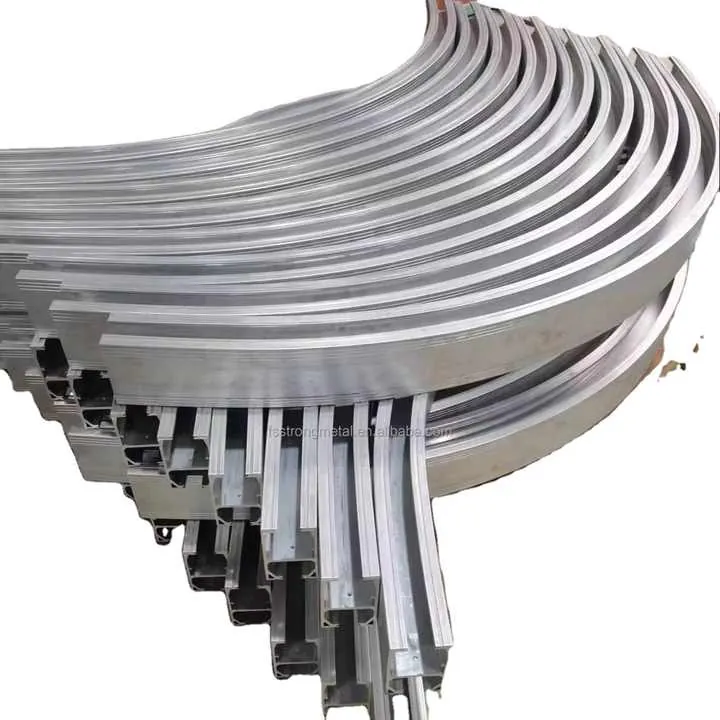
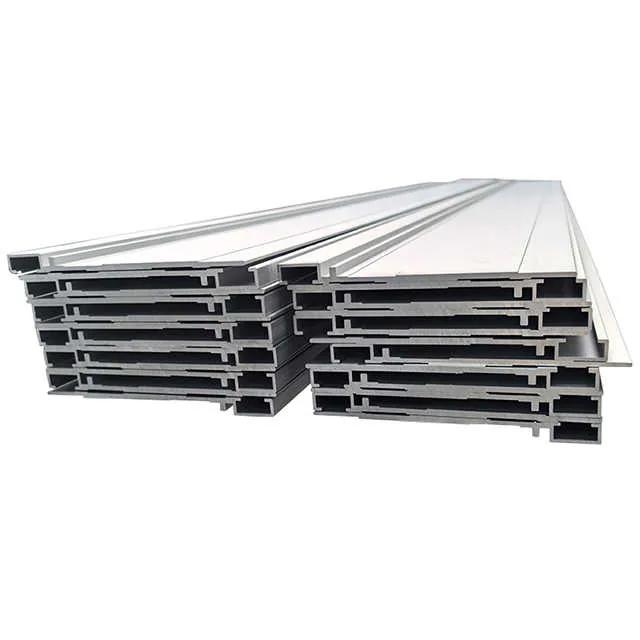
Many U.S. metal suppliers and distributors keep standard aluminum extrusions in stock. Some focus on common profiles like “T‑slots,” angles, channels, or rectangular tubing. Others supply architectural‑grade shapes or industrial frames. These suppliers often offer standard sizes in common alloys (like 6061 or 6063) and may ship directly or via regional warehouses.

Dive deeper: where to look and what to expect
I checked a number of U.S. distributors. Many are set up to serve both small buyers and large industrial clients. Typical names include regional mills, online metal shops, and large distributors. They often list dozens of standard extrusion shapes — “T‑slot 20×40,” “angle 1.5×1.5,” “channel 2×1,” etc. Because they stock these shapes, lead times are short (sometimes same- or next-day shipping).
Here is a simple breakdown of what some suppliers offer:
| Supplier type | Typical stock shapes | Alloy options | Order minimums |
|---|---|---|---|
| Regional mills / extrusion houses | Angles, channels, flat bars, tubes | 6061‑T6, 6063‑T5 | ~25–100 lbs |
| Online metal shops | T‑slots, rectangular tubing, angles, channels | 6061, 6063, 6064 | ~50 lbs |
| Large national distributors | Full range including architectural profiles, standard shapes | 6061, 6063, others | ~100–200 lbs |
Most of these suppliers also offer cut‑to‑length service. That means you can get profiles cut to your exact size instead of receiving extra-long stock and cutting yourself. This saves material waste and time.
Small buyers often worry about high minimum orders. But many online shops handle modest orders without issue. They usually charge modest cutting fees or handle charges. Bulk buyers or repeated clients might get discounts or free cutting.
It helps to use standard profile designations when you request quotes. For example, “20×40 T‑slot, 6063‑T5, cut to 500 mm length, quantity 200 pcs.” That clarity helps suppliers give precise quotes fast.
Because these suppliers stock standard shapes, they often handle rush orders. That is useful if a project is delayed or needs extra parts quickly.
Many U.S. distributors keep aluminum extrusion stocks of standard shapes ready for same‑day shippingTrue
Regional mills and online metal shops often list standard aluminum profiles like angles, channels and T‑slots as in‑stock items for quick dispatch.
It is nearly impossible to order small amounts (e.g. 50 lbs) from U.S. extrusion suppliersFalse
Online metal shops and regional mills often accept modest orders and even allow cut‑to‑length, making small orders feasible.
Why check standard size availability?
Without checking standard size availability, a buyer may end up waiting weeks or paying extra for custom extrusions. Custom profiles often have high tooling costs and require long lead time. By using standard profiles, you avoid delays and extra budget.

Dive deeper: risks of custom profiles and benefits of standard shapes
Many engineers design aluminum extrusions without first checking whether the shapes exist as standard profiles. They pick arbitrary dimensions, or unique cross-sections. Then they send drawings to extrusion houses asking for custom extrusions. That triggers a custom tooling process. Tooling costs and minimum orders for custom shapes are high. The lead time may stretch to 6–12 weeks or more, depending on the mill’s workload.
Here are main risks with ignoring standard size availability:
- High tooling cost — Custom dies cost money. It often adds significantly to unit cost, especially for small orders.
- Long lead times — Custom dies and setup take time. Projects may be delayed.
- Large minimum order — Mills may require thousands of pounds to justify tooling. That may far exceed actual need.
- Waste risk — If design changes after tooling is made, the tooling may go unused or require costly changes.
On the other hand, standard profiles save cost and time. Because many buyers use them, standard shapes are produced regularly. Thus they are kept in stock. That means you can buy just what you need. You avoid large minimum orders. You can get material in days, not weeks.
Standard sizes also make it easier to compare prices among multiple suppliers. Suppliers know the shapes, so quotes are comparable. Custom shapes are different for each mill, so comparisons are difficult and often misleading.
For many projects — frames, enclosures, supports — standard profiles work well. Unless design demands special cross‑section or strength, standard shapes offer enough flexibility.
Therefore, check standard-size availability early in design. It can save time, money, and reduce risk.
Custom aluminum extrusion always costs more and takes longer than standard profilesTrue
Custom extrusions require new tooling, longer lead times, and larger minimum orders, which add cost and time.
Using standard profiles cannot meet strength or design flexibility needsFalse
Standard profiles are often sufficient for many common applications like frames, supports, and enclosures, offering flexibility with lower cost and lead time.
How to compare national distributors?
Not all distributors are equal. Some deliver nationwide quickly with good logistics. Others focus on regional markets. You need clear criteria to pick the right distributor. The key factors: stock range, alloy specs, cutting service, shipping options, lead time, and customer support.
Dive deeper: building a comparison method
When I evaluate national distributors, I use a simple matrix. I identify what matters for my project. Then I ask each candidate the same questions. This helps compare apples to apples.
Here is a matrix I follow:
| Criterion | Why it matters |
|---|---|
| Stock range (shapes, sizes, alloys) | More shapes increase chance you find exact profile needed |
| Cut‑to‑length / saw service | Avoids waste, simplifies project logistics |
| Alloy options and temper (e.g. 6061‑T6, 6063‑T5) | Determines strength, corrosion resistance, machinability |
| Lead time for delivery | Affects project timeline |
| Freight‑ready packaging & shipping | Ensures safe transport, lower shipping costs |
| Customer support / communication | Helps when changes or urgent requests happen |
Step 1: Gather list of national distributors
Search online for large metal suppliers known in the U.S. For example, companies that advertise across states. Filter those that list standard extrusions in catalog.
Step 2: Request the same quote format
Ask each supplier: name the profile (e.g. “1.5×1.5 angle, 6063‑T5”), quantity (lbs or pcs), cut length, alloy, finish, shipping to ZIP, and freight costs. Make all requests identical.
Step 3: Compare quotes side by side
Make a comparison table. Example:
| Supplier | Price per lb | Cut fee | Lead time | Freight cost | Total cost (1000 lbs) |
|---|---|---|---|---|---|
| Supplier A | \$1.85 | \$0.05/lb | 3 days | \$0.15/lb | \$2.05/lb → \$2,050 |
| Supplier B | \$1.80 | \$0.10/lb | 5 days | \$0.18/lb | \$2.08/lb → \$2,080 |
| Supplier C | \$1.90 | \$0.00 | 4 days | \$0.12/lb | \$2.02/lb → \$2,020 |
This helps you see real cost differences. Sometimes a slightly higher raw price but lower freight or cut fee beats others.
Step 4: Check delivery and packaging details
Freight damage is a real risk. Ask how they package long extrusions. Good distributors will bundle, pad corners, and mark length. Also check whether they include packing slip or invoice. This helps with customs if importing to another country.
Step 5: Evaluate support and flexibility
If design changes occur — e.g. you need different length or alloy — good distributors respond fast. Their sales or customer support should be easy to contact. They should provide updated quotes and revised delivery dates quickly.
By using this method, you avoid surprises. You find a distributor that matches both cost and service needs. You also build a supplier relationship. That helps for future orders.
A thorough side‑by‑side quote comparison can reveal lower total cost even if raw material price seems higherTrue
Freight cost, cut fee, and lead time affect total cost, so a higher raw price can lead to lower total cost after shipping and processing.
You only need to check raw material price when choosing a distributorFalse
Raw material price is only one factor; shipping, cut fees, lead time, packaging, and service quality all affect overall cost and project success.
Can freight shipping lower cost?
Long aluminum extrusions can cost more to ship per pound if shipped parcel‑by‑parcel. Freight shipping — using pallets and LTL (less‑than‑truckload) or full‑truckload methods — can reduce per‑lb cost and protect materials. That lowers total cost for large orders.

Dive deeper: how freight helps and what to watch out for
When ordering long extrusions — say 8 ft to 20 ft — shipping cost becomes a major factor. Parcel shippers often charge by size, not weight. They may treat extrusions as oversized items and apply high fees. That increases per‑lb cost by 2–4 times compared to freight.
Freight shipping solves many of these problems. Good distributors offer freight‑ready packaging. They bundle extrusions on pallets, wrap corners and ends, pad the sides, and secure with straps. They label the package and provide a packing list.
Here are some benefits of freight shipping for aluminum extrusions:
- Lower shipping cost per pound when order volume is large.
- Better protection during transit, reducing damage risk.
- Convenient for large orders, especially when order weight exceeds ~500 lbs or length exceeds ~6–8 ft.
- Faster delivery for bulk orders, as freight companies handle long loads efficiently.
However, you must watch out for some risks and costs:
Hidden costs and logistics to check
- Lift‑gate or delivery assistance: Some freight deliveries require loading dock or forklift at receiver. If your site lacks this, you may need extra fee or risk damage.
- Delivery window: Freight companies may offer “business days” only. Weekend or residential delivery may cost more or may not be available.
- Minimum order size: Freight may only be cost‑effective for orders above a certain weight or volume (e.g. 500–1000 lbs). For small orders, parcel may still be better.
- Packaging fee: Some distributors charge extra for palletizing and packing, especially for small orders.
When freight shipping makes sense
Freight shipping is worth it when:
- Order totals more than 500–1000 lbs
- Extrusion length is over 8 ft (longer lengths are hard for parcel services)
- You have a warehouse or loading dock to receive pallet shipments
Example cost comparison
Assume you order 2000 lbs of 20 ft aluminum and compare parcel vs freight:
| Method | Parcel shipping (oversize) | Freight (pallet + LTL) |
|---|---|---|
| Shipping cost | \$0.80/lb → \$1,600 | \$0.25/lb → \$500 |
| Risk of damage | High | Low |
| Delivery speed for bulk | Slow or split shipments | Single pallet, faster |
This shows freight can reduce shipping cost by a large margin. Bulk buyers benefit most.
Using freight also helps with customs and export if you ship overseas. Well‑packed pallets survive handling and border transit better. Containers and pallets stack well.
For overseas clients or large projects, freight shipping makes big difference in cost and reliability. It enables buying standard profiles in bulk, shipping safe, and saving time and money.
For large orders of long aluminum extrusions, freight shipping often costs less than parcel shipping per poundTrue
Freight uses pallet and LTL handling that spreads cost over many pounds, lowering per‑lb cost compared to oversized parcel rates.
Parcel shipping is always cheaper for long aluminum extrusionsFalse
Parcel services often charge high oversize fees for long items, making per‑lb cost higher than freight for bulk orders.
Conclusion
Getting standard aluminum extrusions in the U.S. is quite doable if you know where to look. Use established distributors that stock common profiles. Check size availability early. Compare quotes carefully. Use freight shipping if your order is large or long. These steps help you save time and money while getting reliable supply.