How to cut aluminum extrusions with a mitre saw?
You’ve got aluminium profiles ready—but when you try your mitre saw, the cuts go rough or the blade drags. It’s frustrating and wastes time.
Yes—you can cut aluminium extrusions cleanly with a mitre saw—but only if you use the right blade, the correct speed, secure clamping and good technique.
Let’s walk through the key questions so you’ll get clean, accurate angle cuts every time.
What blade types fit mitre‑saw cutting?
The wrong blade ruins the cut and the blade fast—your problems start when you use a wood blade for aluminium.
For aluminium extrusions you need a carbide‑tipped blade rated for non‑ferrous metals, with high tooth count and a neutral or negative hook angle.

When cutting aluminium extrusions on a mitre saw, the blade choice is the foundation of a good cut. Let’s break down what to look for and why.
What to look for in a blade
| Feature | Why it matters |
|---|---|
| Material: carbide‑tipped, non‑ferrous rated | Aluminium is softer than steel but still wears blades and causes “cold‑welding” to the teeth if they’re wrong. |
| Tooth count (TPI or number of teeth) | More teeth = smoother finish, fewer burrs. For example, 80‑100 teeth on a 10″ blade for cleaner aluminium cuts. |
| Hook angle (also called rake angle) | Neutral (0°) or slightly negative (‑5°) prevents the blade from grabbing the aluminium and pulling/exploding. |
| Kerf width & coating | A thinner kerf means less material removed and less waste. Anti‑stick coatings reduce aluminium sticking to teeth. |
What to avoid
- Using a standard wood‑cut blade with low tooth count and high positive hook angle. It may cut aluminium, but you’ll get rough edges, more burrs, possible blade grabbing, and shorter blade life.
- A blade that is dull, gummed up with aluminium chips — this causes poor cuts and more heat buildup. Clean the blade frequently.
My tips from experience
- If you do only occasional aluminium cuts, you might reuse a fine‑finish wood blade (say 60‑80 teeth) but accept you’ll have more finishing.
- If you cut many aluminium extrusions as part of production, invest in a blade dedicated for non‑ferrous metals.
- Always inspect the blade before each job. Remove built‑up aluminium chips from the teeth.
- Label the blade for aluminium use (“non‑ferrous only”) so you don’t accidentally revert to wood cutting with it.
A blade rated for non‑ferrous metals gives smoother aluminium cuts.True
Such blades have the right tooth count, geometry and coating for aluminium, so fewer burrs and better finish.
Any standard wood‑cutting blade is fine for aluminium extrusions.False
Wood blades usually have too few teeth, a positive hook angle, and are not optimized for aluminium—leading to rough cuts and blade wear.
Why adjust RPM for aluminum?
Cutting aluminium at full wood‑saw speed might feel fine—but the blade, material, and heat behave differently and can cause issues fast.
Aluminium cuts best at controlled speed and feed so that the blade doesn’t overheat, materials don’t melt or chip, and you keep a clean finish.

When you cut aluminium extrusions with a mitre saw originally designed for wood, RPM and feed rate become key parameters. The softer metal, the finer blade, and the different chip formation demand care.
Why speed matters
- Aluminium is softer and tends to smear or weld to blade teeth if the surface gets too hot.
- High RPM helps when cutting wood with coarse teeth, but for aluminium, you want the teeth to engage cleanly and remove material without grabbing or melting.
- The number of teeth is large (80‑100) so each tooth removes less material per revolution. If you feed too fast, you overload each tooth; if too slow, heat builds up.
Practical adjustments
- If your mitre saw has variable speed, reduce the RPM somewhat for aluminium.
- Feed the material steadily. Do not push aggressively. Let the blade do the cutting.
- Monitor the cut: if you see aluminium discoloring (darkening), excessive burrs, or the blade is smoking/choking on chips — you’re going too fast or feed is too slow.
- Chip evacuation matters: Aluminium chips are sharp and conductive. They can get into machine parts or clog. Use vacuum or catch bags.
My tips
- Do a test cut on scrap aluminium extrusion to dial in feed and speed before cutting the actual piece.
- Keep an eye (and hand) on how the chips are ejected. If they pile up or fly back, adjust your parameters.
- Clean the blade periodically to remove gummy aluminium buildup.
- If you make a lot of cuts in a shift, consider a species of dry lubricant spray or mist to help.
Slowing down feed and using correct RPM helps reduce heat and improve cuts in aluminium.True
Controlled speed and feed prevent heat buildup and lead to cleaner cuts in aluminium extrusions.
You should always keep mitre saw at maximum RPM when cutting aluminium for fastest results.False
Maximum RPM may overload the blade‐tooth engagement and cause smearing, burrs or grabbing when cutting aluminium; proper speed/feed is key.
How to clamp extrusions for clean angles?
Even with the perfect blade and settings, a loose profile will ruin the cut—angle accuracy and finish depend on how firmly and correctly you clamp the extrusion.
Secure the aluminium extrusion firmly, support long pieces, align it square to fence and blade, and clamp before you cut—this ensures your angle cuts stay clean and accurate.
When cutting aluminium extrusions—especially angled (mitre or bevel) cuts—clamping is not just a safety step, it’s a precision step. Poor clamping yields angled cuts that are off, or surfaces that chip or dent.
Key clamping & support practices
| Item | Check |
|---|---|
| Workpiece flat on table? | Yes/No |
| Aligned flush with fence? | Yes/No |
| Clamp holding firmly? | Yes/No |
| Waste side clear of blade path? | Yes/No |
| Support on the far side especially for long pieces? | Yes/No |
Tips for better clamping
- Support long extrusions at both ends so they don’t sag.
- Use a flat or parallel clamp with padding to avoid scratching aluminium.
- Align carefully before clamping and do a dry run of the saw to check clearances.
- Clean away chips between cuts—metal chips can shift the profile slightly, affecting angles.
Clamping the extrusion firmly and supporting both ends avoids vibration and improves angle accuracy.True
Firm clamping prevents movement during cut which is critical for clean, accurate angles in aluminium profiles.
It is okay to loosely hold a long aluminium extrusion by hand for angle cuts if the saw has a sharp blade.False
Hand holding is unsafe and allows movement or vibration, resulting in poor finish or inaccurate angles; proper clamping and support are required.
Can cooling extend blade life?
If you’re making many cuts of aluminium extrusions, the blade heats up, chips stick, and wear happens faster. Cooling or lubrication helps—but how effective is it and when should you use it?
Yes—applying a light lubricant or coolant mist when cutting aluminium extrusions can reduce heat, clear chips, reduce “gumming”, and extend blade life significantly.
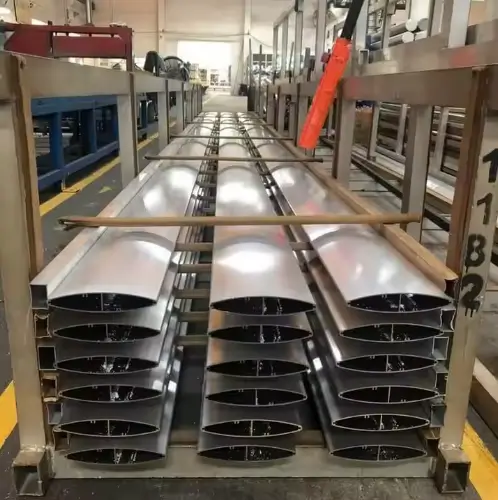
In a production or workshop setting where you cut many aluminium profiles, keeping blade life high and maintaining cut quality matters. Cooling or lubrication is a subtle but impactful tool.
When and how to apply
- Apply a light mist of cutting fluid or lubricant. Avoid soaking the machine.
- Remove chips after every few cuts. Chip build‑up traps heat and affects performance.
- Use lubricants that don’t leave residues or cause fume issues.
- Monitor the finish: if burrs increase or cuts get rough, it’s time to clean or lube.
When it’s most useful
- During long production runs.
- When cutting thick or wide extrusions.
- On older blades that are still serviceable.
- In setups where chip evacuation is limited.
My tips
- Use WD‑40 or dry mist for occasional jobs.
- Use dedicated coolant systems for industrial setups.
- Rotate blades to balance wear and maintain sharpness.
Applying a light lubricant while cutting aluminium extrusions reduces blade wear and improves finish.True
Lubrication helps reduce heat, prevents aluminium adhering to teeth, and maintains better cut quality and blade life.
Cooling or lubricant are only required when cutting steel, not aluminium extrusions.False
Aluminium chips and heat build‑up can still cause blade damage or poor finish, so cooling/lubrication can still be beneficial for aluminium cutting.
Conclusion
Cutting aluminium extrusions with a mitre saw works very well—but only when you choose the right blade, set your speed/feed, clamp the profile securely, and manage heat/chips with lubrication or cooling. Apply those steps and your angle cuts will be clean, fast, and reliable.