how to connect other aluminum extrusions?
Have you ever struggled to link different aluminum extrusion profiles into one solid frame? The pain of loose joints, misaligned slots or weak connections can kill your timeline.
You can successfully join other aluminum extrusions by picking the right connectors, aligning profiles precisely, reinforcing joints properly, and using adapters when needed.
Let’s walk through how to handle this step by step — so you can build your aluminum extrusion system with confidence.
What connectors link different extrusion types?
Finding the wrong connector means wasted parts, weak joins and frustration when the profiles don’t line up.
Connectors like angle brackets, internal corner gussets, bolt‑through connectors and T‑slot fasteners allow you to link varying extrusion types securely.
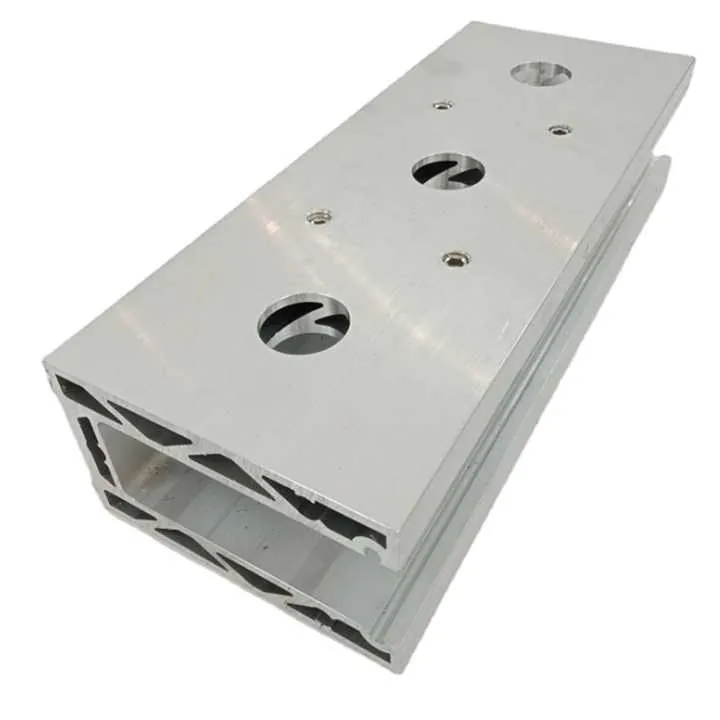
When you’re working with aluminum extrusions of different types (for example one profile is 30×30mm with a T-slot, another is 40×20mm with a different slot or no slot), choosing a connector is the first key decision. A detailed breakdown helps:
Types of connectors
| Connector Type | What It Does | When to Use It |
|---|---|---|
| Angle Bracket | External L-shaped metal that links profiles at an angle | Use for fast, visible connections |
| Internal Gusset | Hidden, internal connector that strengthens corners | Use when looks and strength matter |
| T-slot Fasteners | Slide into profile slot to attach parts | Great for modular builds |
| Through-bolt | Drilled holes with bolt/nut system | High-strength or permanent joins |
Factors to consider
- Slot Compatibility: Match slot sizes between profiles or use bridging brackets.
- Profile Strength: Don’t overload thin-walled extrusions with heavy connectors.
- Assembly Access: Some connectors need inside access or pre-drilled holes.
- Modularity vs Permanence: T-slot nuts are reversible, while through-bolts are stronger but harder to change.
Angle brackets are always the strongest way to connect different aluminum extrusions.False
While angle brackets are convenient, through‑bolt or internal gusset connectors often provide higher strength when profiles differ.
T‑slot fasteners are ideal when you need modularity and adjustment in your extrusion assembly.True
T‑slot fasteners allow sliding nuts, re‑adjustment and attachment of accessories, making them excellent for modular builds.
Why alignment matters when mixing profiles?
Misalignment might look like a small issue, but it can cause structural weakness, misfit panels and reduce lifespan.
When mixing extrusion profiles, perfect alignment ensures load transfer, correct panel attachment and avoids torsion or bending failures.
Mixing profile types (for example joining a 40×40mm profile to a 20×60mm profile, or a T-slot profile to a plain extruded beam) brings alignment challenges. You must consider geometric alignment, slot orientation, interface surfaces and load paths.
Why it’s important
- Load Transfer: Even small misalignments shift pressure to one point, leading to failures.
- Panel Fit: Sliding panels won’t sit well if slots aren’t aligned.
- Ease of Assembly: Misaligned parts make builds slow and require rework.
- Appearance: Poor alignment looks unprofessional and may block moving parts.
Best Practices
- Check profile cut accuracy (square edges, clean surfaces).
- Use alignment jigs or clamps during assembly.
- Align slots in compatible orientations.
- Inspect and adjust before full tightening.
If two aluminum extrusion profiles have different slot orientations, they cannot be aligned properly and must not be joined.False
They *can* be joined; you just need a connector or adapter that accommodates the difference in slot orientation or uses a bridging bracket.
Proper alignment reduces the risk of load concentration and improves structural strength when using mixed profiles.True
Alignment ensures loads are transferred evenly across the joint instead of being channelled into a single fastener or bracket.
How to reinforce multi-profile joints?
When you link more than two profiles (for example a three-way corner, or T-junction) you need extra reinforcement or you risk joint failure under load or vibration.
Reinforcement methods like gussets, brackets, backing plates, welding or adhesives can strengthen multi-profile joints in aluminum extrusion structures.

Multi-profile joints deal with more stress and movement than basic two-piece connections. A junction might face downward force, torque, or repeated vibration, especially in industrial or mechanical settings.
Options for reinforcement
- Gussets: Triangle-shaped plates that brace the joint, spreading forces.
- Backing Plates: Flat steel or aluminum plates behind the joint increase strength.
- Through-bolt Systems: Strong, direct, and often the best choice for fixed builds.
- Welding or Adhesives: For permanent, high-load structures.
Match the Joint to the Right Support
| Joint Type | Reinforcement Suggestion | Reason |
|---|---|---|
| 90° Corner | Gusset + internal bolt | Handles twist and shear |
| T-joint | Backing plate + bolt-through | Spreads force across junction |
| Load-Bearing Beam | High-strength bracket + gusset | Supports weight and vibration |
| Moving Frame | Combination (bolt + adhesive) | Flexible but strong |
Choose reinforcement based on profile thickness, force direction, and access for tools. Always tighten bolts to the correct torque and check joints after load testing.
Simply using angle brackets without gussets is sufficient for all multi-profile joints.False
Angle brackets alone might work for light loads, but heavy or multi‑directional joints usually require gussets, backing plates or through‑bolts for sufficient strength.
Using a through‑bolt connector at a junction with multiple profiles increases joint rigidity better than a simple T‑slot nut and bolt.True
Through‑bolt connectors provide a firmer, more direct clamp through profile walls, offering higher rigidity than slot‑based fasteners alone.
Can adapters join incompatible extrusions?
What happens when two extrusion profiles have totally different slot widths, shapes or no slot at all? An adapter might be what saves the day.
Yes—adapters and custom connector pieces can bridge incompatible extrusions by aligning slots or creating interface surfaces for one profile to connect to another.

Adapters help when extrusion systems from different manufacturers, designs or generations need to connect. Some have round holes, some have square grooves, others no groove at all.
What adapters do
- Bridge size differences (like 20mm to 30mm)
- Add new slots where none exist
- Create flush faces between different heights
- Match thread patterns or bolt styles
Key Adapter Uses
- Retrofitting older equipment
- Joining unsupported slot profiles
- Mixing standard and custom extrusions
- Handling unequal wall thickness or shape
Designing or Choosing an Adapter
- Know slot size, depth, wall thickness
- Choose matching metal or a non-corrosive finish
- Plan for load direction and total force
- Test fit before load use
Adapters can be off-the-shelf or custom machined. In both cases, they save time and money by making different systems work together without replacing full sections.
Adapters can only be used if the two extrusion profiles are exactly the same alloy and wall thickness.False
Adapters can bridge profiles of different alloys or thicknesses; the adapter’s design must account for differences.
Using an adapter is a cost-effective way to connect incompatible profiles without replacing all existing extrusions.True
Adapters let you reuse existing profiles and integrate new systems, saving cost and resources.
Conclusion
In summary, connecting other aluminum extrusions requires the right connector, careful alignment, reinforcement at complex joints and the smart use of adapters when needed. With these pieces in place you can build frames that are strong, modular and fit your project goals.