Can I reuse a heat sink after removing it from old equipment?

I once salvaged a large aluminum heat sink from an old industrial control unit and wondered: “Can I reuse this?” It looked solid—but was it reliable?
Yes, reusing a heat sink is possible if it’s undamaged, properly cleaned, and still meets your thermal needs. But it must be carefully inspected before reuse.
Many engineers try to save time or money by repurposing old components. Sometimes it works perfectly. Other times, it causes overheating or failure. Let’s break it down.
What are the risks of reusing old heat sinks?

I’ve seen reused heat sinks fail simply because someone skipped inspection. Don’t assume all metal blocks are the same.
The main risks of reusing heat sinks include surface damage, corrosion, loss of thermal efficiency, and physical deformation.
Old heat sinks may have suffered from years of heat cycling. Expansion and contraction can cause micro-cracks or warping. If the base is no longer flat, it won’t make good thermal contact with the new component.
Another issue is corrosion. Exposure to humidity or dust can degrade the surface. Oxidized or pitted fins reduce heat transfer. If the heat sink was painted or coated, peeling or cracked finishes could trap air and reduce effectiveness.
Thermal paste or pads from the old installation might still be stuck. Leftover materials can prevent full surface contact. If not removed, heat transfer drops significantly.
Mounting hardware is another concern. Old brackets or clips may no longer fit your new setup. Loose mounting leads to bad contact and overheating.
Some heat sinks were designed for airflow from specific fans. If the orientation changes, cooling performance may suffer. A fan-cooled design may not work in a passive system.
Also, older designs may not meet the power density of new components. Using an undersized heat sink can cause serious overheating.
Reusing a heat sink without inspection is safe in most cases.False
Surface damage, warping, corrosion, or degraded mounting hardware can reduce performance and reliability.
Used heat sinks must be cleaned and inspected before reuse.True
Only clean, undamaged heat sinks with a flat base and solid mounting features can be safely reused.
What benefits can reusing provide if done correctly?
I’ve reused heat sinks successfully in test equipment, low-budget prototypes, and even outdoor lighting projects. When done right, it’s a smart move.
Reusing heat sinks can reduce cost, save lead time, support sustainability, and add flexibility to small-scale projects.
The cost savings are obvious. Heat sinks, especially large or custom ones, can be expensive. Reusing a serviceable unit from an old system means you save money without compromising function.
Lead times are shorter too. No need to wait for procurement or production. If you already have a used heat sink on hand, that’s instant availability.
It’s also more sustainable. Aluminum is recyclable, but reusing a finished part saves even more energy. In a world moving toward green design, this matters.
In R&D, repurposing old parts speeds up prototyping. You can test ideas quickly without ordering new hardware.
Sometimes reused heat sinks are actually oversized for a new low-power device. This adds thermal margin and boosts reliability.
Finally, if you run a workshop or small-scale production, having a stock of salvaged parts gives you more options. You can customize or modify reused sinks as needed.
Here’s a simple table summarizing the benefits:
| Benefit | Description |
|---|---|
| Cost savings | Avoids new purchase costs |
| Faster deployment | No waiting for production or delivery |
| Environmental value | Reduces material waste and supports green goals |
| Flexibility | Useful for test setups, repairs, or custom systems |
| Reliability margin | Some old sinks offer more cooling than needed |
When reused properly, an old heat sink can deliver excellent performance at minimal cost.
How do I inspect and prepare a used heat sink?
I use a simple 5-step checklist to evaluate any used heat sink before installation. This avoids surprises and protects the new equipment.
To prepare a used heat sink, inspect for damage, clean the surface, check mounting integrity, apply new thermal material, and test fit before use.
Step 1: Visual inspection
Look closely at the base. It should be flat, clean, and free from scratches or dents. Run your finger across it — you’ll feel unevenness.
Check the fins. Bent or corroded fins block airflow. Surface rust or discoloration is a warning sign.
Look at mounting holes or clips. If anything is loose, bent, or missing, you’ll need to repair or replace it.
Step 2: Clean the surface
Remove old thermal paste or pads completely. Use isopropyl alcohol and a lint-free cloth. The metal should look clean and shiny. Don’t leave behind grease or residue.
If the heat sink was painted or coated and the layer is peeling, sand it lightly or remove it. Trapped paint flakes affect heat flow.
Step 3: Check base flatness
Place the base on a flat surface or use a ruler edge. If it rocks or gaps are visible, the contact surface is warped. Minor imperfections can be fixed by lapping (light sanding) with fine sandpaper on a flat surface.
Step 4: Replace thermal interface material
Never reuse old paste. Always apply fresh thermal paste or a new thermal pad matched to your component size. Spread it evenly.
Step 5: Test mount
Fit the heat sink on your component. Confirm good pressure, full contact, and solid alignment. Run a short thermal test under load and monitor temperatures.
If it passes the test, it’s ready. If not, retire it.
| Inspection Step | What to Check |
|---|---|
| Visual inspection | Clean base, intact fins, no corrosion |
| Cleaning | Remove old paste, clear surface |
| Flatness test | Base must be even and contact properly |
| TIM replacement | Apply new paste or pad |
| Fit and thermal test | Ensure proper contact and temperatures |
Spending 10 minutes on inspection can prevent hours of debugging later.
What are the recycling trends in heat management?
More companies, including my own clients, are asking about “green cooling.” The shift is real and accelerating.
Heat management is evolving with trends like material recycling, refurbished parts, sustainable design, and lower-carbon supply chains.
1. Aluminum recovery
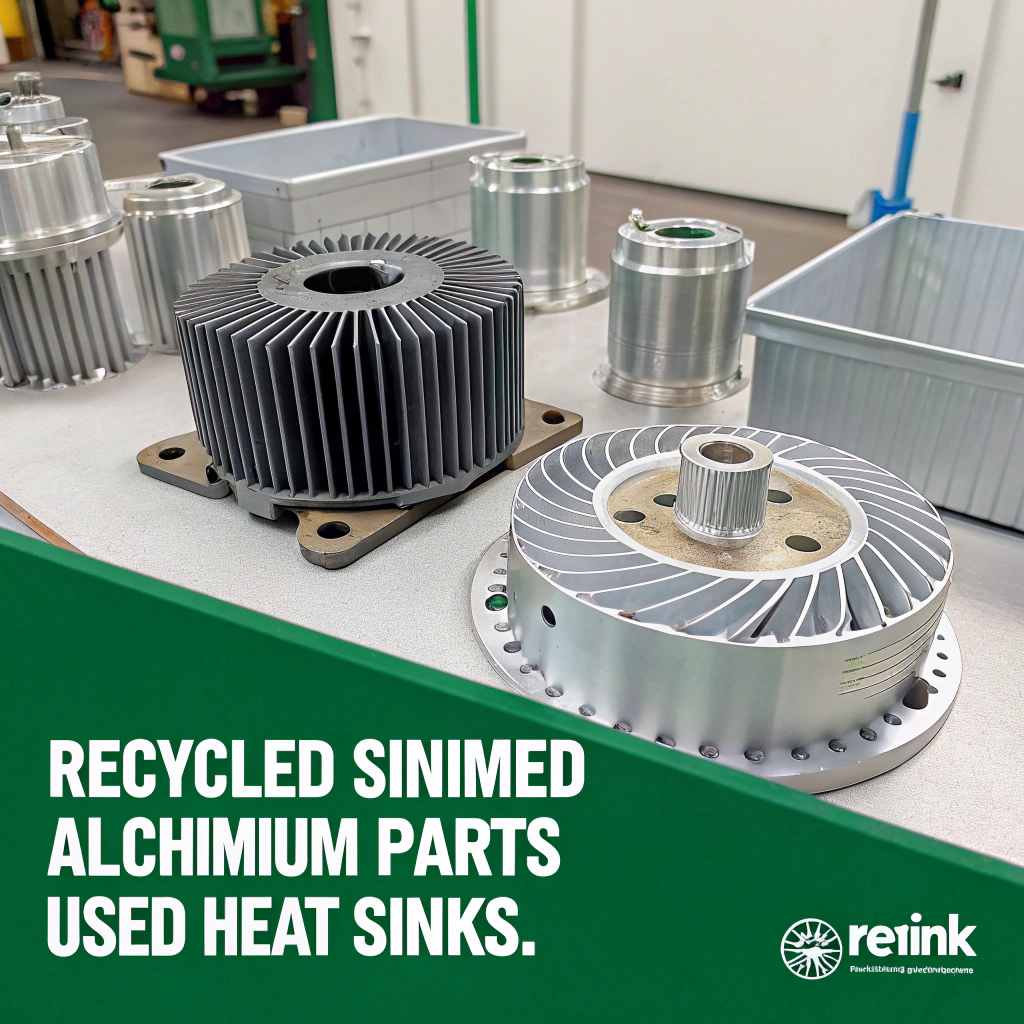
Aluminum heat sinks are highly recyclable. Many manufacturers now offer products made from recycled aluminum, reducing carbon emissions and energy use.
2. Refurbishment
Some companies now clean, restore, and resell used heat sinks — especially in telecom, lighting, and industrial automation. This supports circular economy principles.
3. Eco-design
Products are being designed for easier disassembly and material separation. Screwed or clipped heat sinks are easier to reuse than glued ones.
4. Regulation compliance
In some regions, end-of-life product recovery is required. Heat sinks must be removable and recyclable to meet these rules.
5. Hybrid materials
Researchers are exploring composite and polymer heat sinks that are easier to recycle. These offer lower weight and manufacturing energy.
Here’s a trends table:
| Trend | Impact |
|---|---|
| Recycled aluminum | Cuts emissions and supports sustainable sourcing |
| Part refurbishment | Extends component life and lowers waste |
| Green product design | Simplifies reuse and recycling at product’s end |
| Material innovation | Lighter, greener alternatives to solid aluminum |
| Policy alignment | Meets growing legal and market sustainability goals |
If your business values sustainability, reuse and recycling of heat sinks is an easy and effective step forward.
Conclusion
I’ve learned that reusing a heat sink is not only possible — it’s practical. But only if it’s cleaned, inspected, and tested. The risks are real, but manageable. The rewards? Lower costs, faster builds, and a lighter footprint. In a world moving toward sustainability and efficiency, smart reuse of heat sinks is a step in the right direction.