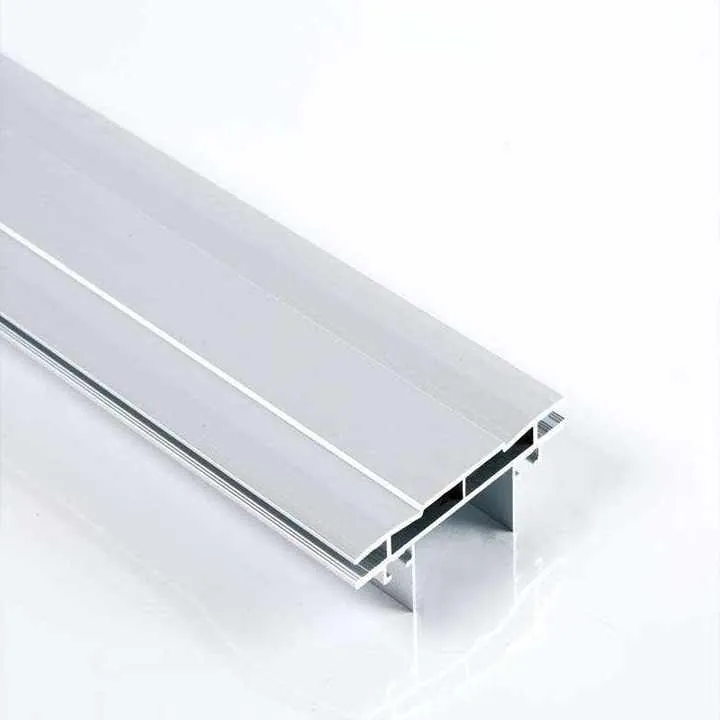
How to Choose Aluminum Profile Specifications for Projects
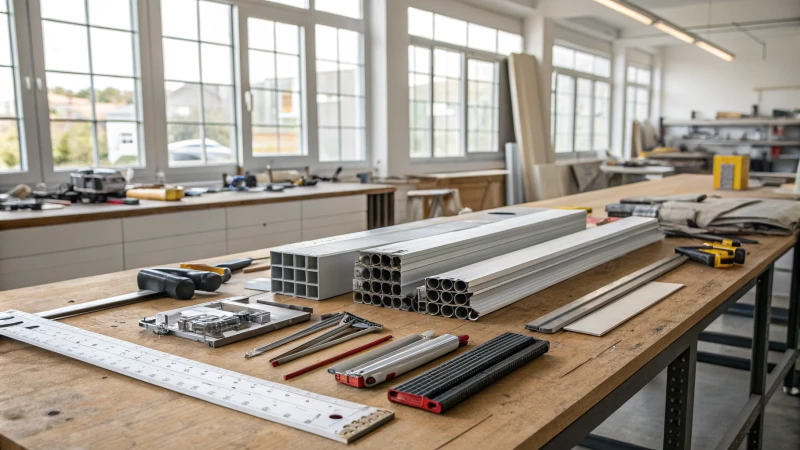
Choosing the right aluminum profile specification can make or break your project.
To select the appropriate aluminum profile specification for your project, consider the profile type (architectural, industrial, or decorative), load requirements, surface treatment needs, and the balance between cost and performance. Each factor plays a crucial role in determining the best fit for your specific application.
While this overview provides a quick answer, understanding the nuances of each factor is vital for making the most informed decision. Dive deeper into the specifics to ensure your project meets both aesthetic and functional goals.
Architectural profiles are the most expensive type.False
Industrial profiles often cost more due to their load-bearing capacity.
Surface treatment affects aluminum profile durability.True
Surface treatments protect against corrosion, enhancing longevity.
What Are the Different Types of Aluminum Profiles?
Aluminum profiles are versatile and used across various industries due to their unique characteristics. Understanding the different types can help in choosing the right one for specific applications, ensuring optimal performance and efficiency.
Aluminum profiles are categorized into architectural, industrial, and decorative types. Architectural profiles emphasize strength and weather resistance, industrial profiles focus on load-bearing capabilities, and decorative profiles prioritize aesthetics.
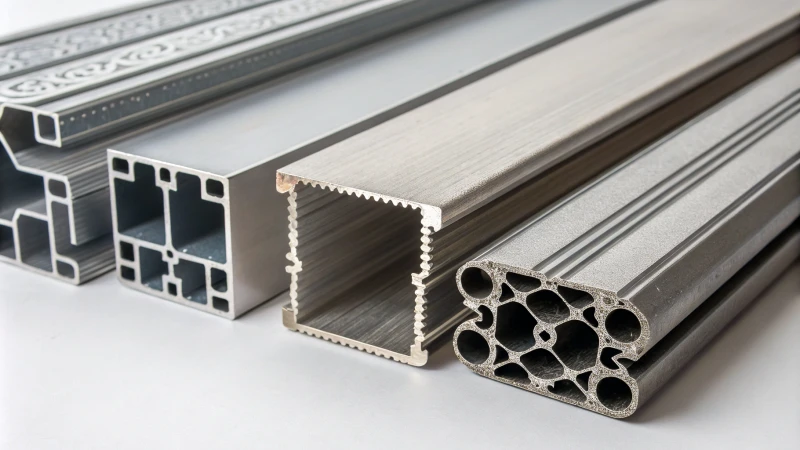
Architectural Aluminum Profiles
These profiles are primarily used in construction for doors, windows, and curtain walls. They require high weather resistance1 and strength. The commonly used alloy is 6063 due to its excellent finishing
characteristics and moderate strength, making it ideal for architectural applications.
| Property | Description |
|---|---|
| Strength | High |
| Weatherproof | Excellent with proper coating |
| Common Alloy | 6063 |
Industrial Aluminum Profiles
Industrial profiles are integral in manufacturing processes. They serve as frames, brackets, and fittings,
emphasizing load-bearing capacity and precision. The 6061 alloy is favored for its superior mechanical properties
and excellent weldability.
- Applications: Machinery frames, conveyor belts, and industrial structures.
- Load Capacity: High due to thicker walls and larger cross-sections.
Decorative Aluminum Profiles
These profiles focus on aesthetics and design flexibility, often used in interior decoration. Surface treatments
like anodizing enhance their appearance.
- Surface Treatments: Anodic oxidation, powder coating.
- Usage: Interior decor elements such as decorative backdrops2, furniture accents, and ceilings.
Choosing the Right Profile
To select the appropriate aluminum profile for a project, consider factors like environmental conditions,
budget constraints, and performance requirements. For example, outdoor projects may benefit from profiles with
enhanced corrosion resistance provided by anodized finishes.
Consider consulting a comprehensive aluminum profile catalog3 to compare specifications and make informed decisions tailored to specific project needs. Evaluating supplier quotations can also help in finding cost-effective options without compromising on quality.
6063 alloy is used in architectural profiles.True
6063 alloy is preferred for its finishing characteristics and moderate strength.
Decorative profiles use 6061 alloy for aesthetics.False
Decorative profiles focus on surface treatments, not the 6061 alloy.
How Do Load Requirements Affect Aluminum Profile Selection?
Choosing the right aluminum profile requires a thorough understanding of load requirements. This ensures both safety and efficiency in your project.
Load requirements determine the size and alloy of aluminum profiles. Larger loads require profiles with greater cross-sectional areas and specific alloys to ensure structural integrity and safety.
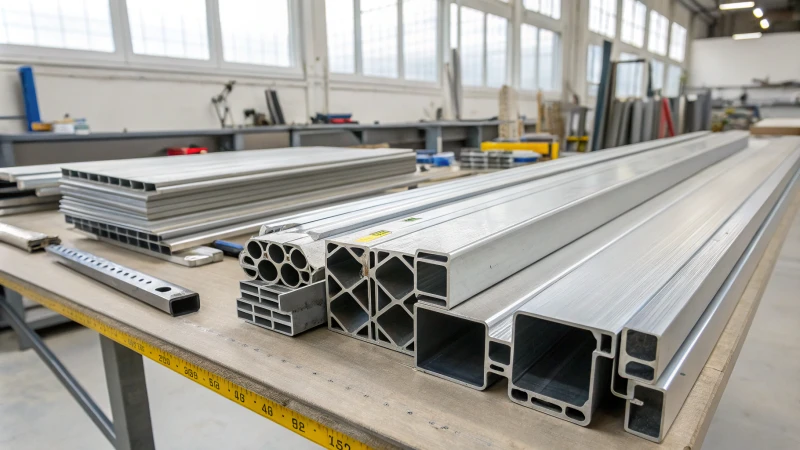
Understanding Load Requirements
Before selecting an aluminum profile, it’s essential to understand the load that it will bear. Loads can be static or dynamic, each affecting the material differently.
Static loads are constant forces acting on a structure, while dynamic loads fluctuate over time. For instance, an architectural profile4 used in window frames might mostly experience static loads from the weight of glass.
Choosing the Right Alloy
Different alloys offer varied strengths and flexibilities. For instance, the 6061 alloy is renowned for its strength, making it suitable for industrial purposes where load-bearing is crucial. Conversely, 6063 is favored in architectural applications due to its excellent finishing properties.
| Alloy | Common Uses | Key Properties |
|---|---|---|
| 6061 | Industrial | High strength, good machinability |
| 6063 | Architectural | Superior surface finish |
The choice between these alloys can be critical depending on load requirements and other factors like environmental conditions.
Cross-sectional Area and Wall Thickness
Higher loads necessitate a larger cross-sectional area and thicker walls. Calculating the maximum load and flexural strength needed will guide you in picking the right profile size.
For example, a decorative profile5 used in interiors may not require the same thickness as a structural profile in an outdoor setting.
Consideration of Environmental Factors
The environment where the profile will be used also affects selection. Outdoor environments may require profiles with corrosion-resistant surface treatments like anodizing or powder coating.
Understanding these factors helps in selecting profiles that not only support the load but also withstand environmental challenges.
6061 alloy is best for architectural applications.False
6061 is better for industrial uses due to its strength.
Static loads are constant forces on a structure.True
Static loads do not change over time, unlike dynamic loads.
What Surface Treatments Are Available for Aluminum Profiles?
Aluminum profiles are versatile and widely used, but choosing the right surface treatment is crucial for enhancing their durability and aesthetics. Discover the various options available to suit different project needs.
The primary surface treatments for aluminum profiles include anodizing, powder coating, electrophoretic coating, and wood grain finishes. Each offers unique benefits in terms of corrosion resistance, aesthetic appeal, and suitability for indoor or outdoor applications.

Anodizing
Anodizing is a popular method that enhances the natural oxide layer on aluminum. This treatment improves corrosion resistance6, making it ideal for outdoor applications. It also allows for a range of color options without compromising durability.
Powder Coating
Powder coating involves applying a dry powder to aluminum profiles, which is then cured under heat. This method provides a thicker coating than anodizing, offering excellent protection against wear and weathering. It’s available in a vast array of colors and textures, making it suitable for both decorative7 and functional uses.
| Surface Treatment | Corrosion Resistance | Color Options | Typical Use |
|---|---|---|---|
| Anodizing | High | Limited | Outdoor |
| Powder Coating | High | Extensive | Indoor/Outdoor |
| Electrophoretic Coating | Moderate | Moderate | Automotive |
| Wood Grain Finish | Moderate | Limited | Indoor |
Electrophoretic Coating
This treatment involves submerging aluminum profiles in a bath where an electric current causes the coating material to adhere to the surface. It offers good corrosion resistance and is often used in automotive parts due to its smooth finish and durability8.
Wood Grain Finish
Wood grain finishes are achieved by transferring a wood-like pattern onto powder-coated aluminum. While not as durable as other treatments, they offer a unique aesthetic appeal, making them perfect for indoor decorative applications where appearance is prioritized over corrosion resistance9.
Anodizing offers limited color options.True
Anodizing allows for a range of colors but is more limited than powder coating.
Wood grain finishes are ideal for outdoor use.False
Wood grain finishes prioritize aesthetics and are better suited for indoor use.
How Can You Balance Cost and Performance in Your Choice?
Balancing cost and performance is crucial in decision-making. Whether choosing materials or selecting suppliers, finding the optimal equilibrium can significantly impact your project’s success.
To balance cost and performance, prioritize essential performance criteria and consider budget constraints. Evaluate potential trade-offs, seek competitive quotes, and use decision matrices to make informed choices.

Prioritizing Essential Performance Criteria
Identifying what matters most for your project is the first step. Determine whether durability, efficiency, or aesthetic appeal10 are non-negotiable aspects. For instance, a project requiring high weather resistance may prioritize corrosion-resistant materials, even at a higher cost.
Evaluating Trade-offs
Trade-offs are inevitable when balancing cost and performance. If cost is a constraint, consider where performance can be compromised without undermining the project’s integrity. Using a thinner aluminum profile might reduce costs but ensure it still meets minimum load requirements.
| Performance Attribute | Cost Implication | Example |
|---|---|---|
| High Durability | Increased Cost | Choose 6063 alloy for strength in architectural applications |
| Aesthetic Design | Medium Cost | Opt for decorative profiles with surface treatment |
| Load Capacity | Higher Cost | Use thicker industrial profiles for load-bearing structures |
Seeking Competitive Quotes
Always compare multiple supplier quotations to gauge the market rate and get the best deal. Consider not just the price but the performance benefits they offer. A supplier providing superior customer support11 might be worth a slightly higher price.
Decision Matrices for Informed Choices
Utilize decision matrices to systematically evaluate options based on weighted criteria. Assign scores to each option for cost, performance, and other relevant factors. This method helps visualize the trade-offs and make a more data-driven choice.
table
| Option       | Cost | Performance | Support | Total |
|--------------|------|-------------|---------|-------|
| Supplier A   | 8    | 9           | 7       | 24    |
| Supplier B   | 7    | 8           | 9       | 24    |
| Supplier C   | 9    | 7           | 8       | 24    |
Leveraging Local Suppliers12
Local sourcing can lower transportation costs and lead times. Supporting local businesses also aligns with sustainable practices, which can be a selling point for environmentally-conscious clients.
Engage suppliers in discussions about how they can tailor their offerings to meet both performance needs and budget constraints. Sometimes, suppliers may offer custom solutions that strike the perfect balance.
High durability always increases cost.True
Durable materials often require advanced production, raising costs.
Local suppliers always offer the lowest prices.False
Local suppliers may not always have the lowest prices due to scale.
Conclusion
Selecting the right aluminum profile involves understanding types, load requirements, surface treatments, and balancing cost with performance to ensure project success and durability.
-
Learn about the significance of weather resistance in aluminum profiles for outdoor applications. ↩
-
Discover inspiring examples of decorative aluminum profiles used in modern interior design. ↩
-
Explore catalogs offering diverse aluminum profiles to meet construction needs efficiently. ↩
-
Explore how architectural aluminum profiles support various structures and their typical applications. ↩
-
Learn about the aesthetic applications of decorative aluminum profiles in interior design. ↩
-
Explore how anodizing enhances aluminum’s durability, making it suitable for challenging outdoor conditions. ↩
-
Discover why powder coating is favored for its extensive color range and durability. ↩
-
Learn about the durability and smooth finish achieved through electrophoretic coating. ↩
-
Understand the aesthetic benefits of using wood grain finishes in interior designs. ↩
-
Understanding aesthetic appeal’s role helps prioritize design elements without compromising other factors. ↩
-
Good customer support ensures smooth project execution and resolves issues promptly. ↩
-
Sourcing locally reduces costs and supports sustainable practices, enhancing project appeal. ↩